THE ADVENTURE COLLECTIVE® · Independent discovery and booking for outdoor travel

Scale Camelback’s Echo Canyon with a certified guide from Mad Desert Trekking and earn a 360-degree view of Phoenix. This 3–4 hour, 1,300-foot ascent mixes steep switchbacks and rock scrambling—perfect for hikers who want a short, intense summit experience.
Scale Camelback’s Echo Canyon with a certified guide from Mad Desert Trekking and earn a 360-degree view of Phoenix. This 3–4 hour, 1,300-foot ascent mixes steep switchbacks and rock scrambling—perfect for hikers who want a short, intense summit experience.
You step into a furnace of light long before the climb begins. The Sonoran sun gleams off the pale granite; saguaros throw long, skeletal shadows across the parking lot. Your guide from Mad Desert Trekking hands you a backpack, slaps on sunscreen, and points to a jagged ridge that rises abruptly above the city—the unmistakable profile of Camelback Mountain.
Verified experiences and guided adventures in the surrounding area.
Operated by Mad Desert Trekking · Phoenix, Arizona
You step into a furnace of light long before the climb begins. The Sonoran sun gleams off the pale granite; saguaros throw long, skeletal shadows across the parking lot. Your guide from Mad Desert Trekking hands you a backpack, slaps on sunscreen, and points to a jagged ridge that rises abruptly above the city—the unmistakable profile of Camelback Mountain.
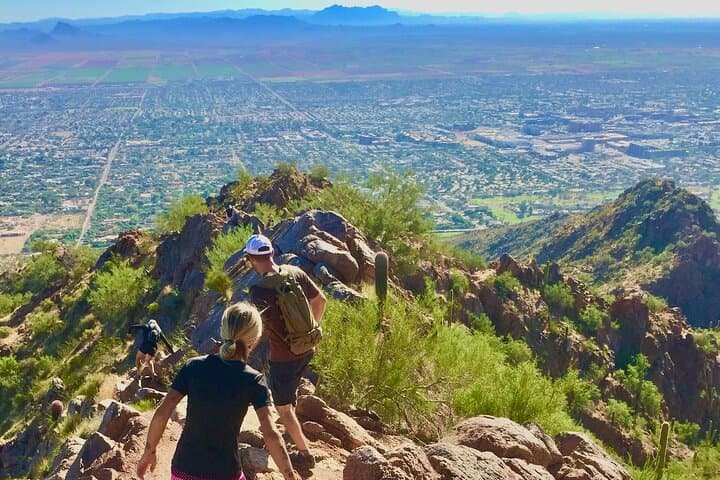
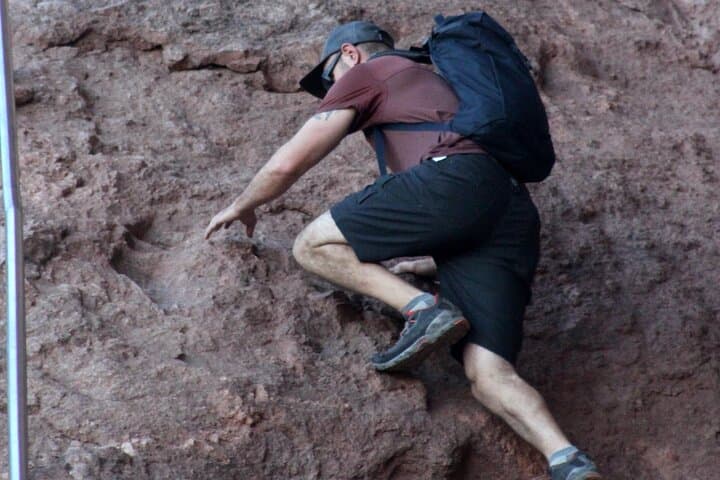
The Echo Canyon route is immediate and unrelenting: 1,300 feet of elevation gain condensed into steep switchbacks and sections of hands-on scrambling. The rock feels warm under your palms, gripping like a deliberate partner that will either help you up or refuse to yield. As you climb, Phoenix retracts beneath a grid of freeways and golf courses; the desert expands outward until the city becomes a geometric toy and the horizon pulls free for a 360-degree view that reaches roughly 50 miles on a clear day.
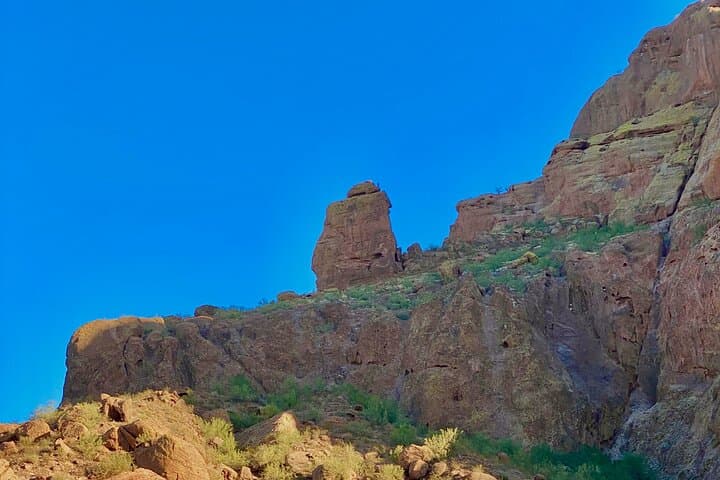
Camelback is a young mountain in geological terms—a remnant of Precambrian granite and coarse-grained gneiss pushed up and sculpted by erosion. Long before it became a fitness challenge for commuters, Hohokam people moved through this landscape, harvesting mesquite and desert saltbush. Today the mountain is a civic landmark and a daily proving ground for locals, and the trail carries both the grit of recreation and the delicate footprints of a fragile ecosystem.
Guided hikes with Mad Desert Trekking add a layer of safety and local knowledge: guides hold Wilderness First Responder or EMT credentials, supply water, snacks and cold beverages after the summit, and point out micro-habitats where desert tortoises or Gila monsters might slip between rocks. They also know the parking reality—lots fill routinely, and drop-offs by ride-hail are common.
For practical planning, treat Camelback like a short but serious alpine push. Start early—sunrise departures avoid heat and crowds. Expect 3–4 hours round-trip depending on pace and group size; sections require deliberate hand-over-hand movement and secure footing. Bring at least 2 liters of water, sun protection, sturdy hiking shoes with sticky rubber, and a light first-aid kit. If you’re nervous about scrambling, a guide will coach technique and choose safer lines.
Conservation is part of the experience: stay on established tread, pack out wrappers, and avoid moving rocks that shelter small desert life. When you reach the summit, let the city drift away and allow the desert’s scale to calibrate your breath; the climb is brief, but the view—the wide, patient Sonoran—is generous and immediate.
challenging.
3–4 hours.
Should be in good cardiovascular shape; comfortable with steep climbs and short sections of scrambling.
Expect a strenuous hike with about 1,300 feet of elevation gain and short sections of hands-on scrambling—3–4 hours round-trip for guided groups.
No—guides will coach you through exposed sections, but comfort with heights and basic climbing movements helps.
Dogs are generally not allowed on Echo Canyon due to remoteness and heat risks; check local park rules before bringing pets.
Mad Desert Trekking meets outside the Echo Canyon Trailhead building off E. McDonald Drive; ride-hail drop-offs are common.
Arrive early or use Uber/Lyft—guides advise planning for limited parking spaces at peak times.
This hike isn’t recommended for those with serious heart or back issues, or for pregnant travelers; a high level of fitness is advised.
Camelback’s name comes from the mountain’s profile which resembles a kneeling camel; the area was traversed by Hohokam people long before modern development.
High foot traffic stresses fragile desert soils—stay on trail, pack out all trash, and avoid moving rocks that protect small animals.
Mad Desert Trekking operates guided outdoor trips and adventures with an emphasis on safety, stewardship, and memorable experiences.
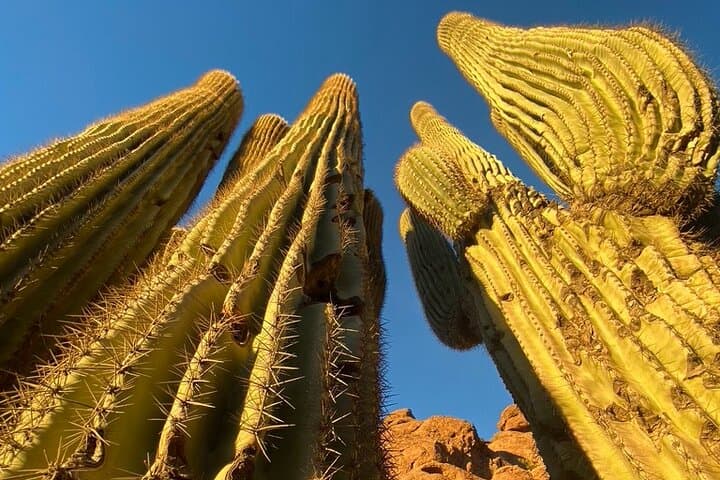
You step into a furnace of light long before the climb begins. The Sonoran sun gleams off the pale granite; saguaros throw long, skeletal shadows across the parking lot. Your guide from Mad Desert Trekking hands you a backpack, slaps on sunscreen, and points to a jagged ridge that rises abruptly above the city—the unmistakable profile of Camelback Mountain.
You step into a furnace of light long before the climb begins. The Sonoran sun gleams off the pale granite; saguaros throw long, skeletal shadows across the parking lot. Your guide from Mad Desert Trekking hands you a backpack, slaps on sunscreen, and points to a jagged ridge that rises abruptly above the city—the unmistakable profile of Camelback Mountain.
The Echo Canyon route is immediate and unrelenting: 1,300 feet of elevation gain condensed into steep switchbacks and sections of hands-on scrambling. The rock feels warm under your palms, gripping like a deliberate partner that will either help you up or refuse to yield. As you climb, Phoenix retracts beneath a grid of freeways and golf courses; the desert expands outward until the city becomes a geometric toy and the horizon pulls free for a 360-degree view that reaches roughly 50 miles on a clear day.
Camelback is a young mountain in geological terms—a remnant of Precambrian granite and coarse-grained gneiss pushed up and sculpted by erosion. Long before it became a fitness challenge for commuters, Hohokam people moved through this landscape, harvesting mesquite and desert saltbush. Today the mountain is a civic landmark and a daily proving ground for locals, and the trail carries both the grit of recreation and the delicate footprints of a fragile ecosystem.
Guided hikes with Mad Desert Trekking add a layer of safety and local knowledge: guides hold Wilderness First Responder or EMT credentials, supply water, snacks and cold beverages after the summit, and point out micro-habitats where desert tortoises or Gila monsters might slip between rocks. They also know the parking reality—lots fill routinely, and drop-offs by ride-hail are common.
For practical planning, treat Camelback like a short but serious alpine push. Start early—sunrise departures avoid heat and crowds. Expect 3–4 hours round-trip depending on pace and group size; sections require deliberate hand-over-hand movement and secure footing. Bring at least 2 liters of water, sun protection, sturdy hiking shoes with sticky rubber, and a light first-aid kit. If you’re nervous about scrambling, a guide will coach technique and choose safer lines.
Conservation is part of the experience: stay on established tread, pack out wrappers, and avoid moving rocks that shelter small desert life. When you reach the summit, let the city drift away and allow the desert’s scale to calibrate your breath; the climb is brief, but the view—the wide, patient Sonoran—is generous and immediate.