THE ADVENTURE COLLECTIVE® · Independent discovery and booking for outdoor travel

Step inside a Ryogoku sumo stable to watch live training, ask wrestlers questions, and share a traditional chanko-nabe meal. This two-hour experience blends ritual, history, and hands-on moments—ideal for culturally curious travelers in Tokyo.
Step inside a Ryogoku sumo stable to watch live training, ask wrestlers questions, and share a traditional chanko-nabe meal. This two-hour experience blends ritual, history, and hands-on moments—ideal for culturally curious travelers in Tokyo.
You step off a narrow street in Ryogoku and into a low-slung doorway where the air changes—warm broth at the back, the polished grain of wooden beams, and the hollow thud of practice on tatami. The stable breathes around you: wrestlers moving with deliberate force, coaches calling corrections, and the dirt ring waiting like a quiet challenger.
Verified experiences and guided adventures in the surrounding area.
Operated by Arumachi · Tokyo, Tokyo
You step off a narrow street in Ryogoku and into a low-slung doorway where the air changes—warm broth at the back, the polished grain of wooden beams, and the hollow thud of practice on tatami. The stable breathes around you: wrestlers moving with deliberate force, coaches calling corrections, and the dirt ring waiting like a quiet challenger.
Sumo traces back more than a thousand years as ritual and sport, formalized in the Edo period when Tokyo was Edo and stables clustered around the Sumida. The neighborhood still carries that history: the Kokugikan arena a short ride away, chanko-nabe restaurants lining the avenues, and wooden plaques that mark long-running stables. Geologically, you’re on Tokyo’s flat alluvial plain—streets and stables packed close to the river—so travel is easy but the city’s humidity can press against the building’s thin walls.
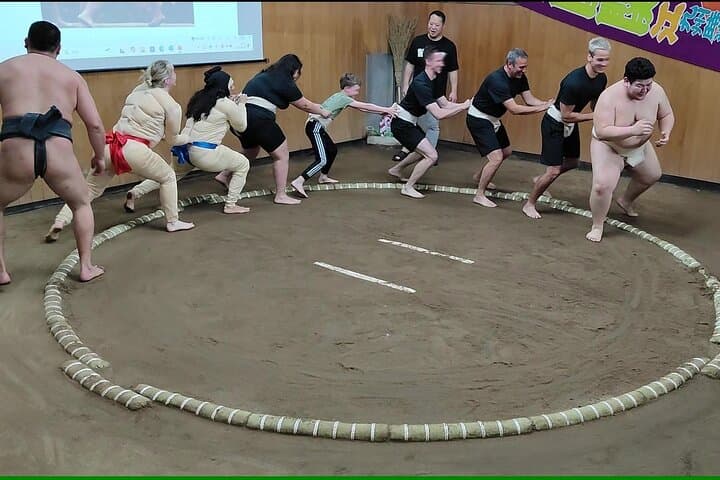
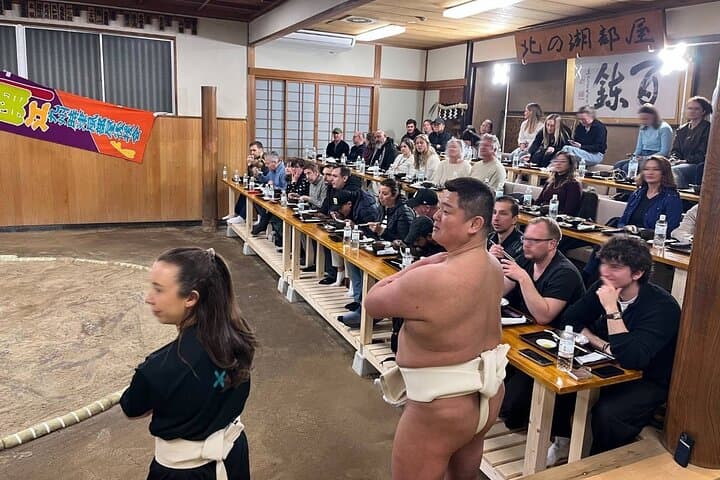
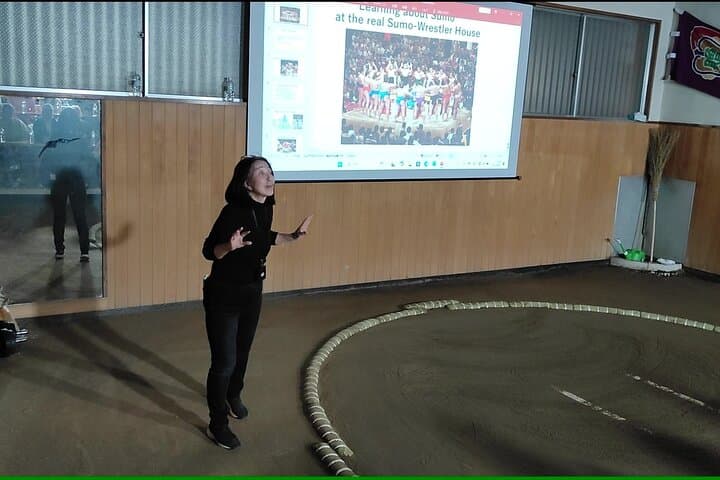
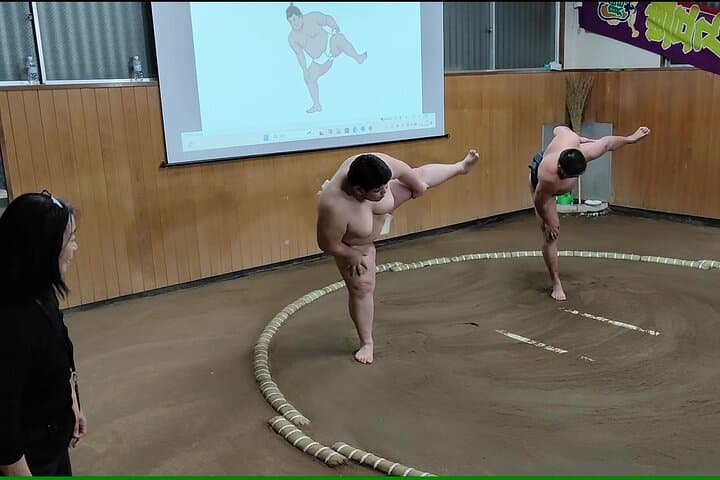
This experience pairs up-close morning practice and exhibition matches with Q&A, photo time, and the option to eat chanko-nabe at 11:00 or 19:00 (a 15:00 session omits the meal). Expect a two-hour program suited to most fitness levels: you’ll watch technique drills, see ritualized entrances, and may get a supervised chance to test a basic shove under a wrestler’s guidance.
Practical tips: remove shoes on tatami, follow the stable master’s instructions, avoid flash photography, and bring small bills for souvenirs. Public transport access is excellent—arrive early, keep questions respectful, and leave your phone on silent. The visit is intimate and direct: sumo’s traditions are both taught and felt.
easy.
2 hours.
Suitable for most fitness levels; standing and short, supervised physical interactions may occur
The chanko-nabe option is offered for 11:00 and 19:00 sessions; the 15:00 session does not include the meal—check your booking option.
Supervised, brief challenge opportunities may be offered, but they are controlled by staff and depend on the wrestlers’ availability and safety protocols.
Yes—this program is suitable for all ages, though infants must sit on an adult’s lap and young children should be supervised around the training area.
Most visitors use Ryogoku Station (JR Sobu Line or Toei Oedo Line); the stable is usually a short walk from the station—follow directions from your ticket confirmation.
Modern professional sumo was formalized in Edo (now Tokyo); many stables here carry lineages that date back generations.
Stables operate as tight-knit cultural sites—minimize waste, respect photography rules, and avoid disturbing training to reduce the site’s operational strain.
Arumachi operates guided outdoor trips and adventures with an emphasis on safety, stewardship, and memorable experiences.
You step off a narrow street in Ryogoku and into a low-slung doorway where the air changes—warm broth at the back, the polished grain of wooden beams, and the hollow thud of practice on tatami. The stable breathes around you: wrestlers moving with deliberate force, coaches calling corrections, and the dirt ring waiting like a quiet challenger.
You step off a narrow street in Ryogoku and into a low-slung doorway where the air changes—warm broth at the back, the polished grain of wooden beams, and the hollow thud of practice on tatami. The stable breathes around you: wrestlers moving with deliberate force, coaches calling corrections, and the dirt ring waiting like a quiet challenger.
Sumo traces back more than a thousand years as ritual and sport, formalized in the Edo period when Tokyo was Edo and stables clustered around the Sumida. The neighborhood still carries that history: the Kokugikan arena a short ride away, chanko-nabe restaurants lining the avenues, and wooden plaques that mark long-running stables. Geologically, you’re on Tokyo’s flat alluvial plain—streets and stables packed close to the river—so travel is easy but the city’s humidity can press against the building’s thin walls.
This experience pairs up-close morning practice and exhibition matches with Q&A, photo time, and the option to eat chanko-nabe at 11:00 or 19:00 (a 15:00 session omits the meal). Expect a two-hour program suited to most fitness levels: you’ll watch technique drills, see ritualized entrances, and may get a supervised chance to test a basic shove under a wrestler’s guidance.
Practical tips: remove shoes on tatami, follow the stable master’s instructions, avoid flash photography, and bring small bills for souvenirs. Public transport access is excellent—arrive early, keep questions respectful, and leave your phone on silent. The visit is intimate and direct: sumo’s traditions are both taught and felt.