THE ADVENTURE COLLECTIVE® · Independent discovery and booking for outdoor travel

Walk the full Freedom Trail from the Massachusetts State House to Old Ironsides—four hours of street-level history, courthouse drama, and the grit of Bunker Hill. This complete tour stitches together the people and places that pushed a colony toward revolution.
Walk the full Freedom Trail from the Massachusetts State House to Old Ironsides—four hours of street-level history, courthouse drama, and the grit of Bunker Hill. This complete tour stitches together the people and places that pushed a colony toward revolution.
The dome of the Massachusetts State House gleams before you, a gilded punctuation over Beacon Hill as the guide calls the group together. Footsteps and hushed chatter fall into a steady rhythm as the tour moves off the Common, down red-brick streets worn smooth by centuries of boots, wheel ruts and trolley tracks. The city compresses history into blocks here: meeting houses that once hosted incendiary sermons, taverns where plans were hatched, and narrow lanes that remember midnight riders.
Verified experiences and guided adventures in the surrounding area.
Operated by Walk & Talk Boston Walking Tours · Boston, Massachusetts
The dome of the Massachusetts State House gleams before you, a gilded punctuation over Beacon Hill as the guide calls the group together. Footsteps and hushed chatter fall into a steady rhythm as the tour moves off the Common, down red-brick streets worn smooth by centuries of boots, wheel ruts and trolley tracks. The city compresses history into blocks here: meeting houses that once hosted incendiary sermons, taverns where plans were hatched, and narrow lanes that remember midnight riders.
This four-hour walk is less about monuments and more about the people who turned civic discontent into revolution. You’ll pass the Granary Burying Ground and meet the dead who still organize the story—Samuel Adams, Paul Revere, John Hancock—then thread through the Blackstone Block and past Faneuil Hall, where arguments about liberty echoed like cannon fire. Geologically, Boston’s landscape is a product of Ice Age glaciers and deliberate human fill; the harbor and reclaimed wharves remind you that the city is built at the edge of the sea, and much of what you’ll stand on was once water.
Crossing to Charlestown, the narrative tightens into a study of tactical choices and stubborn bravery at Breed’s Hill, commonly called Bunker Hill. The guide traces musket lines and casualty counts with unromantic clarity: a moral victory that burned a message into British command. The route finishes at Old Ironsides, the USS Constitution, where a wooden hull seems to shrug off the modern skyline and still smells faintly of tar and salt.
Along the way you’ll get local texture: the abolitionist streak in the city’s churches, newspaper offices that fanned revolutionary flames, and a neighborhood economy that spun on shipwrights and rum merchants. The guide stops for questions, points out restroom locations and suggests ferry options back to downtown—there’s an urban logic here that makes backtracking optional.
Practical notes: this is an active, mostly flat four-hour route on pavement and cobbles. Wear broken-in shoes, bring at least one large bottle of water, and layer for coastal wind that can come off the harbor. Start early in summer to avoid the worst crowds and heat; spring and fall offer the clearest light for photos and fewer tour groups. The tour is best for teens and adults; children under 12 may find the pace and depth heavy.
If you want the complete story of Boston’s path to independence—the legal fights, the furious town meetings, the human mistakes that triggered a war—this tour delivers it in a compact, navigable stretch of city. It’s history you can keep pace with, told where it happened, with practical stops and plenty of context to make the past feel immediate and usable.
moderate.
4 hours.
Moderate fitness—comfortable walking at a steady pace for four hours with brief stops; able to handle stairs and cobbles.
The tour is approximately four hours from the State House to the USS Constitution.
Yes—guides schedule stops at public restrooms and will stop on request; there are four main restroom options along the route.
Infants and small children can ride in a stroller, though cobblestones and stairs may make some sections bumpy.
You can walk back, take public transit, or board a ferry from Long Wharf depending on where the tour ends and ferry schedules.
The tour is recommended for children 12 and older; younger kids may find the pace and historical detail challenging.
Guide gratuities are not accepted; tipping is discouraged as stated in the tour inclusions.
The Freedom Trail stitches together sites tied to 17th–18th century civic life—meeting houses, trial sites, and burial grounds that hosted arguments over taxation and governance.
Boston’s waterfront is actively managed for sea-level rise; visitors are asked to stay on marked paths and avoid climbing on historic structures to reduce wear.
Walk & Talk Boston Walking Tours operates guided outdoor trips and adventures with an emphasis on safety, stewardship, and memorable experiences.

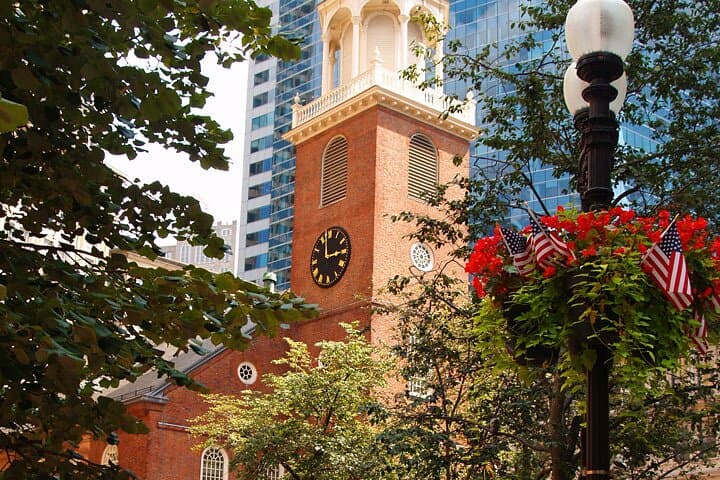


The dome of the Massachusetts State House gleams before you, a gilded punctuation over Beacon Hill as the guide calls the group together. Footsteps and hushed chatter fall into a steady rhythm as the tour moves off the Common, down red-brick streets worn smooth by centuries of boots, wheel ruts and trolley tracks. The city compresses history into blocks here: meeting houses that once hosted incendiary sermons, taverns where plans were hatched, and narrow lanes that remember midnight riders.
The dome of the Massachusetts State House gleams before you, a gilded punctuation over Beacon Hill as the guide calls the group together. Footsteps and hushed chatter fall into a steady rhythm as the tour moves off the Common, down red-brick streets worn smooth by centuries of boots, wheel ruts and trolley tracks. The city compresses history into blocks here: meeting houses that once hosted incendiary sermons, taverns where plans were hatched, and narrow lanes that remember midnight riders.
This four-hour walk is less about monuments and more about the people who turned civic discontent into revolution. You’ll pass the Granary Burying Ground and meet the dead who still organize the story—Samuel Adams, Paul Revere, John Hancock—then thread through the Blackstone Block and past Faneuil Hall, where arguments about liberty echoed like cannon fire. Geologically, Boston’s landscape is a product of Ice Age glaciers and deliberate human fill; the harbor and reclaimed wharves remind you that the city is built at the edge of the sea, and much of what you’ll stand on was once water.
Crossing to Charlestown, the narrative tightens into a study of tactical choices and stubborn bravery at Breed’s Hill, commonly called Bunker Hill. The guide traces musket lines and casualty counts with unromantic clarity: a moral victory that burned a message into British command. The route finishes at Old Ironsides, the USS Constitution, where a wooden hull seems to shrug off the modern skyline and still smells faintly of tar and salt.
Along the way you’ll get local texture: the abolitionist streak in the city’s churches, newspaper offices that fanned revolutionary flames, and a neighborhood economy that spun on shipwrights and rum merchants. The guide stops for questions, points out restroom locations and suggests ferry options back to downtown—there’s an urban logic here that makes backtracking optional.
Practical notes: this is an active, mostly flat four-hour route on pavement and cobbles. Wear broken-in shoes, bring at least one large bottle of water, and layer for coastal wind that can come off the harbor. Start early in summer to avoid the worst crowds and heat; spring and fall offer the clearest light for photos and fewer tour groups. The tour is best for teens and adults; children under 12 may find the pace and depth heavy.
If you want the complete story of Boston’s path to independence—the legal fights, the furious town meetings, the human mistakes that triggered a war—this tour delivers it in a compact, navigable stretch of city. It’s history you can keep pace with, told where it happened, with practical stops and plenty of context to make the past feel immediate and usable.