THE ADVENTURE COLLECTIVE® · Independent discovery and booking for outdoor travel

Spend four days moving from Angkor Wat’s dawn light to Phnom Kulen’s waterfalls and the floating villages of Tonle Sap. This circuit blends sunrise temple runs, jungle-claimed ruins, and hands-on cultural encounters with local communities.
Spend four days moving from Angkor Wat’s dawn light to Phnom Kulen’s waterfalls and the floating villages of Tonle Sap. This circuit blends sunrise temple runs, jungle-claimed ruins, and hands-on cultural encounters with local communities.
The day begins before dawn at Angkor Wat, when the first cool light slips over lotus-filled moats and the stone towers darken into silhouettes. Visitors gather, cameras ready, as the temple slowly reveals its carvings and causeways — a quiet, gravity-holding moment before the circuit unfolds.
Verified experiences and guided adventures in the surrounding area.
Operated by Asia Voyage Travel · Siem Reap, Siem Reap Province
The day begins before dawn at Angkor Wat, when the first cool light slips over lotus-filled moats and the stone towers darken into silhouettes. Visitors gather, cameras ready, as the temple slowly reveals its carvings and causeways — a quiet, gravity-holding moment before the circuit unfolds.
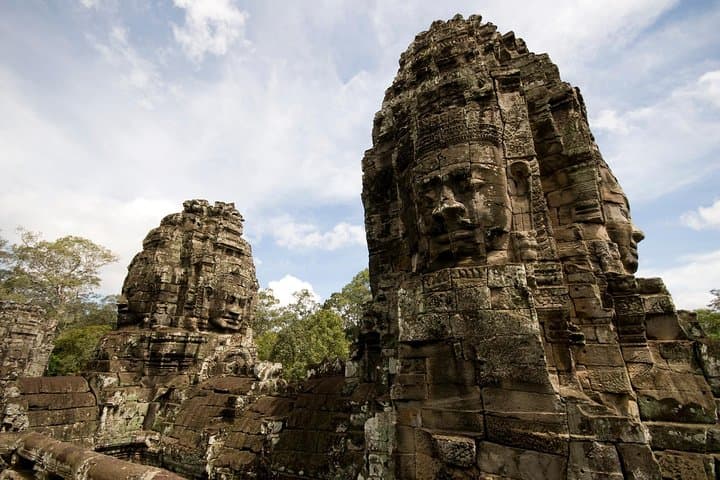
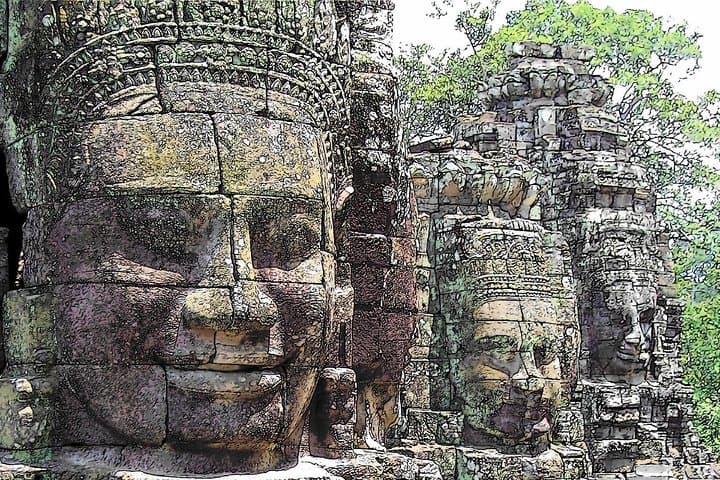
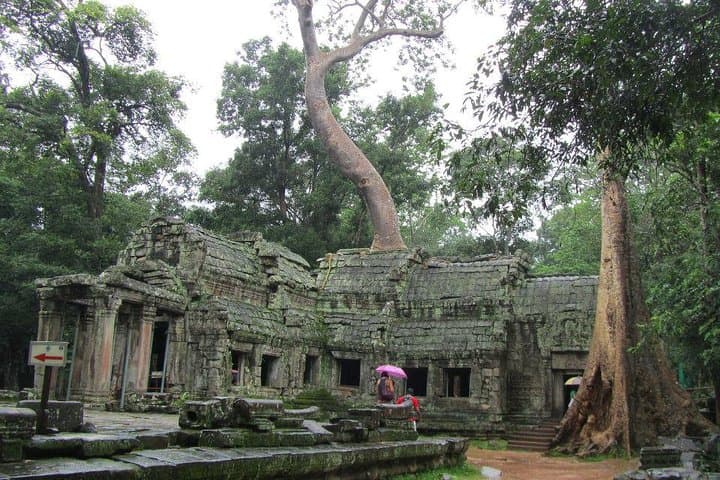
Across four days the route moves from the monumental geometry of Angkor Thom and Bayon’s carved faces to the tree-entwined corridors of Ta Prohm, and outward to Phnom Kulen’s waterfalls and the pink sandstone detail of Banteay Srei. Geology here is part of the show: hard sandstone and laterite were quarried and shipped into vast reservoirs (barays) that sustained the Khmer capital. Culturally, the landscape is layered — 9th–15th century Khmer empire architecture sits beside living villages on Tonle Sap’s seasonal floodplain.
Expect varied pacing: early sunrises, long but comfortable vehicle transfers, short treks among temple terraces, and a motorboat across Tonle Sap to stilted Kompong Pluk villages. Beng Mealea offers a wilder, less-restored experience where masonry piles and lichen invite cautious exploration. Guides typically organize Angkor Park tickets; bring cash for entrance fees, tips, and small vendors.
Practical tips: dress for heat and respectful temple attire, carry reusable water and sun protection, and plan for dust on secondary roads to Kulen and Beng Mealea. The tour balances photography, history, and low-impact immersion — rewarding travelers who move deliberately between ruin and riverside life.
moderate.
4 days.
Moderate fitness; able to walk 1–3 miles a day on uneven ground and tolerate multiple hours in a vehicle.
Most operators do not include park entrance fees in the base price; guides typically assist with ticket purchase on arrival so bring cash for passes.
The tour uses air-conditioned private vehicles for transfers, but expect long drives to Kulen and Beng Mealea on rough roads.
Yes—there are designated swimming areas at Phnom Kulen, though currents and slippery rocks require caution and attentive footwear.
Visits are conducted by motorboat; choose operators that respect residents’ routines, pay for boat fees, and avoid photographing people without permission.
This region was the heart of the Khmer Empire (9th–15th centuries); Angkor’s barays and temples reflect sophisticated hydraulic engineering and state religion.
Angkor Archaeological Park manages visitor flows to protect fragile stonework; on Tonle Sap, choose operators that practice low-impact boating to protect fishery habitats.
Asia Voyage Travel operates guided outdoor trips and adventures with an emphasis on safety, stewardship, and memorable experiences.
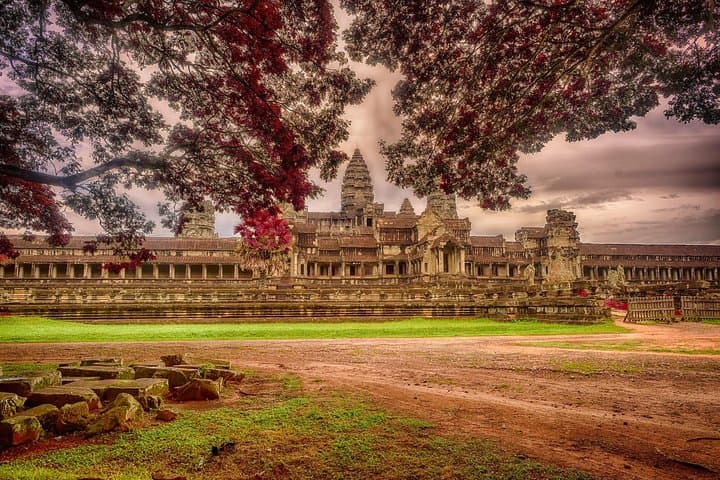
The day begins before dawn at Angkor Wat, when the first cool light slips over lotus-filled moats and the stone towers darken into silhouettes. Visitors gather, cameras ready, as the temple slowly reveals its carvings and causeways — a quiet, gravity-holding moment before the circuit unfolds.
The day begins before dawn at Angkor Wat, when the first cool light slips over lotus-filled moats and the stone towers darken into silhouettes. Visitors gather, cameras ready, as the temple slowly reveals its carvings and causeways — a quiet, gravity-holding moment before the circuit unfolds.
Across four days the route moves from the monumental geometry of Angkor Thom and Bayon’s carved faces to the tree-entwined corridors of Ta Prohm, and outward to Phnom Kulen’s waterfalls and the pink sandstone detail of Banteay Srei. Geology here is part of the show: hard sandstone and laterite were quarried and shipped into vast reservoirs (barays) that sustained the Khmer capital. Culturally, the landscape is layered — 9th–15th century Khmer empire architecture sits beside living villages on Tonle Sap’s seasonal floodplain.
Expect varied pacing: early sunrises, long but comfortable vehicle transfers, short treks among temple terraces, and a motorboat across Tonle Sap to stilted Kompong Pluk villages. Beng Mealea offers a wilder, less-restored experience where masonry piles and lichen invite cautious exploration. Guides typically organize Angkor Park tickets; bring cash for entrance fees, tips, and small vendors.
Practical tips: dress for heat and respectful temple attire, carry reusable water and sun protection, and plan for dust on secondary roads to Kulen and Beng Mealea. The tour balances photography, history, and low-impact immersion — rewarding travelers who move deliberately between ruin and riverside life.