THE ADVENTURE COLLECTIVE® · Independent discovery and booking for outdoor travel

Glide along Rome’s ancient Appian Way in an eco-friendly golf cart, combining drive-by views of the Colosseum and Pyramid of Cestius with a guided visit to the Catacombs of San Callisto. Minimal walking, maximum context—ideal for time‑pressed travelers.
Glide along Rome’s ancient Appian Way in an eco-friendly golf cart, combining drive-by views of the Colosseum and Pyramid of Cestius with a guided visit to the Catacombs of San Callisto. Minimal walking, maximum context—ideal for time‑pressed travelers.
You roll away from Piazza Venezia with cobbles ticking under the golf cart, Roman air pressing cool around the open sides as the city’s layers pass like pages. The Colosseum looms briefly, a hulking silhouette seen from afar, then the cart eases onto the Appian Way where ancient stones dare you to imagine imperial legions marching past.
Verified experiences and guided adventures in the surrounding area.
Operated by GOLF CART TOUR ROME · Rome, Lazio
You roll away from Piazza Venezia with cobbles ticking under the golf cart, Roman air pressing cool around the open sides as the city’s layers pass like pages. The Colosseum looms briefly, a hulking silhouette seen from afar, then the cart eases onto the Appian Way where ancient stones dare you to imagine imperial legions marching past.
This route threads together Rome’s archaeology and early Christian history: the Appian Way (Via Appia Antica) is a 3rd‑century‑BC arterial road that linked the capital to the south, flanked by tombs, aqueducts and villas. The Catacombs of San Callisto offer an underground counterpoint—labyrinthine galleries carved into tuff that shaped early Christian burial practice. Scattered funerary monuments like the Pyramid of Cestius and the Circus Maxentius show Rome’s eclectic tastes and engineering breadth. Local guides add context—who built which stretches, how the road shaped trade, and why aqueducts still thread the hills.
Practical guidance: the full experience runs about 4–5 hours with several short stops and one guided catacombs visit. Wear sturdy shoes for a brief walk on uneven cobbles, bring sun protection and a small daypack for water and your camera. Expect minimal physical exertion—the golf cart covers most ground—but steps and uneven surfaces at ruins and catacombs require mobility and care. Morning departures avoid heat and crowds; check dress rules for catacombs (shoulders and knees covered). The tour is eco‑friendlier than bus tours and gives close access to sites that are harder to stitch together independently, making it an efficient way to see Rome’s imperial and early Christian landmarks.
easy.
4–5 hours.
Minimal fitness required—suitable for most travelers who can handle short walks and some steps.
The tour lasts about 4–5 hours, including multiple drive‑by sites and a guided 30–40 minute visit to the catacombs.
No—most time is seated in the golf cart; however there are short walks on uneven cobbles and steps at stops and in the catacombs.
Yes—the itinerary includes a guided visit to the Catacombs of San Callisto (or San Sebastian on Wednesdays) as specified.
Yes—infants must sit on an adult’s lap, and the pace is family‑friendly, though catacombs may be claustrophobic for some children.
The Appian Way was a strategic Roman consular road built in the 4th century BC that facilitated military movement and commerce; many funerary monuments line its path because Roman law required burials outside city walls.
The Appian Way is a protected archaeological park; visitors are asked to stay on marked paths, avoid climbing ruins, and use organized tours to reduce wear on sensitive sites.
GOLF CART TOUR ROME operates guided outdoor trips and adventures with an emphasis on safety, stewardship, and memorable experiences.

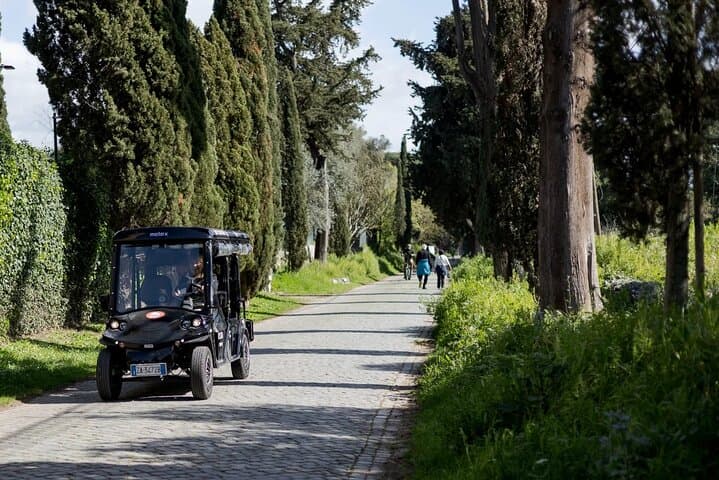
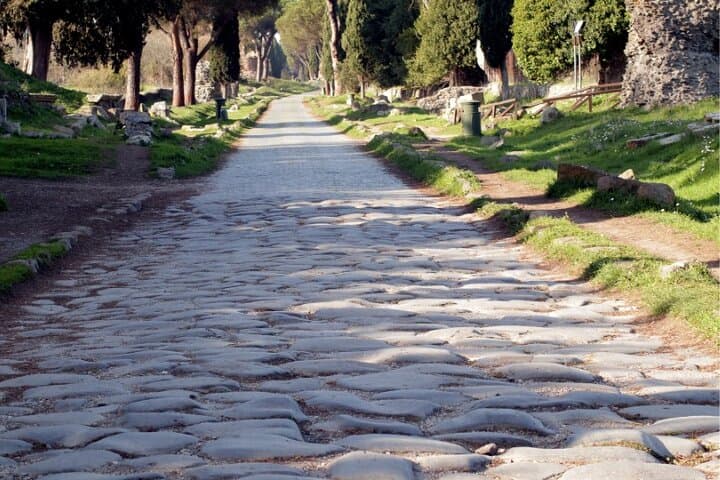

You roll away from Piazza Venezia with cobbles ticking under the golf cart, Roman air pressing cool around the open sides as the city’s layers pass like pages. The Colosseum looms briefly, a hulking silhouette seen from afar, then the cart eases onto the Appian Way where ancient stones dare you to imagine imperial legions marching past.
You roll away from Piazza Venezia with cobbles ticking under the golf cart, Roman air pressing cool around the open sides as the city’s layers pass like pages. The Colosseum looms briefly, a hulking silhouette seen from afar, then the cart eases onto the Appian Way where ancient stones dare you to imagine imperial legions marching past.
This route threads together Rome’s archaeology and early Christian history: the Appian Way (Via Appia Antica) is a 3rd‑century‑BC arterial road that linked the capital to the south, flanked by tombs, aqueducts and villas. The Catacombs of San Callisto offer an underground counterpoint—labyrinthine galleries carved into tuff that shaped early Christian burial practice. Scattered funerary monuments like the Pyramid of Cestius and the Circus Maxentius show Rome’s eclectic tastes and engineering breadth. Local guides add context—who built which stretches, how the road shaped trade, and why aqueducts still thread the hills.
Practical guidance: the full experience runs about 4–5 hours with several short stops and one guided catacombs visit. Wear sturdy shoes for a brief walk on uneven cobbles, bring sun protection and a small daypack for water and your camera. Expect minimal physical exertion—the golf cart covers most ground—but steps and uneven surfaces at ruins and catacombs require mobility and care. Morning departures avoid heat and crowds; check dress rules for catacombs (shoulders and knees covered). The tour is eco‑friendlier than bus tours and gives close access to sites that are harder to stitch together independently, making it an efficient way to see Rome’s imperial and early Christian landmarks.