THE ADVENTURE COLLECTIVE® · Independent discovery and booking for outdoor travel

In a half‑day from Portland, this small family‑run tour threads I‑84 into the Columbia River Gorge to visit Multnomah Falls, Latourell Falls, and the Vista House—an efficient, low‑stress introduction to the Gorge’s volcanic cliffs and cascading water.
In a half‑day from Portland, this small family‑run tour threads I‑84 into the Columbia River Gorge to visit Multnomah Falls, Latourell Falls, and the Vista House—an efficient, low‑stress introduction to the Gorge’s volcanic cliffs and cascading water.
You step off the minivan and a misty curtain is already at work: cool river spray, the metallic tang of basalt, and the hush of forest broken only by water on stone. Along I‑84 the road threads the Columbia River Gorge like a seam, and within thirty minutes from downtown Portland you can trade the city grid for skyscraper cliffs and waterfalls that still feel like private discoveries.
Verified experiences and guided adventures in the surrounding area.
Operated by Oregon Tour Co., LLC · Portland, Oregon
You step off the minivan and a misty curtain is already at work: cool river spray, the metallic tang of basalt, and the hush of forest broken only by water on stone. Along I‑84 the road threads the Columbia River Gorge like a seam, and within thirty minutes from downtown Portland you can trade the city grid for skyscraper cliffs and waterfalls that still feel like private discoveries.
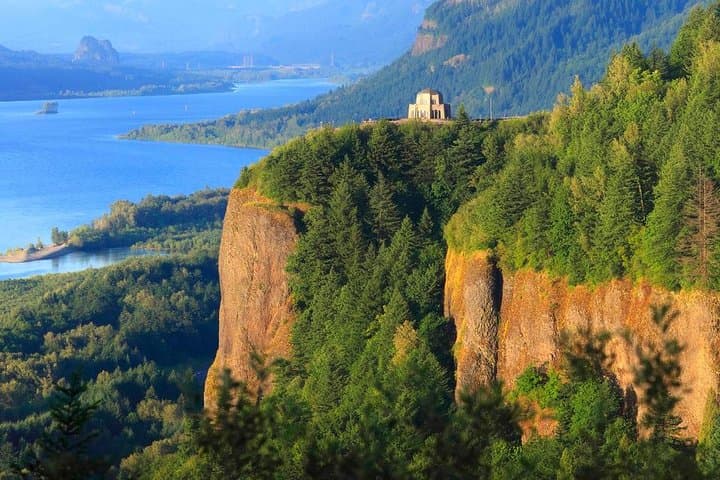
The Gorge reads like geological biography. Repeated Columbia River basalt flows laid down mile‑thick sheets of lava millions of years ago; in the last ice age, the Missoula Floods ripped away soil and carved sheer cliffs that frame the river today. Human stories are here, too—Chinook and other Indigenous peoples fished these waters for millennia, and the Vista House at Crown Point, perched atop an 800‑foot promontory, was built in the early 20th century as a place to pause and look out over the river’s sweep.
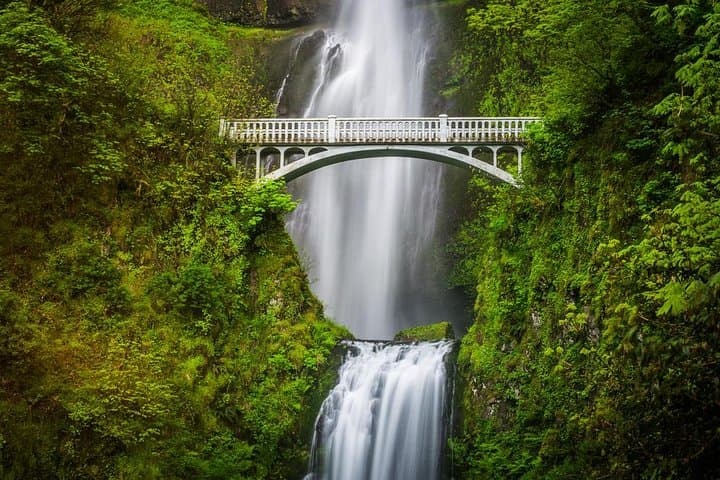
On this small, family‑run tour you’ll hit the highlights with a local driver/guide who knows where the light falls best. Multnomah Falls—about 620 feet total and among the tallest year‑round falls in the U.S.—isn’t just a photo op; the Benson Bridge offers a close, roaring view and short stairs that put you within the plume. Latourell Falls, a plunge fall framed by columnar basalt, illustrates the volcanic bones of the Gorge. Between falls you’ll stop at Vista House for its dizzying overlook and at lesser cascades that tumble beneath old stone bridges.
Practical guidance: the tour is four hours and paced for easy walking—short paved approaches and observation areas rather than long hikes—so it suits most travelers. Expect cool, damp microclimates even in summer; a waterproof shell and sturdy shoes matter as much as sunscreen. The company limits group size to keep traffic through viewpoints manageable and picks up from downtown hotels or a central meeting point if you prefer to drive.
Timing affects the experience: mornings and weekdays reduce crowds and offer cleaner air for photography; autumn brings salmon runs in Multnomah Creek and richer color in riparian trees; winter light and ice can make the falls otherworldly but also slippery.
If you want an efficient, low‑stress way to sample the Gorge’s geology, waterfalls, and viewpoints in a half‑day, this family‑run trip delivers local stories, scenic stops, and enough on‑foot time to let the Gorge do what it does best—pull you toward the edge and make you look downriver.
easy.
4 hours.
Suitable for most fitness levels; includes short paved walks and stairs but no sustained hiking.
The tour runs about 4 hours and most stops are within a 30‑minute drive east of downtown Portland along I‑84.
No—walks are short and mostly on paved or well‑maintained paths; basic mobility to manage stairs is helpful.
Yes—the itinerary includes a stop at Multnomah Falls with time to cross Benson Bridge and view the falls from the main observation area.
The tour covers transportation and guiding; some sites have free access but parking at busy times may be restricted—guided transport avoids parking hassles.
Yes—infants and small children can use a stroller on paved areas, though some viewpoints include stairs where strollers must be carried.
The company cancels in severe weather; expect cool, wet microclimates year‑round and bring layered rain protection.
The Gorge’s cliffs are the product of Columbia River basalt flows and catastrophic Missoula Floods; Vista House, built in 1918, was designed as a rest stop for sightseers on the historic highway.
Stay on designated paths to protect riparian habitat and spawning streams; avoid disturbing salmon redds in autumn and pack out all trash.
Oregon Tour Co., LLC operates guided outdoor trips and adventures with an emphasis on safety, stewardship, and memorable experiences.
You step off the minivan and a misty curtain is already at work: cool river spray, the metallic tang of basalt, and the hush of forest broken only by water on stone. Along I‑84 the road threads the Columbia River Gorge like a seam, and within thirty minutes from downtown Portland you can trade the city grid for skyscraper cliffs and waterfalls that still feel like private discoveries.
You step off the minivan and a misty curtain is already at work: cool river spray, the metallic tang of basalt, and the hush of forest broken only by water on stone. Along I‑84 the road threads the Columbia River Gorge like a seam, and within thirty minutes from downtown Portland you can trade the city grid for skyscraper cliffs and waterfalls that still feel like private discoveries.
The Gorge reads like geological biography. Repeated Columbia River basalt flows laid down mile‑thick sheets of lava millions of years ago; in the last ice age, the Missoula Floods ripped away soil and carved sheer cliffs that frame the river today. Human stories are here, too—Chinook and other Indigenous peoples fished these waters for millennia, and the Vista House at Crown Point, perched atop an 800‑foot promontory, was built in the early 20th century as a place to pause and look out over the river’s sweep.
On this small, family‑run tour you’ll hit the highlights with a local driver/guide who knows where the light falls best. Multnomah Falls—about 620 feet total and among the tallest year‑round falls in the U.S.—isn’t just a photo op; the Benson Bridge offers a close, roaring view and short stairs that put you within the plume. Latourell Falls, a plunge fall framed by columnar basalt, illustrates the volcanic bones of the Gorge. Between falls you’ll stop at Vista House for its dizzying overlook and at lesser cascades that tumble beneath old stone bridges.
Practical guidance: the tour is four hours and paced for easy walking—short paved approaches and observation areas rather than long hikes—so it suits most travelers. Expect cool, damp microclimates even in summer; a waterproof shell and sturdy shoes matter as much as sunscreen. The company limits group size to keep traffic through viewpoints manageable and picks up from downtown hotels or a central meeting point if you prefer to drive.
Timing affects the experience: mornings and weekdays reduce crowds and offer cleaner air for photography; autumn brings salmon runs in Multnomah Creek and richer color in riparian trees; winter light and ice can make the falls otherworldly but also slippery.
If you want an efficient, low‑stress way to sample the Gorge’s geology, waterfalls, and viewpoints in a half‑day, this family‑run trip delivers local stories, scenic stops, and enough on‑foot time to let the Gorge do what it does best—pull you toward the edge and make you look downriver.