THE ADVENTURE COLLECTIVE® · Independent discovery and booking for outdoor travel

Walk beyond the monuments and into the real District: a two-hour guided ramble from Meridian Hill Park through Columbia Heights into Adams Morgan. Discover hidden memorials, diplomatic-era homes, and the social history that shaped Northwest DC.
Walk beyond the monuments and into the real District: a two-hour guided ramble from Meridian Hill Park through Columbia Heights into Adams Morgan. Discover hidden memorials, diplomatic-era homes, and the social history that shaped Northwest DC.
You step out at the corner of 16th Street and W Street NW, the air threaded with coffee steam and a faint echo of distant traffic. Meridian Hill Park rises ahead—stone steps, stately elms, and small memorials that invite a slower pace—while the guide sketches the map of neighborhoods you’re about to cross: a stretch of diplomatic-era mansions, row houses, and storefronts that tell Washington stories beyond the National Mall.
Verified experiences and guided adventures in the surrounding area.
Operated by DC Design Tours · Washington, DC
You step out at the corner of 16th Street and W Street NW, the air threaded with coffee steam and a faint echo of distant traffic. Meridian Hill Park rises ahead—stone steps, stately elms, and small memorials that invite a slower pace—while the guide sketches the map of neighborhoods you’re about to cross: a stretch of diplomatic-era mansions, row houses, and storefronts that tell Washington stories beyond the National Mall.
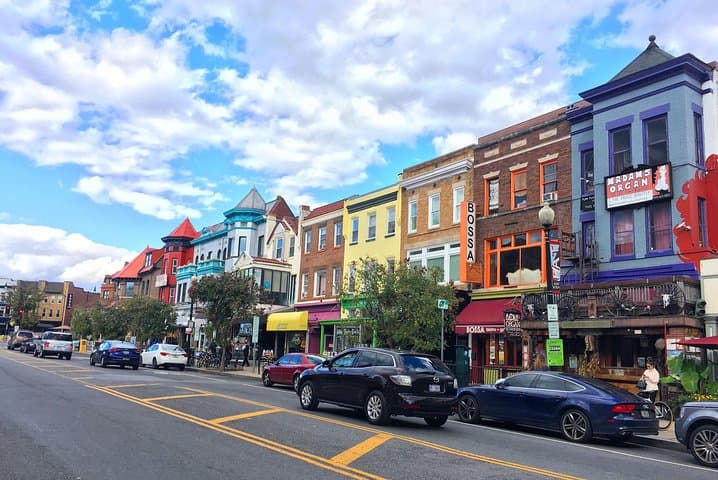
These blocks bear layers: turn-of-the-century developers who imagined elite enclaves, waves of 20th-century migration, and the activism that made these streets stages for civil-rights organizing. Geologically the area sits atop the Piedmont fall line’s gentle rise—nothing dramatic, but enough slope to give brief viewpoints and a change in tree species between blocks. Culturally, Adams Morgan still hums with independent cafes, Latin eateries, and muraled walls that mark community identity.
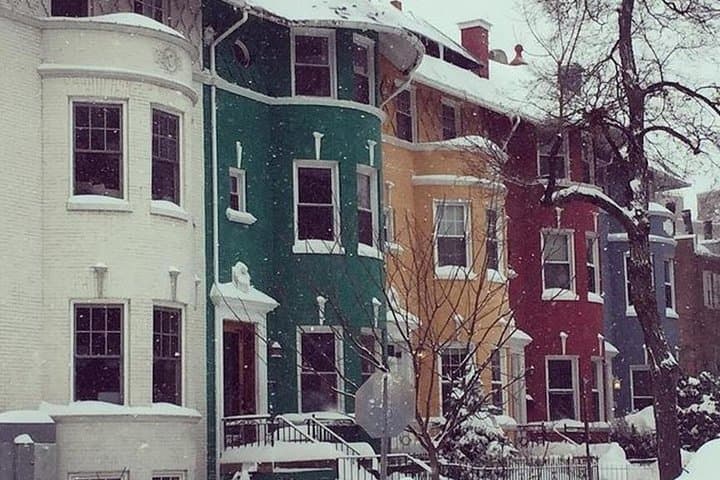
On the walk expect 2 flat miles over mostly paved sidewalks, intermittent hill sections, and narrow residential alleys. The guide highlights architectural details—cast-iron fences, tiled stoops—and points out hidden memorials and pocket gardens. You’ll pass embassy-era structures and community-run cultural centers that illustrate the neighborhood’s layered past.
Practical notes: wear broken-in walking shoes, carry a refillable water bottle, and bring a transit card if you’re looping back to a Metro station. Morning tours dodge late-afternoon crowds and summer heat; fall and spring offer the best light for photos. This is urban exploration with a civic heartbeat—easy on technical demand, rich in local texture.
moderate.
2 hours.
Moderate fitness—able to walk 2 miles with some stairs and short hills at a steady pace.
The tour meets at the corner of 16th Street NW and W Street NW, just outside Meridian Hill Park near the flagstone steps.
Much of the route is on paved sidewalks, but there are steps and short uneven sections; contact the operator ahead to confirm accommodations for specific needs.
The walk covers roughly 2 miles over about two hours at an easy-to-moderate walking pace with stops for history and neighborhood highlights.
Children are welcome if they can keep pace; pets are generally not advised—service animals are allowed, per the tour provider’s policy.
Columbia Heights and Adams Morgan evolved from 19th-century residential development through waves of immigration and mid-20th-century activism, producing a layered urban culture and community institutions.
This tour relies on low-impact, pedestrian travel—use reusable bottles, stay on sidewalks, and respect green spaces to minimize wear on neighborhood ecosystems.
DC Design Tours operates guided outdoor trips and adventures with an emphasis on safety, stewardship, and memorable experiences.

You step out at the corner of 16th Street and W Street NW, the air threaded with coffee steam and a faint echo of distant traffic. Meridian Hill Park rises ahead—stone steps, stately elms, and small memorials that invite a slower pace—while the guide sketches the map of neighborhoods you’re about to cross: a stretch of diplomatic-era mansions, row houses, and storefronts that tell Washington stories beyond the National Mall.
You step out at the corner of 16th Street and W Street NW, the air threaded with coffee steam and a faint echo of distant traffic. Meridian Hill Park rises ahead—stone steps, stately elms, and small memorials that invite a slower pace—while the guide sketches the map of neighborhoods you’re about to cross: a stretch of diplomatic-era mansions, row houses, and storefronts that tell Washington stories beyond the National Mall.
These blocks bear layers: turn-of-the-century developers who imagined elite enclaves, waves of 20th-century migration, and the activism that made these streets stages for civil-rights organizing. Geologically the area sits atop the Piedmont fall line’s gentle rise—nothing dramatic, but enough slope to give brief viewpoints and a change in tree species between blocks. Culturally, Adams Morgan still hums with independent cafes, Latin eateries, and muraled walls that mark community identity.
On the walk expect 2 flat miles over mostly paved sidewalks, intermittent hill sections, and narrow residential alleys. The guide highlights architectural details—cast-iron fences, tiled stoops—and points out hidden memorials and pocket gardens. You’ll pass embassy-era structures and community-run cultural centers that illustrate the neighborhood’s layered past.
Practical notes: wear broken-in walking shoes, carry a refillable water bottle, and bring a transit card if you’re looping back to a Metro station. Morning tours dodge late-afternoon crowds and summer heat; fall and spring offer the best light for photos. This is urban exploration with a civic heartbeat—easy on technical demand, rich in local texture.