THE ADVENTURE COLLECTIVE® · Independent discovery and booking for outdoor travel

Soar above Alaska’s Columbia Glacier on a 90-minute helicopter tour that includes a 30-minute landing on the ice. Expect dramatic calving, vivid blue melt pools in summer, and a rare chance to walk on a tidewater glacier under expert guidance.
Soar above Alaska’s Columbia Glacier on a 90-minute helicopter tour that includes a 30-minute landing on the ice. Expect dramatic calving, vivid blue melt pools in summer, and a rare chance to walk on a tidewater glacier under expert guidance.
The rotor wash settles and the world opens: a mosaic of blue crevasses, tabular bergs, and a coastline cut by fjords. From the Valdez runway the helicopter climbs, and the Columbia Glacier unfurls below like a moving, creaking river of ice—alive, raw, and unpredictable.
Verified experiences and guided adventures in the surrounding area.
Operated by Alpine Air Alaska · Valdez, Alaska
The rotor wash settles and the world opens: a mosaic of blue crevasses, tabular bergs, and a coastline cut by fjords. From the Valdez runway the helicopter climbs, and the Columbia Glacier unfurls below like a moving, creaking river of ice—alive, raw, and unpredictable.
This is Alaska’s tidewater drama. Columbia Glacier is one of Prince William Sound’s largest tidewater glaciers and has been actively calving and retreating for decades, reshaping the shorelines and creating the deep blue melt pools visible from the air. The surrounding peaks are steep, glaciated, and often dusted with snow year-round; wildlife—seals hauled out on ice floes, mountain goats perched on sheer cliffs—threads the narrative between ice and sea.
Culturally, Valdez is a maritime gateway with a long history of fishing, oil logistics, and search-and-rescue culture; pilots and guides here are steeped in local weather lore and safety practice.
Practical guidance: flights run about 90 minutes with a 30-minute landing for on-glacier exploration—expect brief, uneven walking on hard ice and intense wind during takeoff and landing. Dress in insulated layers and windproof outerwear; footwear should be sturdy and closed-toe. Cameras with wide-angle lenses and extra batteries are essential—cold drains power fast.
Timing matters: summer brings open melt pools and larger calving displays; shoulder seasons offer quieter skies and stronger light contrasts. Operators monitor weather closely and cancel in poor conditions; allow flexibility in your schedule. Follow pilot instructions on landing and wildlife approach, carry nothing that could blow away, and leave the glacier as you found it—no ice sampling or disturbance.
easy.
2 hours.
No advanced fitness required; able to stand and step on uneven ice for short periods.
The total experience is about 90 minutes in the air with an approximately 30-minute landing and supervised on-glacier exploration.
Yes—operators monitor conditions closely; flights may be delayed or canceled for safety due to low visibility, high winds, or active precipitation.
Infants are allowed but must sit on an adult’s lap; the operator lists the activity as suitable for all physical fitness levels but follow weight and age guidance when booking.
You may spot seals and mountain goats and could observe calving, but wildlife sightings and calving are not guaranteed and depend on season and conditions.
Columbia Glacier has been an active tidewater glacier for centuries but experienced rapid retreat and increased calving from the late 20th century onward, reshaping local shorelines and ecosystems.
Helicopter operators follow strict protocols to minimize disturbance; visitors should pack out waste, avoid disturbing wildlife, and follow guide instructions to protect fragile ice and marine habitats.
Alpine Air Alaska operates guided outdoor trips and adventures with an emphasis on safety, stewardship, and memorable experiences.
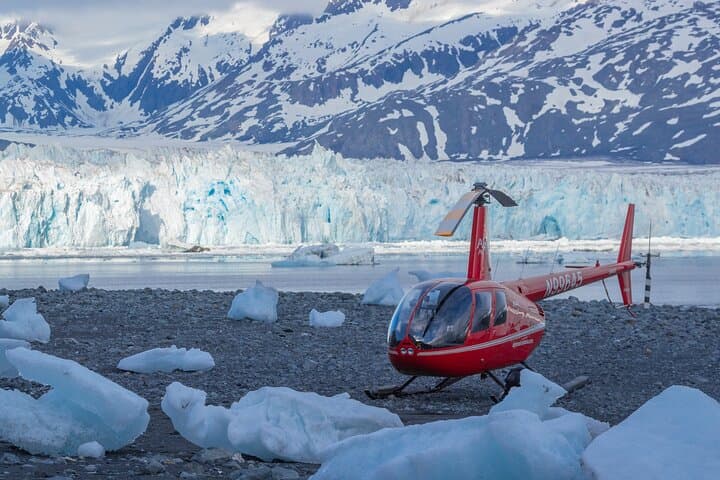


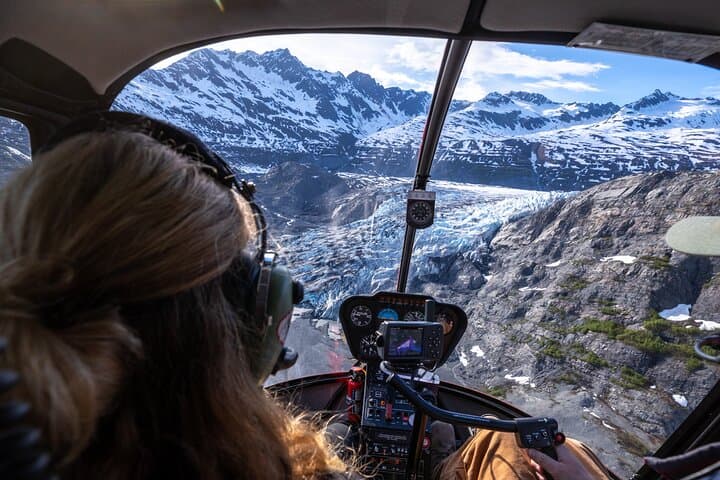
The rotor wash settles and the world opens: a mosaic of blue crevasses, tabular bergs, and a coastline cut by fjords. From the Valdez runway the helicopter climbs, and the Columbia Glacier unfurls below like a moving, creaking river of ice—alive, raw, and unpredictable.
The rotor wash settles and the world opens: a mosaic of blue crevasses, tabular bergs, and a coastline cut by fjords. From the Valdez runway the helicopter climbs, and the Columbia Glacier unfurls below like a moving, creaking river of ice—alive, raw, and unpredictable.
This is Alaska’s tidewater drama. Columbia Glacier is one of Prince William Sound’s largest tidewater glaciers and has been actively calving and retreating for decades, reshaping the shorelines and creating the deep blue melt pools visible from the air. The surrounding peaks are steep, glaciated, and often dusted with snow year-round; wildlife—seals hauled out on ice floes, mountain goats perched on sheer cliffs—threads the narrative between ice and sea.
Culturally, Valdez is a maritime gateway with a long history of fishing, oil logistics, and search-and-rescue culture; pilots and guides here are steeped in local weather lore and safety practice.
Practical guidance: flights run about 90 minutes with a 30-minute landing for on-glacier exploration—expect brief, uneven walking on hard ice and intense wind during takeoff and landing. Dress in insulated layers and windproof outerwear; footwear should be sturdy and closed-toe. Cameras with wide-angle lenses and extra batteries are essential—cold drains power fast.
Timing matters: summer brings open melt pools and larger calving displays; shoulder seasons offer quieter skies and stronger light contrasts. Operators monitor weather closely and cancel in poor conditions; allow flexibility in your schedule. Follow pilot instructions on landing and wildlife approach, carry nothing that could blow away, and leave the glacier as you found it—no ice sampling or disturbance.