THE ADVENTURE COLLECTIVE® · Independent discovery and booking for outdoor travel

Step onto the Colosseum’s Arena Floor and explore the Roman Forum and Palatine Hill with a 48-hour AI video guide and 3D reconstructions. This VIP access gives a unique vantage of ancient Rome along with practical tools to unpack the city’s layered past.
Step onto the Colosseum’s Arena Floor and explore the Roman Forum and Palatine Hill with a 48-hour AI video guide and 3D reconstructions. This VIP access gives a unique vantage of ancient Rome along with practical tools to unpack the city’s layered past.
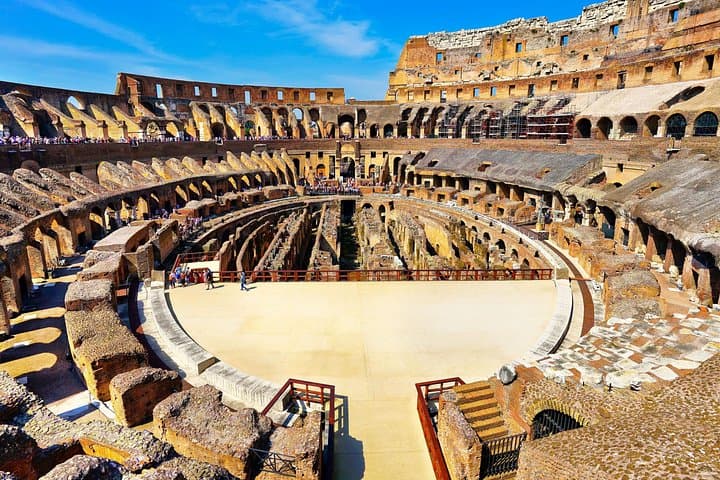
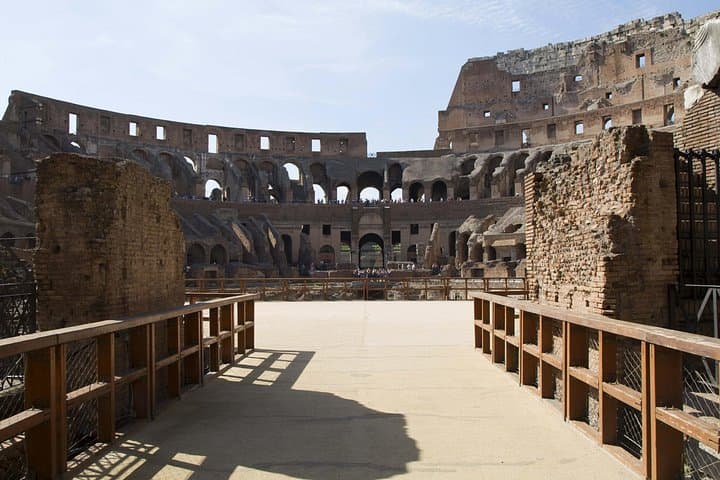
You step through Rome’s morning haze at Via Marco Aurelio 19 and the stone exhales history—dry, textured, and patient. Inside the Colosseum the crowd’s roar is absent but imagined; from the arena floor you stand where gladiators once faced 50,000 eyes, a wooden platform giving you a vantage that makes the tiers feel like a living ring around you.
Verified experiences and guided adventures in the surrounding area.
Operated by ANCIENT AND RECENT · Rome, Lazio
You step through Rome’s morning haze at Via Marco Aurelio 19 and the stone exhales history—dry, textured, and patient. Inside the Colosseum the crowd’s roar is absent but imagined; from the arena floor you stand where gladiators once faced 50,000 eyes, a wooden platform giving you a vantage that makes the tiers feel like a living ring around you.
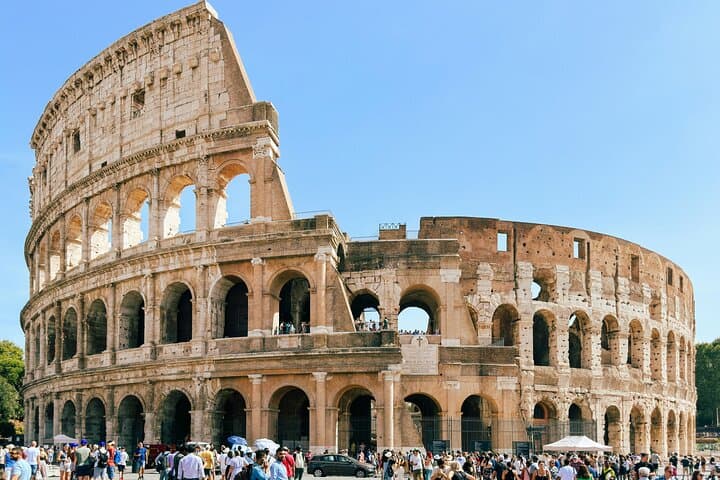
The site folds together layers of history: the Colosseum’s concrete and travertine vaults built in AD 70–80, the Roman Forum’s plaza of temples and courts where magistrates marched, and Palatine Hill’s terraces where emperors turned landscape into palace. Geology matters here—local tufa and travertine shaped the city’s bones—and the Imperial Fora are architectural arguments in marble about power and public life.
Culturally, this is a place of ritual and reinvention; the AI Video Guide restores vanished monuments with 3D reconstructions so a single column can tell the story of an entire temple. You’ll also get a paper 3D map and 48-hour access to the app that includes Circus Maximus views from outside.
Practically: arrive early to avoid peak crowds and heat, bring charged phone and earphones for the AI audio in multiple languages, and wear comfortable shoes—surfaces are uneven. Note the ticket includes Arena, Forum, Palatine, and Imperial Fora access; the Hypogeum remains off-limits. The experience is largely accessible but expect stairs on certain routes. With a little planning—hydration, secure belongings, and a reasonable pace—you can move from gladiatorial spectacle to imperial repose in under three hours and leave with a clearer picture of how Rome built power into stone.
easy.
1–3 hours.
Suitable for most fitness levels; involves walking and standing on uneven surfaces for up to a few hours
No—this VIP experience includes Arena Floor access and views into the exposed Hypogeum, but—you do not descend into the underground tunnels.
The AI Video Guide app is available for 48 hours from download so you can replay content and explore sites at your own pace.
The meeting point and some routes are wheelchair accessible, but certain archaeological areas contain steps or uneven terrain—contact the operator with specific mobility needs before booking.
Audio is offered in English, Spanish, French, German, Italian, Hindi, Russian and Portuguese via the AI Video Guide.
The Colosseum was completed under Titus in AD 80; the adjacent Forum and Palatine Hill concentrated Rome’s civic, religious and imperial life for centuries.
Heavy foot traffic accelerates wear on ancient stone—stick to marked paths, don’t climb ruins, and support conservation by following site rules and purchasing legitimate tickets.
ANCIENT AND RECENT operates guided outdoor trips and adventures with an emphasis on safety, stewardship, and memorable experiences.
You step through Rome’s morning haze at Via Marco Aurelio 19 and the stone exhales history—dry, textured, and patient. Inside the Colosseum the crowd’s roar is absent but imagined; from the arena floor you stand where gladiators once faced 50,000 eyes, a wooden platform giving you a vantage that makes the tiers feel like a living ring around you.
You step through Rome’s morning haze at Via Marco Aurelio 19 and the stone exhales history—dry, textured, and patient. Inside the Colosseum the crowd’s roar is absent but imagined; from the arena floor you stand where gladiators once faced 50,000 eyes, a wooden platform giving you a vantage that makes the tiers feel like a living ring around you.
The site folds together layers of history: the Colosseum’s concrete and travertine vaults built in AD 70–80, the Roman Forum’s plaza of temples and courts where magistrates marched, and Palatine Hill’s terraces where emperors turned landscape into palace. Geology matters here—local tufa and travertine shaped the city’s bones—and the Imperial Fora are architectural arguments in marble about power and public life.
Culturally, this is a place of ritual and reinvention; the AI Video Guide restores vanished monuments with 3D reconstructions so a single column can tell the story of an entire temple. You’ll also get a paper 3D map and 48-hour access to the app that includes Circus Maximus views from outside.
Practically: arrive early to avoid peak crowds and heat, bring charged phone and earphones for the AI audio in multiple languages, and wear comfortable shoes—surfaces are uneven. Note the ticket includes Arena, Forum, Palatine, and Imperial Fora access; the Hypogeum remains off-limits. The experience is largely accessible but expect stairs on certain routes. With a little planning—hydration, secure belongings, and a reasonable pace—you can move from gladiatorial spectacle to imperial repose in under three hours and leave with a clearer picture of how Rome built power into stone.