THE ADVENTURE COLLECTIVE® · Independent discovery and booking for outdoor travel

Explore the Colosseum after hours on a small-group night tour that includes restricted underground chambers and arena-floor access. This guided experience pairs quieter evenings with detailed context about Roman engineering and spectacle.
Explore the Colosseum after hours on a small-group night tour that includes restricted underground chambers and arena-floor access. This guided experience pairs quieter evenings with detailed context about Roman engineering and spectacle.
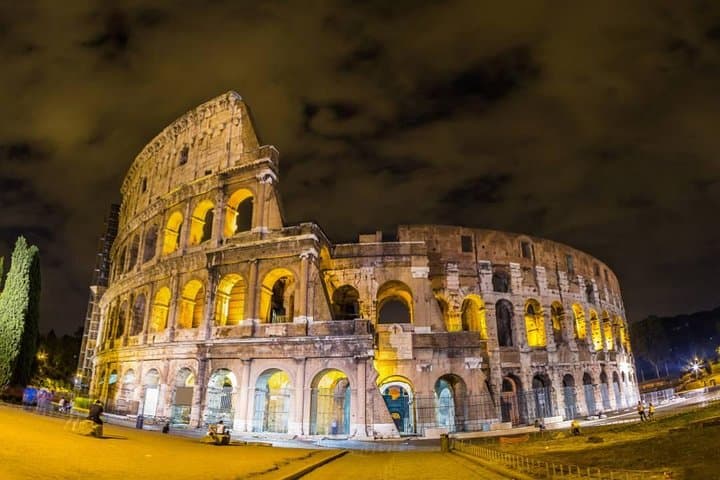
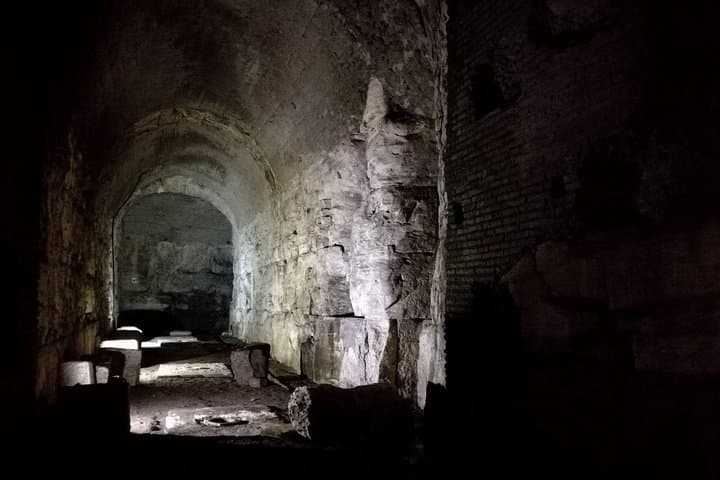
The moon slides over broken travertine and shadowed arches as a small group threads through a gated entrance — the Colosseum at night feels less like a landmark and more like a place with a pulse. Lantern light picks out the damp stone of the underground corridors while the city hums beyond the elliptical walls.
Verified experiences and guided adventures in the surrounding area.
Operated by Find Rome Tours · Rome, Lazio
The moon slides over broken travertine and shadowed arches as a small group threads through a gated entrance — the Colosseum at night feels less like a landmark and more like a place with a pulse. Lantern light picks out the damp stone of the underground corridors while the city hums beyond the elliptical walls.
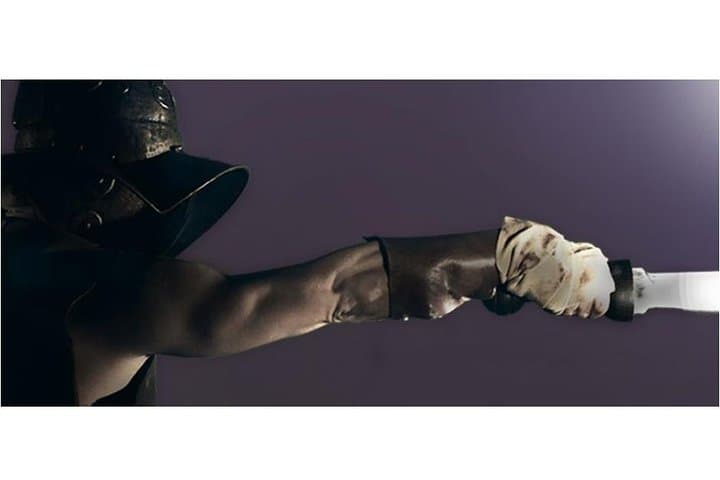
Built between AD 70–80 under the Flavian emperors, the Colosseum’s concrete core and layered vaults reveal Roman engineering that turned quarried stone into a social machine for gladiatorial games and public spectacle. Geology shows in the banded travertine, tufa, and pozzolana concrete that give the amphitheater its mass and resilience. Culturally, the arena echoes Rome’s appetite for public ritual — the tunnels once staged combat, animals, and abrupt scene changes behind the screams of 50,000 spectators.
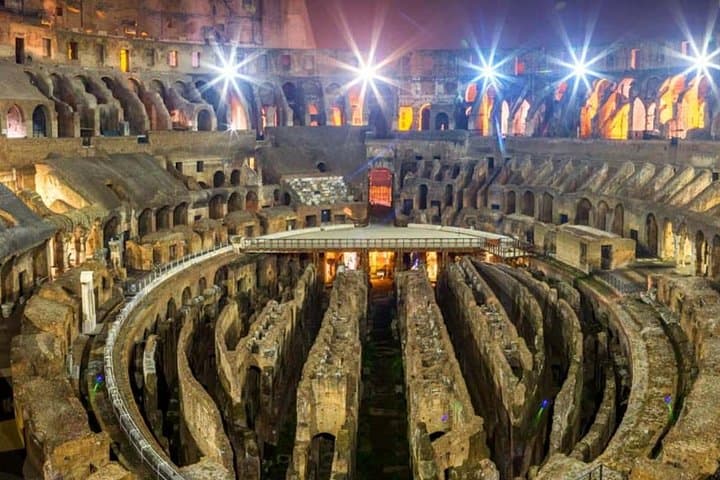
This night tour begins below ground where elevators and pulleys once hoisted cages into the arena, then crosses the sand where combatants stood. Guides paint practical context — how elevators worked, why the arena was oriented as it was, and how later centuries repurposed the stone.
Practical details are direct: meet the coordinator at the stated point, bring photo ID that matches your booking, and expect stairs and narrow passageways. Wear comfortable shoes and a light jacket; Rome’s night breeze can make stone feel chilly. Photography is allowed but respectful use of flash preserves the site. Small-group night access reduces crowds and lets the visitor feel the scale of an ancient spectacle — and leaves time afterward to step outside and let the moon lead the way through Rome’s quiet streets.
easy.
1–1.5 hours.
Suitable for most visitors who can stand and climb stairs; not strenuous but requires mobility for steps and uneven surfaces.
Yes — this option is included on select tours; when allowed, guests enter the sanded arena floor under guide supervision.
Children under 6 are not permitted; the tour includes stairs and confined underground spaces that may not be suitable for very young visitors.
The underground and arena-floor areas include stairs and uneven surfaces; those with serious mobility or cardiovascular concerns should check accessibility options or consult the operator in advance.
Public transit serves the Colosseum area; the operator provides a specific meeting location and recommends arriving 10–15 minutes early to complete check-in with ID.
Commissioned by Emperors Vespasian and Titus in the 1st century AD, the Colosseum hosted public spectacles that shaped Roman civic life and engineering practice.
Night tours and restricted underground access limit visitor impact and help preserve fragile substructures; follow guide instructions and avoid touching ancient stone to support conservation.
Find Rome Tours operates guided outdoor trips and adventures with an emphasis on safety, stewardship, and memorable experiences.
The moon slides over broken travertine and shadowed arches as a small group threads through a gated entrance — the Colosseum at night feels less like a landmark and more like a place with a pulse. Lantern light picks out the damp stone of the underground corridors while the city hums beyond the elliptical walls.
The moon slides over broken travertine and shadowed arches as a small group threads through a gated entrance — the Colosseum at night feels less like a landmark and more like a place with a pulse. Lantern light picks out the damp stone of the underground corridors while the city hums beyond the elliptical walls.
Built between AD 70–80 under the Flavian emperors, the Colosseum’s concrete core and layered vaults reveal Roman engineering that turned quarried stone into a social machine for gladiatorial games and public spectacle. Geology shows in the banded travertine, tufa, and pozzolana concrete that give the amphitheater its mass and resilience. Culturally, the arena echoes Rome’s appetite for public ritual — the tunnels once staged combat, animals, and abrupt scene changes behind the screams of 50,000 spectators.
This night tour begins below ground where elevators and pulleys once hoisted cages into the arena, then crosses the sand where combatants stood. Guides paint practical context — how elevators worked, why the arena was oriented as it was, and how later centuries repurposed the stone.
Practical details are direct: meet the coordinator at the stated point, bring photo ID that matches your booking, and expect stairs and narrow passageways. Wear comfortable shoes and a light jacket; Rome’s night breeze can make stone feel chilly. Photography is allowed but respectful use of flash preserves the site. Small-group night access reduces crowds and lets the visitor feel the scale of an ancient spectacle — and leaves time afterward to step outside and let the moon lead the way through Rome’s quiet streets.