THE ADVENTURE COLLECTIVE® · Independent discovery and booking for outdoor travel

Skip the daytime crush and experience the Colosseum after hours: explore the restricted underground hypogeum, step onto the arena floor, and learn the engineering behind Roman spectacle. This guided 80-minute night tour offers rare access and a quieter, more tactile visit.
Skip the daytime crush and experience the Colosseum after hours: explore the restricted underground hypogeum, step onto the arena floor, and learn the engineering behind Roman spectacle. This guided 80-minute night tour offers rare access and a quieter, more tactile visit.
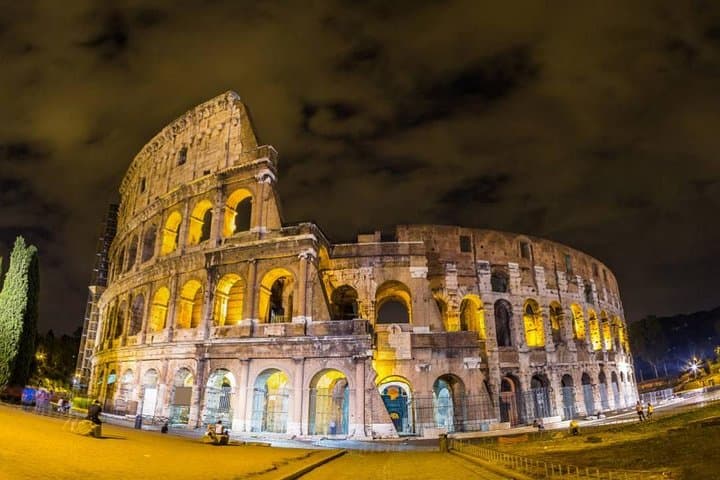
The light from Rome's streetlamps thins as you approach the Colosseum; stone faces that saw millennia feel colder at night and the crowds have receded. Your group meets a coordinator near the entrance, then slips past the daytime lines for an hour inside the Flavian amphitheatre — below the arena, through the hypogeum, and out onto the packed-earth floor where gladiators once stood.
Verified experiences and guided adventures in the surrounding area.
Operated by Find Rome Tours · Rome, Lazio
The light from Rome's streetlamps thins as you approach the Colosseum; stone faces that saw millennia feel colder at night and the crowds have receded. Your group meets a coordinator near the entrance, then slips past the daytime lines for an hour inside the Flavian amphitheatre — below the arena, through the hypogeum, and out onto the packed-earth floor where gladiators once stood.
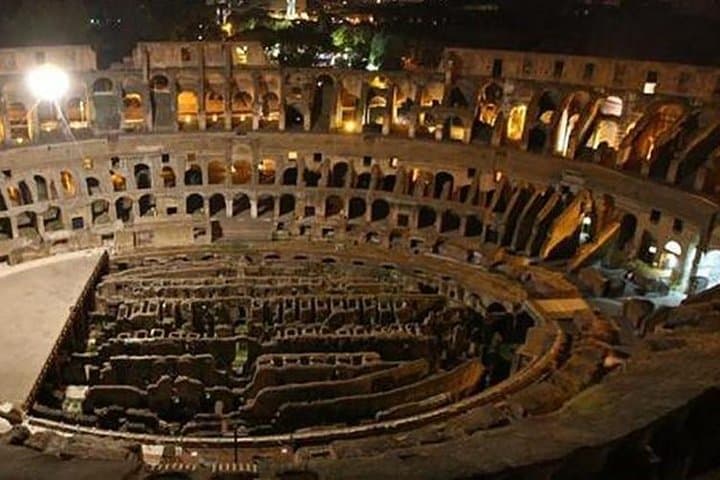
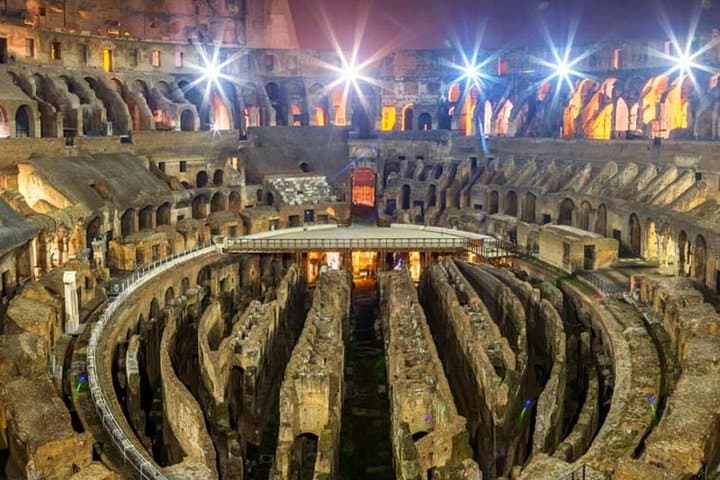
Built between AD 70–80, the Colosseum is a lesson in Roman engineering: concrete vaults, radial corridors, and the complex system of lifts and pulleys that moved scenery and animals into view. The underground chambers you’ll enter reveal the mechanized side of spectacle — cages, ramps and service tunnels that expose how performances were staged.
Culturally, the monument remains a civic stage: conservation projects rotate through its levels, and guide-led visits help protect fragile areas by limiting access. Nearby, the Tiber’s slow pull and the layered streets of the Roman Forum give context to what you’ll see inside.
Practically, the night format reduces heat and daytime noise but increases the need for attention — steps are uneven, lighting is low, and groups are intentionally small. Bring a valid photo ID that matches your booking; entry is controlled and names are checked. The tour lasts roughly 80 minutes, includes underground and arena-floor access, and is not suitable for children under six. Wear sturdy shoes, keep a small light handy, and allow time for security screening. The result is an intimate, surprisingly tactile encounter with a structure that still holds the city’s past within its walls.
easy.
1–1.5 hours.
Suitable for people in basic mobility — expect standing, short stair climbs, and uneven surfaces; not recommended for those with serious mobility issues.
Yes — this tour includes restricted access to the Colosseum’s underground hypogeum and the arena floor as stated; these areas are limited to guided groups only.
Children under 6 years are not permitted on this tour; older children must have valid ID and be capable of walking stairs safely.
Accessibility is limited: the underground and arena require stairs and uneven surfaces; contact the operator in advance for alternatives or assistance options.
Bring comfortable shoes, a small flashlight (or use your phone), a light layer for the evening, and any necessary medical supplies — backpacks are allowed but may be screened.
The Colosseum was completed in AD 80 under Emperor Titus as the Flavian Amphitheatre; its design included elevators, trapdoors and service tunnels that supported complex shows.
Access restrictions and guided tours help limit wear on fragile structures; visitors should follow pathing and avoid touching ancient stone to support preservation.
Find Rome Tours operates guided outdoor trips and adventures with an emphasis on safety, stewardship, and memorable experiences.
The light from Rome's streetlamps thins as you approach the Colosseum; stone faces that saw millennia feel colder at night and the crowds have receded. Your group meets a coordinator near the entrance, then slips past the daytime lines for an hour inside the Flavian amphitheatre — below the arena, through the hypogeum, and out onto the packed-earth floor where gladiators once stood.
The light from Rome's streetlamps thins as you approach the Colosseum; stone faces that saw millennia feel colder at night and the crowds have receded. Your group meets a coordinator near the entrance, then slips past the daytime lines for an hour inside the Flavian amphitheatre — below the arena, through the hypogeum, and out onto the packed-earth floor where gladiators once stood.
Built between AD 70–80, the Colosseum is a lesson in Roman engineering: concrete vaults, radial corridors, and the complex system of lifts and pulleys that moved scenery and animals into view. The underground chambers you’ll enter reveal the mechanized side of spectacle — cages, ramps and service tunnels that expose how performances were staged.
Culturally, the monument remains a civic stage: conservation projects rotate through its levels, and guide-led visits help protect fragile areas by limiting access. Nearby, the Tiber’s slow pull and the layered streets of the Roman Forum give context to what you’ll see inside.
Practically, the night format reduces heat and daytime noise but increases the need for attention — steps are uneven, lighting is low, and groups are intentionally small. Bring a valid photo ID that matches your booking; entry is controlled and names are checked. The tour lasts roughly 80 minutes, includes underground and arena-floor access, and is not suitable for children under six. Wear sturdy shoes, keep a small light handy, and allow time for security screening. The result is an intimate, surprisingly tactile encounter with a structure that still holds the city’s past within its walls.