THE ADVENTURE COLLECTIVE® · Independent discovery and booking for outdoor travel

Explore Rome’s defining ruins efficiently: a guided 90-minute entry to the Colosseum, Palatine Hill and Roman Forum. Expect vaulted corridors, layered ruins and practical tips to beat the crowds.
Explore Rome’s defining ruins efficiently: a guided 90-minute entry to the Colosseum, Palatine Hill and Roman Forum. Expect vaulted corridors, layered ruins and practical tips to beat the crowds.
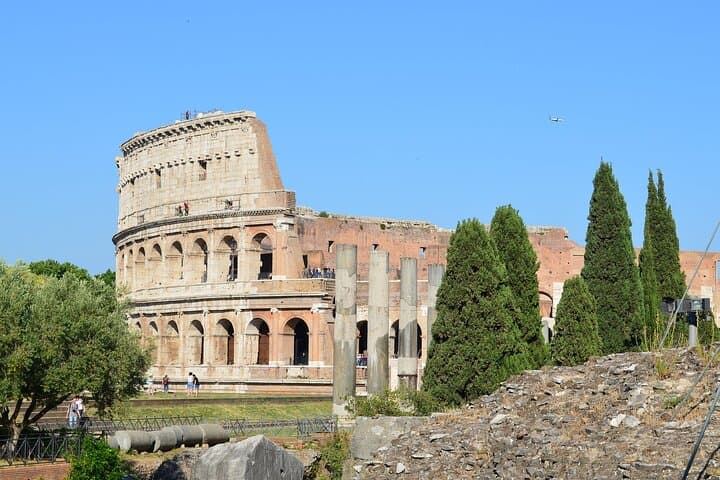
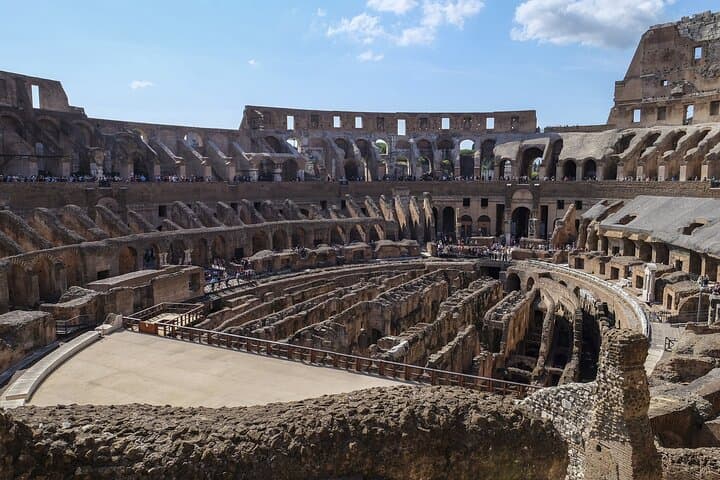
Stepping through the Colosseum’s arched entrance, the city’s noise fades and the stones begin to speak. The guide leads the group across the arena’s edge where vaulted corridors cradle echoes of gladiators and crowds; outside, the Palatine slopes green against the sky and the Roman Forum opens like an archaeological atlas.
Verified experiences and guided adventures in the surrounding area.
Operated by Discover Rome with Us · Rome, Lazio
Stepping through the Colosseum’s arched entrance, the city’s noise fades and the stones begin to speak. The guide leads the group across the arena’s edge where vaulted corridors cradle echoes of gladiators and crowds; outside, the Palatine slopes green against the sky and the Roman Forum opens like an archaeological atlas.
This compact 90-minute tour threads three of Rome’s foundational sites. The Colosseum, completed in 80 AD, reveals Roman engineering—travertine facades, tuff foundations and concrete vaulting—that allowed mass spectacles. Palatine Hill, one of Rome’s oldest residential quarters, shows Republic- and Imperial-era ruins layered over centuries of occupation. The Forum’s forumla of temples, basilicas and triumphal arches maps civic and commercial life in stone.
Culturally, the route traces power: from sacrificial rites to senate debates and public entertainments that shaped Western urban ritual. Geologically, local travertine and volcanic tuff give the ruins their pale, weathered character and the terraces their natural drainage.
Practically, expect a brisk, interpretive walk with multiple stair sections and uneven Roman paving; the tour includes entry tickets and a maximum of about two dozen people. Security screening is standard—travel light and carry ID. Morning slots avoid crowds and midday heat; winter visits are quieter but wind-exposed on the Palatine. Photography is allowed but brief stops keep the group moving. The experience is ideal for travelers who want authoritative context plus direct access to the Colosseum’s interior without long standalone lines.
easy.
1.5 hours.
Suitable for most travelers who can stand and walk for 60–90 minutes and manage a few staircases and uneven surfaces.
Yes — the tour includes entrance to the Colosseum, Palatine Hill and the Roman Forum as part of the 90-minute itinerary.
The route includes stairs and uneven paving; it's not fully wheelchair accessible and is not recommended for people with serious spinal issues.
Arrive 15–20 minutes before the scheduled start to clear security and meet the guide; earlier in summer to avoid the heat.
Tours are shared with a limited group—typically up to about 24 participants—so you still get focused commentary but should keep pace with the guide.
The Colosseum opened in 80 AD under Emperor Titus and became Rome’s largest amphitheatre, while the Palatine served as the elite residential and political heart of early Rome.
Ongoing restoration projects and controlled visitor access aim to protect fragile masonry; stay on designated paths and avoid touching exposed frescoes and carved stone.
Discover Rome with Us operates guided outdoor trips and adventures with an emphasis on safety, stewardship, and memorable experiences.


Stepping through the Colosseum’s arched entrance, the city’s noise fades and the stones begin to speak. The guide leads the group across the arena’s edge where vaulted corridors cradle echoes of gladiators and crowds; outside, the Palatine slopes green against the sky and the Roman Forum opens like an archaeological atlas.
Stepping through the Colosseum’s arched entrance, the city’s noise fades and the stones begin to speak. The guide leads the group across the arena’s edge where vaulted corridors cradle echoes of gladiators and crowds; outside, the Palatine slopes green against the sky and the Roman Forum opens like an archaeological atlas.
This compact 90-minute tour threads three of Rome’s foundational sites. The Colosseum, completed in 80 AD, reveals Roman engineering—travertine facades, tuff foundations and concrete vaulting—that allowed mass spectacles. Palatine Hill, one of Rome’s oldest residential quarters, shows Republic- and Imperial-era ruins layered over centuries of occupation. The Forum’s forumla of temples, basilicas and triumphal arches maps civic and commercial life in stone.
Culturally, the route traces power: from sacrificial rites to senate debates and public entertainments that shaped Western urban ritual. Geologically, local travertine and volcanic tuff give the ruins their pale, weathered character and the terraces their natural drainage.
Practically, expect a brisk, interpretive walk with multiple stair sections and uneven Roman paving; the tour includes entry tickets and a maximum of about two dozen people. Security screening is standard—travel light and carry ID. Morning slots avoid crowds and midday heat; winter visits are quieter but wind-exposed on the Palatine. Photography is allowed but brief stops keep the group moving. The experience is ideal for travelers who want authoritative context plus direct access to the Colosseum’s interior without long standalone lines.