THE ADVENTURE COLLECTIVE® · Independent discovery and booking for outdoor travel

Stand on the Colosseum’s arena floor and walk through imperial Rome: a guided Arena visit followed by self-guided access to Palatine Hill and the Roman Forum. Essential for first-time visitors wanting context and close-up views.
Stand on the Colosseum’s arena floor and walk through imperial Rome: a guided Arena visit followed by self-guided access to Palatine Hill and the Roman Forum. Essential for first-time visitors wanting context and close-up views.
Sunlight cuts across the arena floor and the roar you imagine hangs in the dust. Standing where gladiators once paced, you get an immediate sense of scale: the stone bowl, the carved archways, the layered seating that held tens of thousands.
Verified experiences and guided adventures in the surrounding area.
Operated by Taj Colosseum Tours · Rome, Lazio
Sunlight cuts across the arena floor and the roar you imagine hangs in the dust. Standing where gladiators once paced, you get an immediate sense of scale: the stone bowl, the carved archways, the layered seating that held tens of thousands.
The Colosseum rose between AD 72 and 80 under the Flavian emperors, built of travertine, tuff and concrete to host games, executions and public spectacles. Palatine Hill and the Roman Forum nearby trace older layers of Rome — imperial palaces, temples and market streets that tell the city’s political and social story. The geology is plain in the walls: local limestone and Roman concrete repaired in later centuries, a visible palimpsest of material and technique.
A guided Arena visit puts you at the same sightlines as combatants; the guide's voice fills the gaps between the stones with names, dates and procedures, while radios keep groups small and focused. After the briefing you'll have self-guided time on Palatine Hill and through the Forum’s cobbled arteries — bring a map or offline app to orient column fragments and basilicas.
Practical edge: arrive early to clear security lines, bring water and sun protection in summer, and wear comfortable shoes for uneven surfaces. Tickets require ID and are timed — cancellations are strict within a week. The site is largely accessible but ancient thresholds and uneven paving mean mobility aides should plan ahead. Respect ropes and signage: conservation is active here. For a compact, high-impact slice of Ancient Rome, the Arena access is unmatched — visceral, factual and transportive in equal measure.
easy.
1–1.5 hours.
Suitable for most fitness levels; expect walking on uneven surfaces and short stair sections.
The guided Arena portion runs about 75 minutes, with additional self-guided time for Palatine Hill and the Roman Forum afterward.
The operator lists wheelchair accessibility for many areas, but some ancient thresholds and uneven paths may limit access—contact the provider for specific arrangements.
Yes: bookings require passport details and you should carry ID for ticket verification at check-in.
Photography is generally permitted for personal use; respect barriers and follow guide instructions during the guided portion.
Constructed under emperors Vespasian and Titus in the first century AD, the Colosseum was Rome’s principal amphitheater for public spectacles and gladiatorial combat.
Heavy visitor numbers require active conservation; follow ropes and signage, avoid touching ancient masonry, and use marked paths to limit wear.
Taj Colosseum Tours operates guided outdoor trips and adventures with an emphasis on safety, stewardship, and memorable experiences.
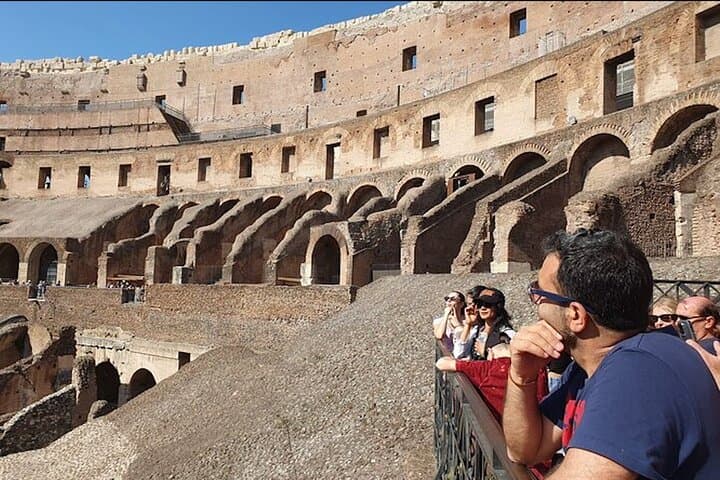


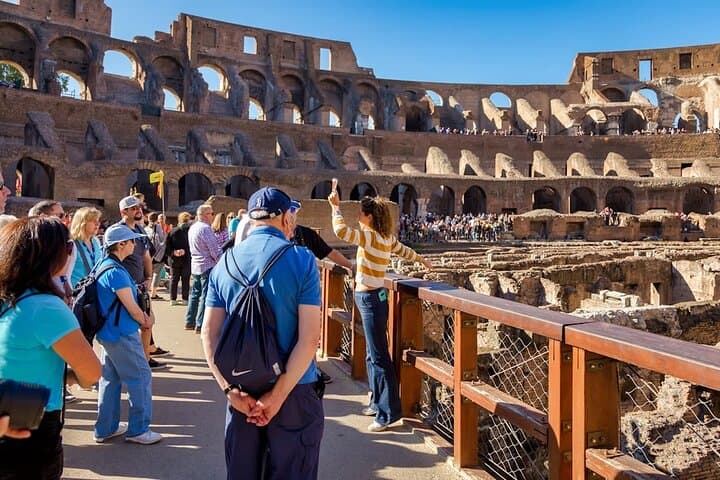
Sunlight cuts across the arena floor and the roar you imagine hangs in the dust. Standing where gladiators once paced, you get an immediate sense of scale: the stone bowl, the carved archways, the layered seating that held tens of thousands.
Sunlight cuts across the arena floor and the roar you imagine hangs in the dust. Standing where gladiators once paced, you get an immediate sense of scale: the stone bowl, the carved archways, the layered seating that held tens of thousands.
The Colosseum rose between AD 72 and 80 under the Flavian emperors, built of travertine, tuff and concrete to host games, executions and public spectacles. Palatine Hill and the Roman Forum nearby trace older layers of Rome — imperial palaces, temples and market streets that tell the city’s political and social story. The geology is plain in the walls: local limestone and Roman concrete repaired in later centuries, a visible palimpsest of material and technique.
A guided Arena visit puts you at the same sightlines as combatants; the guide's voice fills the gaps between the stones with names, dates and procedures, while radios keep groups small and focused. After the briefing you'll have self-guided time on Palatine Hill and through the Forum’s cobbled arteries — bring a map or offline app to orient column fragments and basilicas.
Practical edge: arrive early to clear security lines, bring water and sun protection in summer, and wear comfortable shoes for uneven surfaces. Tickets require ID and are timed — cancellations are strict within a week. The site is largely accessible but ancient thresholds and uneven paving mean mobility aides should plan ahead. Respect ropes and signage: conservation is active here. For a compact, high-impact slice of Ancient Rome, the Arena access is unmatched — visceral, factual and transportive in equal measure.