THE ADVENTURE COLLECTIVE® · Independent discovery and booking for outdoor travel

Combine a twilight walk through Munich’s Old Town with a hands‑on spray‑paint postcard workshop at Bahnwärter Thiel. This bilingual, small‑group experience blends historic sights with street‑art technique — perfect for an inspired after‑work outing.
Combine a twilight walk through Munich’s Old Town with a hands‑on spray‑paint postcard workshop at Bahnwärter Thiel. This bilingual, small‑group experience blends historic sights with street‑art technique — perfect for an inspired after‑work outing.
Evening light slides across Marienplatz as the tour assembles — cobbles cool underfoot and the Frauenkirche’s twin towers shoulder the sky. Guides punctuate the route with short stories; the group moves like a brushstroke through the Old Town, pausing where lamplight frames gothic and baroque façades.
Verified experiences and guided adventures in the surrounding area.
Operated by Philipp's Munich Tours · Munich, Bavaria
Evening light slides across Marienplatz as the tour assembles — cobbles cool underfoot and the Frauenkirche’s twin towers shoulder the sky. Guides punctuate the route with short stories; the group moves like a brushstroke through the Old Town, pausing where lamplight frames gothic and baroque façades.
The route threads key Munich sites: Marienplatz’s market square, the carved detail of the Residenz, the theatrical curve of the National Theatre and the intimate narrowness of Viscardigasse. Geologically the city sits on the North Alpine Foreland, a plain of glacial gravel and river terraces shaped by the Isar; architecturally the area records centuries of medieval trade, baroque patronage and post‑war rebuilding. Culturally, this is the pulse of Bavarian civic life — markets, churches and hidden alleys that locals still use after dark.
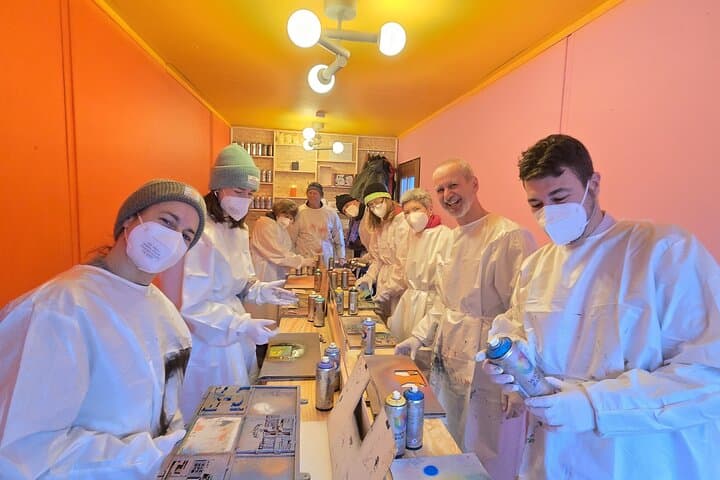
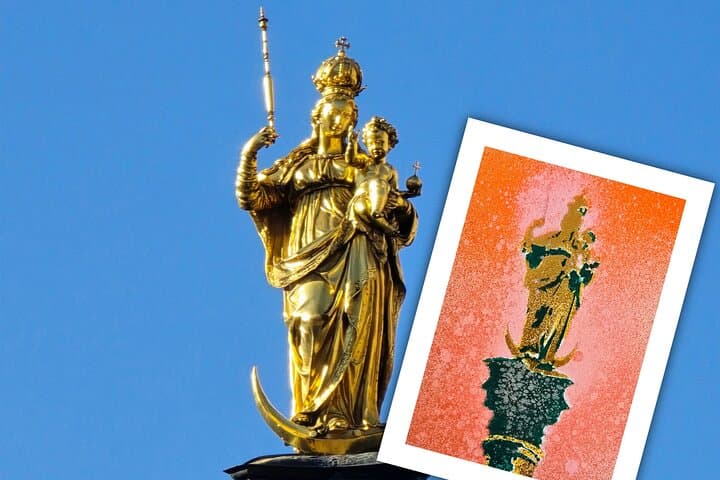
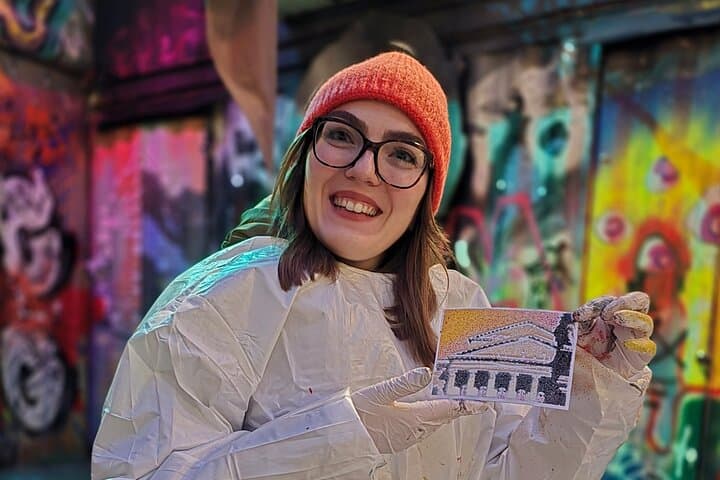
After the walk, participants ride a short subway hop south to Bahnwärter Thiel, an alternative cultural hub. Inside a heated shipping container you’ll don gloves and masks and use professional stencils and spray paint to make six postcards — a fast, contained introduction to street‑art technique suitable for beginners.
Practical guidance: wear shoes for cobbles and clothes you won’t mind getting a speck of paint on; bring a public‑transport ticket or buy one at machines; allow 2–3 hours for the full experience. Expect light walking with several 10‑minute stops and a hands‑on creative session in a ventilated, supervised space. The combination of history, urban geology and hands‑on art makes this an efficient, local evening that’s equal parts sightseeing and studio time.
moderate.
2–3 hours.
Able to stand and walk for several short stretches; comfortable with stairs and brief urban strolls
Yes — the workshop is designed for beginners; instructors provide stencils, safety gear and step‑by‑step guidance to create six postcards.
Yes — the experience is offered in English and German to accommodate international guests.
Not recommended for pregnant travelers or those with serious heart or respiratory conditions due to paint fumes and standing; children are accepted if able to follow safety instructions.
The creative session is in a heated, covered container; the walking portion is outdoors so dress for the weather — organizers do not cancel for light rain.
Munich’s Old Town grew from a medieval market center around Marienplatz; many structures were rebuilt after WWII, preserving historic facades and baroque layers like the Theatine Church.
Workshops use contained indoor spaces and provide PPE to limit airborne paint; guests are asked to respect public spaces and dispose of materials via organizers to reduce local litter.
Philipp's Munich Tours operates guided outdoor trips and adventures with an emphasis on safety, stewardship, and memorable experiences.

Evening light slides across Marienplatz as the tour assembles — cobbles cool underfoot and the Frauenkirche’s twin towers shoulder the sky. Guides punctuate the route with short stories; the group moves like a brushstroke through the Old Town, pausing where lamplight frames gothic and baroque façades.
Evening light slides across Marienplatz as the tour assembles — cobbles cool underfoot and the Frauenkirche’s twin towers shoulder the sky. Guides punctuate the route with short stories; the group moves like a brushstroke through the Old Town, pausing where lamplight frames gothic and baroque façades.
The route threads key Munich sites: Marienplatz’s market square, the carved detail of the Residenz, the theatrical curve of the National Theatre and the intimate narrowness of Viscardigasse. Geologically the city sits on the North Alpine Foreland, a plain of glacial gravel and river terraces shaped by the Isar; architecturally the area records centuries of medieval trade, baroque patronage and post‑war rebuilding. Culturally, this is the pulse of Bavarian civic life — markets, churches and hidden alleys that locals still use after dark.
After the walk, participants ride a short subway hop south to Bahnwärter Thiel, an alternative cultural hub. Inside a heated shipping container you’ll don gloves and masks and use professional stencils and spray paint to make six postcards — a fast, contained introduction to street‑art technique suitable for beginners.
Practical guidance: wear shoes for cobbles and clothes you won’t mind getting a speck of paint on; bring a public‑transport ticket or buy one at machines; allow 2–3 hours for the full experience. Expect light walking with several 10‑minute stops and a hands‑on creative session in a ventilated, supervised space. The combination of history, urban geology and hands‑on art makes this an efficient, local evening that’s equal parts sightseeing and studio time.