THE ADVENTURE COLLECTIVE® · Independent discovery and booking for outdoor travel

Drive from Colombo into Sri Lanka’s cultural heart on a compact two-day route that pairs Dambulla’s cave temples and a half-day elephant safari with Sigiriya’s rock fortress and the ruins of Polonnaruwa—ending at the beaches of Trincomalee or Nilaveli. Fast-paced but manageable, it’s perfect for travelers who want history, wildlife and coastline in one short trip.
Drive from Colombo into Sri Lanka’s cultural heart on a compact two-day route that pairs Dambulla’s cave temples and a half-day elephant safari with Sigiriya’s rock fortress and the ruins of Polonnaruwa—ending at the beaches of Trincomalee or Nilaveli. Fast-paced but manageable, it’s perfect for travelers who want history, wildlife and coastline in one short trip.
You step out of Colombo’s humid traffic into the steady hum of a long-drive rhythm—air-conditioned comfort, a chauffeur-guide offering a warm Ayubowan, and a route that peels away the coast and opens onto brown paddy plains and isolated granite outcrops. The first day eases you into central Sri Lanka: a gentle climb of time through villages and onion-domed temples until the countryside admits the gold-streaked mouth of the Dambulla cave temples. Inside, carved Buddhas and Kandyan-era paintings hold a quiet authority; outside, the plains already taste of elephants.
Verified experiences and guided adventures in the surrounding area.
Operated by Lanka Excursions Holidays · Sigiriya, Central Province
You step out of Colombo’s humid traffic into the steady hum of a long-drive rhythm—air-conditioned comfort, a chauffeur-guide offering a warm Ayubowan, and a route that peels away the coast and opens onto brown paddy plains and isolated granite outcrops. The first day eases you into central Sri Lanka: a gentle climb of time through villages and onion-domed temples until the countryside admits the gold-streaked mouth of the Dambulla cave temples. Inside, carved Buddhas and Kandyan-era paintings hold a quiet authority; outside, the plains already taste of elephants.
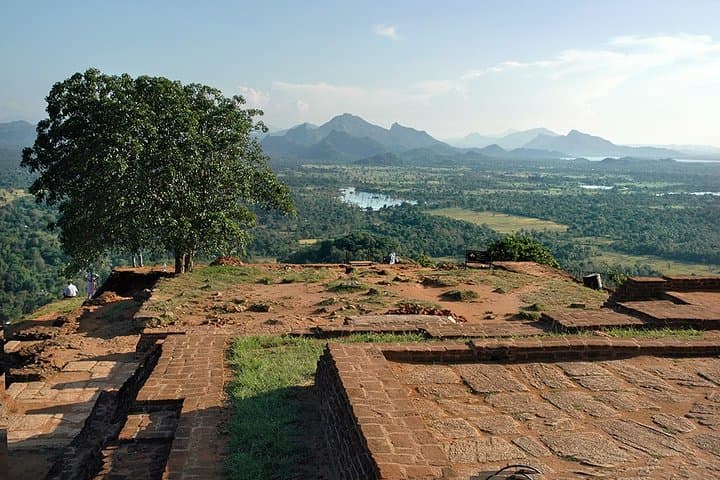
This two-day transfer is part road trip, part cultural sprint and part wildlife expedition. Historically the route threads the island’s ancient kingdoms—Sigiriya and Polonnaruwa were power centers of medieval Sri Lanka, their rock palaces and monastic complexes built into an iron-rich landscape uplifted by tectonics millions of years ago. Sigiriya’s Lion Rock rises roughly 200 meters over the plain; the climb follows iron stairways, frescoes, and a mirror wall, ending at a 360-degree view that lays out the irrigation tanks that made ancient agriculture possible.
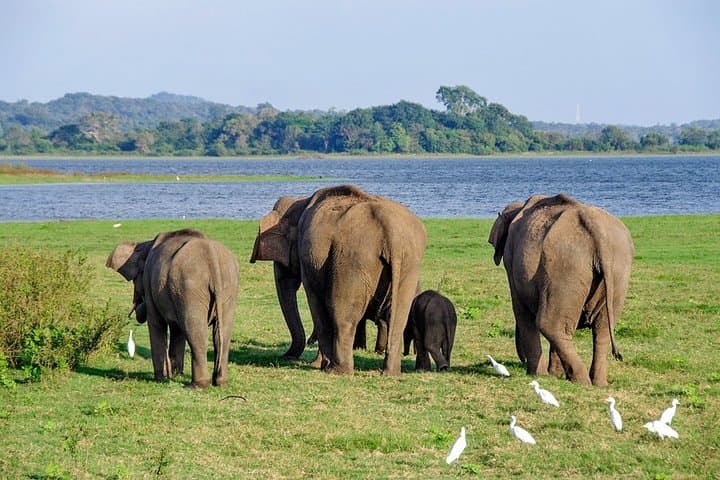
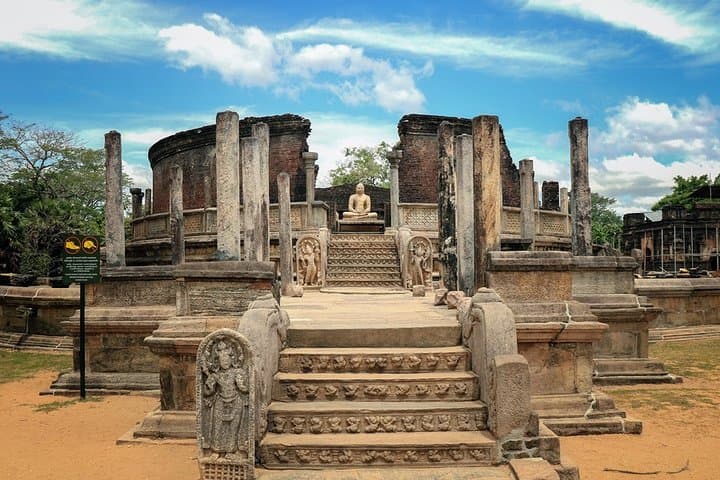
The safari component takes place in Minneriya, Kaudulla or Hurulu, parks that concentrate wild herds around seasonal tanks—an ecological choreography driven by monsoon rhythms. Polonnaruwa the next day is flatter, its ruined stupas and stone Buddhas telling of royal patronage and medieval urban planning. After the archaeological stops, the transfer delivers you north to Trincomalee or the quieter sands of Nilaveli and Uppuveli—beaches that offer a cool coastal punctuation to the inland history.
Practically: this itinerary covers roughly 350–420 km of driving across two days. Expect 3.5–5 hours on the first day from Colombo to Dambulla depending on traffic, plus afternoon safari of 3–4 hours in a 4x4, and another 2–3 hours on day two between Sigiriya/Polonnaruwa and Trincomalee. The operator includes an air-conditioned vehicle, a half-day 4x4 for safari, bottled water and a multilingual chauffeur-guide; park admissions and Sigiriya/Polonnaruwa entrance fees are typically extra, so bring cash or card.
Comfort and timing matter: start early to avoid midday heat at Sigiriya and to catch elephants at their most active—late afternoon or early morning. Wear sturdy shoes for the rock staircases, sun protection and insect repellent for the park, and carry binoculars and a tele lens for wildlife photography. If you prefer a slower pace, book your Sigiriya hotel in Habarana or nearby villages to split the driving and add a pre-dawn climb to Pidurangala Rock for sunrise. Finally, give wildlife room: do not approach or feed elephants; responsible viewing keeps both you and the animals safe.
moderate.
2 days.
Moderate fitness recommended—ability to climb stairs and walk uneven surfaces for 1–3 hours during temple and ruin visits.
The tour includes an air-conditioned vehicle, bottled water, a half-day 4x4 for safari, passenger insurance and a multilingual chauffeur-guide; entrance fees are generally extra.
Yes—hotels should be booked in or near Sigiriya or Habarana to fit the itinerary and reduce driving time to the heritage sites and safari.
Depending on seasonal concentrations of elephants, the safari may run in Minneriya, Kaudulla or Hurulu; your guide will choose the best option that day.
The climb is typically 1–2 hours round trip with about 200 m of ascent on stairs and rock—steady fitness and caution on steep sections are advised.
Entrance fees are not listed as included—bring cash or a card for park and heritage site admissions, which are charged per visitor.
Yes—pickup can be arranged at many hotels, designated points, or near the airport; specify your pickup point when booking.
The route links kingdoms of ancient Sri Lanka—Sigiriya (a 5th-century palace-fortress) and Polonnaruwa (a medieval capital celebrated for its stone sculpture).
Tourism fees support park management, but visitors should minimize disturbance—stay on vehicles, avoid single-use plastics and follow guide instructions.
Lanka Excursions Holidays operates guided outdoor trips and adventures with an emphasis on safety, stewardship, and memorable experiences.
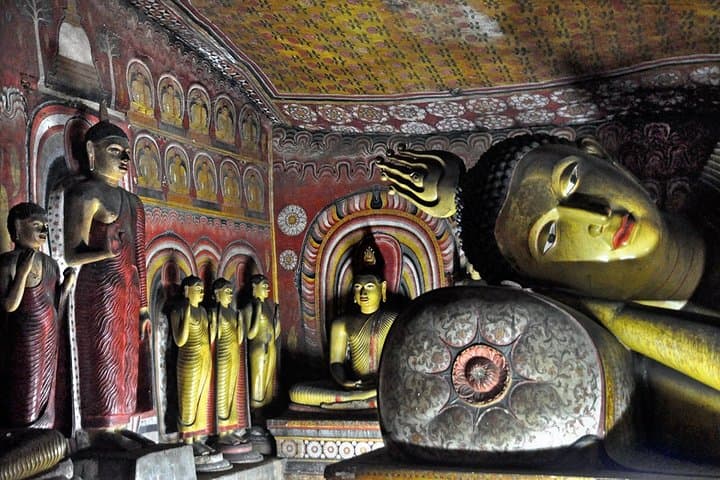
You step out of Colombo’s humid traffic into the steady hum of a long-drive rhythm—air-conditioned comfort, a chauffeur-guide offering a warm Ayubowan, and a route that peels away the coast and opens onto brown paddy plains and isolated granite outcrops. The first day eases you into central Sri Lanka: a gentle climb of time through villages and onion-domed temples until the countryside admits the gold-streaked mouth of the Dambulla cave temples. Inside, carved Buddhas and Kandyan-era paintings hold a quiet authority; outside, the plains already taste of elephants.
You step out of Colombo’s humid traffic into the steady hum of a long-drive rhythm—air-conditioned comfort, a chauffeur-guide offering a warm Ayubowan, and a route that peels away the coast and opens onto brown paddy plains and isolated granite outcrops. The first day eases you into central Sri Lanka: a gentle climb of time through villages and onion-domed temples until the countryside admits the gold-streaked mouth of the Dambulla cave temples. Inside, carved Buddhas and Kandyan-era paintings hold a quiet authority; outside, the plains already taste of elephants.
This two-day transfer is part road trip, part cultural sprint and part wildlife expedition. Historically the route threads the island’s ancient kingdoms—Sigiriya and Polonnaruwa were power centers of medieval Sri Lanka, their rock palaces and monastic complexes built into an iron-rich landscape uplifted by tectonics millions of years ago. Sigiriya’s Lion Rock rises roughly 200 meters over the plain; the climb follows iron stairways, frescoes, and a mirror wall, ending at a 360-degree view that lays out the irrigation tanks that made ancient agriculture possible.
The safari component takes place in Minneriya, Kaudulla or Hurulu, parks that concentrate wild herds around seasonal tanks—an ecological choreography driven by monsoon rhythms. Polonnaruwa the next day is flatter, its ruined stupas and stone Buddhas telling of royal patronage and medieval urban planning. After the archaeological stops, the transfer delivers you north to Trincomalee or the quieter sands of Nilaveli and Uppuveli—beaches that offer a cool coastal punctuation to the inland history.
Practically: this itinerary covers roughly 350–420 km of driving across two days. Expect 3.5–5 hours on the first day from Colombo to Dambulla depending on traffic, plus afternoon safari of 3–4 hours in a 4x4, and another 2–3 hours on day two between Sigiriya/Polonnaruwa and Trincomalee. The operator includes an air-conditioned vehicle, a half-day 4x4 for safari, bottled water and a multilingual chauffeur-guide; park admissions and Sigiriya/Polonnaruwa entrance fees are typically extra, so bring cash or card.
Comfort and timing matter: start early to avoid midday heat at Sigiriya and to catch elephants at their most active—late afternoon or early morning. Wear sturdy shoes for the rock staircases, sun protection and insect repellent for the park, and carry binoculars and a tele lens for wildlife photography. If you prefer a slower pace, book your Sigiriya hotel in Habarana or nearby villages to split the driving and add a pre-dawn climb to Pidurangala Rock for sunrise. Finally, give wildlife room: do not approach or feed elephants; responsible viewing keeps both you and the animals safe.