THE ADVENTURE COLLECTIVE® · Independent discovery and booking for outdoor travel

Make the inland run from Colombo to Kandy an active day: climb Sigiriya’s ancient rock fortress, share a village-made lunch and glide across a lake by paddle boat before exploring the painted caves of Dambulla. This full-day shuttle pairs history and hands-on culture with practical logistics.
Make the inland run from Colombo to Kandy an active day: climb Sigiriya’s ancient rock fortress, share a village-made lunch and glide across a lake by paddle boat before exploring the painted caves of Dambulla. This full-day shuttle pairs history and hands-on culture with practical logistics.
You step out of the vehicle into a heat-softened plain and the rock appears like a deliberate cut from the sky — a vertical island of stone rising roughly 200 meters above rice paddies. That’s Sigiriya: a rock fortress that demands momentum. The day starts in Colombo or Negombo with a quiet predawn collection, then moves inland where the traffic thins and the countryside opens into plantations, village lakes and the wide silhouette of the ancient column of rock.
Verified experiences and guided adventures in the surrounding area.
Operated by Tuktukdude Leisure · Dambulla, Central Province
You step out of the vehicle into a heat-softened plain and the rock appears like a deliberate cut from the sky — a vertical island of stone rising roughly 200 meters above rice paddies. That’s Sigiriya: a rock fortress that demands momentum. The day starts in Colombo or Negombo with a quiet predawn collection, then moves inland where the traffic thins and the countryside opens into plantations, village lakes and the wide silhouette of the ancient column of rock.
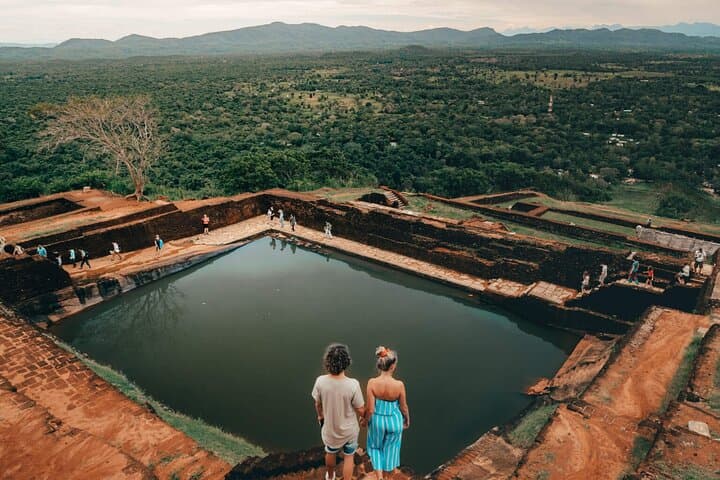
Sigiriya’s climb is immediate and physical: narrow staircases pinned to bare granite, terraces with carved mirror walls and the fragmentary frescoes of a king’s ambition. King Kashyapa chose this site in the late 5th century AD and left a complex of gardens, moats and galleries that still read as an engineered statement—water features that outwitted drought and a plateau that watches over the plain.
Later the tour pulls into Pelwehera cultural village where lunch is not just a meal but a demonstration: homestyle rice and curries prepared by villagers, the aroma of coconut and curry powder thick in the air. A short, carbon-neutral paddle boat ride on the village lake follows — the water placid, reeds brushing the hull, local children waving from the shore.
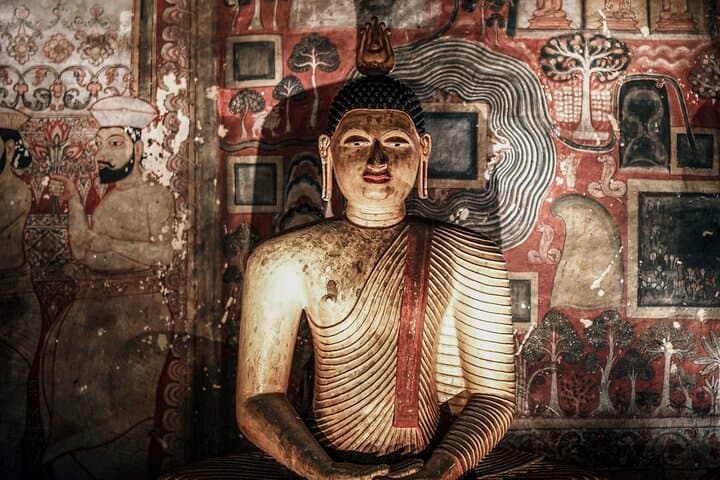
Dambulla’s Golden Temple completes the loop. The cave complex perches on a low rocky outcrop and contains over 150 Buddha statues and painted ceilings that chronicle centuries of devotion. Geologically, these cave temples occupy a band of hard igneous rock that resisted erosion while the surrounding plain lowered, creating the towers you see today.
Practical edge: the full itinerary runs about eight hours door-to-door and requires moderate fitness. Sigiriya’s ascent is mostly stairways and iron walkways — slick when wet — and the Dambulla visit involves uneven cave floors and steps.
Timing matters. Start early to climb Sigiriya before midday heat and to beat visitor crowds; bring cash for small local purchases and donations. Footwear should have a secure sole for steep stone and sudden rain; a lightweight rain jacket and a refillable water bottle will make the day more comfortable.
Culturally the route crosses rice-growing country and Buddhist heartlands; respect temple rules (cover shoulders and knees at Dambulla) and accept that photography inside caves may be restricted. The shuttle model—hotel pickup in Colombo, Negombo or suburbs and drop-off in Kandy—lets you travel between two major hubs while experiencing two of Sri Lanka’s most storied sites in a single, efficient day.
moderate.
8 hours.
Moderate fitness required—comfortable walking and climbing ability for stair-heavy ascent
Expect about 8 hours from pickup in Colombo or Negombo to drop-off in Kandy or nearby suburbs.
The climb is steep and involves many stairs; children and seniors with mobility issues may find portions challenging.
Admission to Sigiriya and Dambulla is typically not included—bring cash for entry fees if not specified in your booking.
Pickup covers Colombo, Negombo and many suburbs; confirm your hotel address during booking for exact availability.
Yes—Sri Lankan village lunches often include vegetarian options; notify the operator of dietary needs when booking.
Restrooms are available at major sites and village stops, though facilities vary in modernity and may require small fees.
Sigiriya was converted into a fortified capital by King Kashyapa in the late 5th century AD; Dambulla’s cave temples contain Buddhist art spanning over two millennia.
Local operators promote low-impact activities—choose carbon-neutral options like the village paddle boat and avoid feeding wildlife to reduce human-wildlife conflict.
Tuktukdude Leisure operates guided outdoor trips and adventures with an emphasis on safety, stewardship, and memorable experiences.
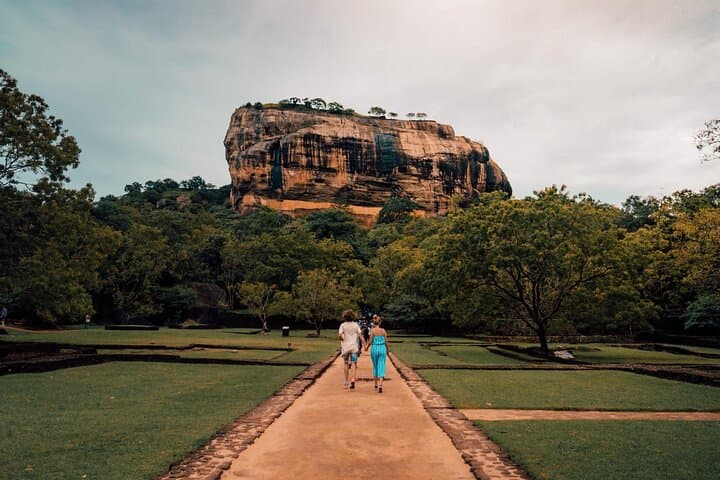
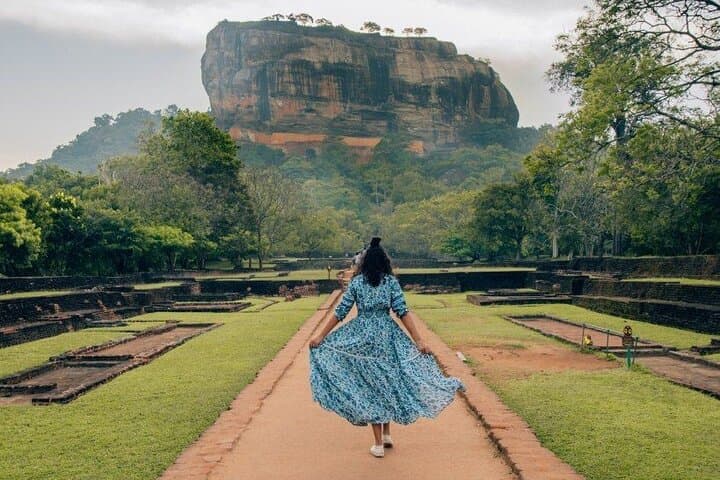
You step out of the vehicle into a heat-softened plain and the rock appears like a deliberate cut from the sky — a vertical island of stone rising roughly 200 meters above rice paddies. That’s Sigiriya: a rock fortress that demands momentum. The day starts in Colombo or Negombo with a quiet predawn collection, then moves inland where the traffic thins and the countryside opens into plantations, village lakes and the wide silhouette of the ancient column of rock.
You step out of the vehicle into a heat-softened plain and the rock appears like a deliberate cut from the sky — a vertical island of stone rising roughly 200 meters above rice paddies. That’s Sigiriya: a rock fortress that demands momentum. The day starts in Colombo or Negombo with a quiet predawn collection, then moves inland where the traffic thins and the countryside opens into plantations, village lakes and the wide silhouette of the ancient column of rock.
Sigiriya’s climb is immediate and physical: narrow staircases pinned to bare granite, terraces with carved mirror walls and the fragmentary frescoes of a king’s ambition. King Kashyapa chose this site in the late 5th century AD and left a complex of gardens, moats and galleries that still read as an engineered statement—water features that outwitted drought and a plateau that watches over the plain.
Later the tour pulls into Pelwehera cultural village where lunch is not just a meal but a demonstration: homestyle rice and curries prepared by villagers, the aroma of coconut and curry powder thick in the air. A short, carbon-neutral paddle boat ride on the village lake follows — the water placid, reeds brushing the hull, local children waving from the shore.
Dambulla’s Golden Temple completes the loop. The cave complex perches on a low rocky outcrop and contains over 150 Buddha statues and painted ceilings that chronicle centuries of devotion. Geologically, these cave temples occupy a band of hard igneous rock that resisted erosion while the surrounding plain lowered, creating the towers you see today.
Practical edge: the full itinerary runs about eight hours door-to-door and requires moderate fitness. Sigiriya’s ascent is mostly stairways and iron walkways — slick when wet — and the Dambulla visit involves uneven cave floors and steps.
Timing matters. Start early to climb Sigiriya before midday heat and to beat visitor crowds; bring cash for small local purchases and donations. Footwear should have a secure sole for steep stone and sudden rain; a lightweight rain jacket and a refillable water bottle will make the day more comfortable.
Culturally the route crosses rice-growing country and Buddhist heartlands; respect temple rules (cover shoulders and knees at Dambulla) and accept that photography inside caves may be restricted. The shuttle model—hotel pickup in Colombo, Negombo or suburbs and drop-off in Kandy—lets you travel between two major hubs while experiencing two of Sri Lanka’s most storied sites in a single, efficient day.