THE ADVENTURE COLLECTIVE® · Independent discovery and booking for outdoor travel

Taste Colombo’s street food circuit with a local guide: 10 hand-picked tastings that trace the city’s trading history and culinary mash-ups. Walk through Pettah market, snack with vendors, and learn the stories behind lamprais, kottu and king coconut refreshments.
Taste Colombo’s street food circuit with a local guide: 10 hand-picked tastings that trace the city’s trading history and culinary mash-ups. Walk through Pettah market, snack with vendors, and learn the stories behind lamprais, kottu and king coconut refreshments.
You meet your guide at Fort Railway Station and the city opens like a map of smells: hot cassava frying at the corner, king coconuts clinking on a vendor’s cart, and a breeze off the harbor pushing a hint of salt through Pettah’s alleys.
Verified experiences and guided adventures in the surrounding area.
Operated by Withlocals · Colombo, Western Province
You meet your guide at Fort Railway Station and the city opens like a map of smells: hot cassava frying at the corner, king coconuts clinking on a vendor’s cart, and a breeze off the harbor pushing a hint of salt through Pettah’s alleys.
Colombo’s streets are the product of centuries of trade — Portuguese, Dutch and British influences layered over a coastal plain that funneled spices and migrants to this port. The samples you try—lamprais, kottu, cassava chips, pickled fruits—carry those histories in texture and spice: Dutch Burgher recipes folded into Sri Lankan technique, Muslim-run snack stalls beside Hindu confectioners.
The route threads market lanes, a mosque-front snack row, and a quiet family kitchen where a home-cooked Lamprais is served. You’ll stand, taste, and move; vendors work quickly and the city’s energy nudges the pace. Guides steer clear of tourist traps, choosing small producers and local ingredients—part of an effort to keep the tour low-impact and community-centered.
Practicalities: the walk is gentle but largely on uneven sidewalks and market steps—comfortable shoes and a reusable water bottle matter. Bring small bills for extras, flag dietary needs ahead (vegetarian alternatives are available), and plan the tour earlier in the day to avoid peak heat or sudden monsoon showers. The experience lasts about three hours, with plentiful tastings and stops for context and history. For travelers who want to eat like residents while learning the city’s food stories, this private tasting loop is efficient, flavorful, and deeply local.
easy.
3 hours.
Light walking fitness required—able to stand and walk short market stretches repeatedly.
Yes—vegetarian alternatives are offered for most stops; indicate dietary restrictions at booking so the guide can plan substitutions.
The tour meets at Fort Railway Station, at the inquiries desk—your guide will be waiting there at the scheduled start time.
The experience includes 10 food and drink tastings selected by your local guide and paced across roughly three hours.
Yes—this tour is family-friendly and physically easy, though parents should manage portions and be mindful of spice levels for young children.
Colombo grew as a strategic trading port under Portuguese, Dutch and British rule; many street foods reflect Dutch Burgher and South Asian fusion, such as lamprais and sambols.
Support vendors who use local produce and minimize single-use plastic—choosing reusable bottles and local businesses helps reduce waste and supports the community.
Withlocals operates guided outdoor trips and adventures with an emphasis on safety, stewardship, and memorable experiences.
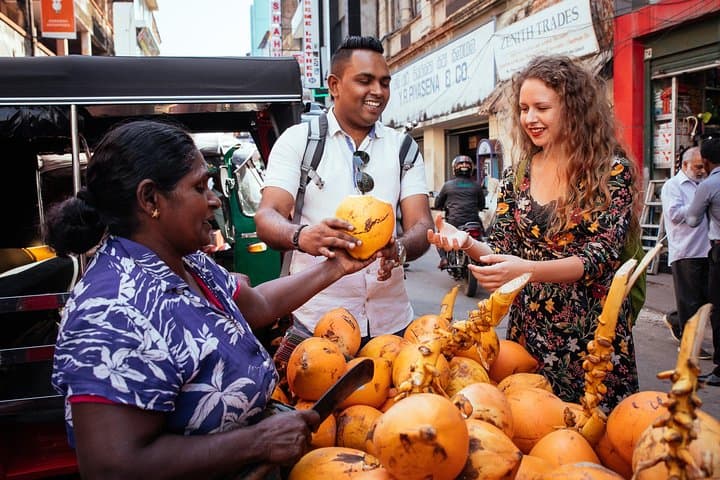


You meet your guide at Fort Railway Station and the city opens like a map of smells: hot cassava frying at the corner, king coconuts clinking on a vendor’s cart, and a breeze off the harbor pushing a hint of salt through Pettah’s alleys.
You meet your guide at Fort Railway Station and the city opens like a map of smells: hot cassava frying at the corner, king coconuts clinking on a vendor’s cart, and a breeze off the harbor pushing a hint of salt through Pettah’s alleys.
Colombo’s streets are the product of centuries of trade — Portuguese, Dutch and British influences layered over a coastal plain that funneled spices and migrants to this port. The samples you try—lamprais, kottu, cassava chips, pickled fruits—carry those histories in texture and spice: Dutch Burgher recipes folded into Sri Lankan technique, Muslim-run snack stalls beside Hindu confectioners.
The route threads market lanes, a mosque-front snack row, and a quiet family kitchen where a home-cooked Lamprais is served. You’ll stand, taste, and move; vendors work quickly and the city’s energy nudges the pace. Guides steer clear of tourist traps, choosing small producers and local ingredients—part of an effort to keep the tour low-impact and community-centered.
Practicalities: the walk is gentle but largely on uneven sidewalks and market steps—comfortable shoes and a reusable water bottle matter. Bring small bills for extras, flag dietary needs ahead (vegetarian alternatives are available), and plan the tour earlier in the day to avoid peak heat or sudden monsoon showers. The experience lasts about three hours, with plentiful tastings and stops for context and history. For travelers who want to eat like residents while learning the city’s food stories, this private tasting loop is efficient, flavorful, and deeply local.