THE ADVENTURE COLLECTIVE® · Independent discovery and booking for outdoor travel

Cycle through the Belgian Quarter and Ehrenfeld on a guided 3-hour street art bike tour that uncovers murals, paste‑ups and local stories. Small groups and local guides make this an efficient way to see Cologne’s changing urban art scene.
Cycle through the Belgian Quarter and Ehrenfeld on a guided 3-hour street art bike tour that uncovers murals, paste‑ups and local stories. Small groups and local guides make this an efficient way to see Cologne’s changing urban art scene.
You start at the Eigelstein City Gate, the old stone throat where medieval Cologne once let visitors into the walls. The first pedal strokes push you past tramlines and graffiti-creased facades, and the city opens like a layered map: punchy stencils in a back alley, a mural swallowing an entire block, stickers tucked under lampposts.
Verified experiences and guided adventures in the surrounding area.
Operated by Colonia Aktiv · Cologne, North Rhine-Westphalia
You start at the Eigelstein City Gate, the old stone throat where medieval Cologne once let visitors into the walls. The first pedal strokes push you past tramlines and graffiti-creased facades, and the city opens like a layered map: punchy stencils in a back alley, a mural swallowing an entire block, stickers tucked under lampposts.
The route threads historic neighborhoods and recent industrial terrain. Eigelstein itself is a remnant of Romanesque defenses; further west the tracks of 19th‑century industry give way to the Belgian Quarter’s cafés and Brüsseler Platz—now a popular canvas. Ehrenfeld grew as a manufacturing and immigrant quarter and has become one of the most active street-art scenes in Germany, where international crews and local stencil artists trade walls and ideas.
Cultural context matters: this is urban art in flux—works appear, fade and get replaced seasonally—so guides point out authorship, political threads and where to look for small paste‑ups and titling systems used by local collectives.
Practicalities govern the ride. Expect roughly three hours on a city bike (or e‑bike option), multiple short stops, flat urban terrain but occasional cobbles and tram tracks. Wear closed shoes, keep a moderate pace in traffic, and carry a lightweight rain layer for sudden showers. Hydrate before and during the tour; pack a phone for photos but be mindful of private property. A small-group format (max 15) keeps conversation easy and lets the guide angle the route toward fresh murals and neighborhood cafés where you can pause for a Kölsch or a coffee.
moderate.
3 hours.
Moderate—comfortable on a city bike for three hours with occasional short standing or walking stops
Bicycles (city bikes or e‑bikes depending on booking) are provided—specify e‑bike at booking if needed; helmets are included.
Children can join but must be accompanied by an adult; specialized infant seats and tandems are available if requested in advance.
Tours run in light rain (ponchos provided); if weather is severe the operator may cancel—check cancellation policy for refunds 24 hours prior.
Participants should have moderate fitness and basic cycling ability to handle city traffic, cobblestones and short sprints between stops.
The tour begins at Eigelstein, part of Cologne’s medieval wall; the neighborhoods en route transformed from industrial zones to multicultural hubs that host today’s street-art culture.
Respect murals and private property—do not touch, remove or photograph in ways that disturb residents; support local cafés and galleries to keep the scene sustainable.
Colonia Aktiv operates guided outdoor trips and adventures with an emphasis on safety, stewardship, and memorable experiences.
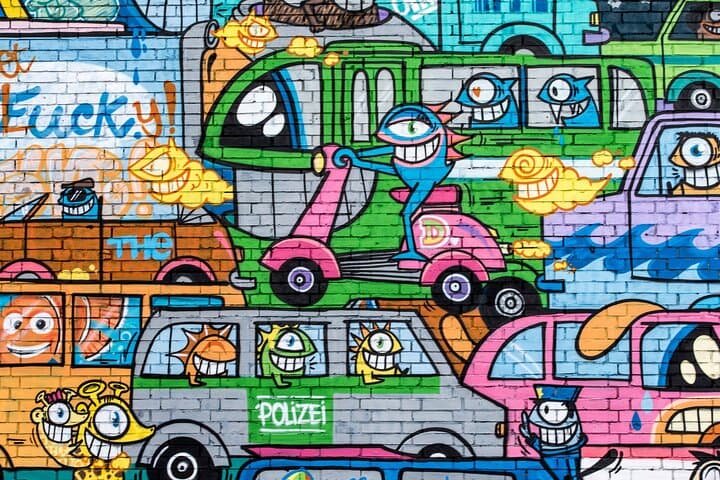
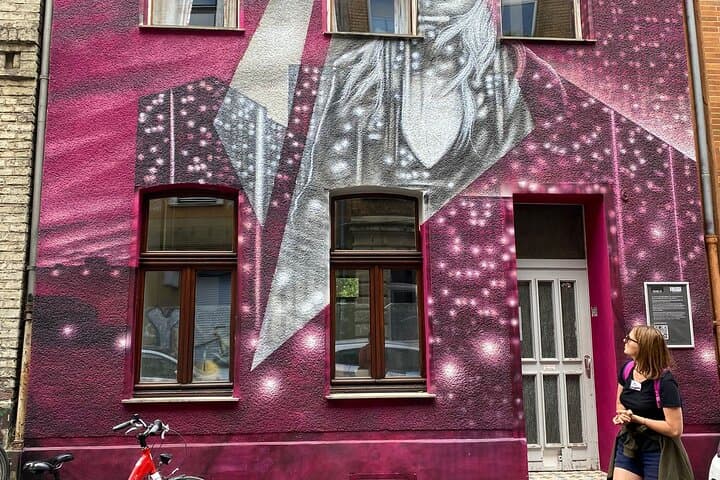
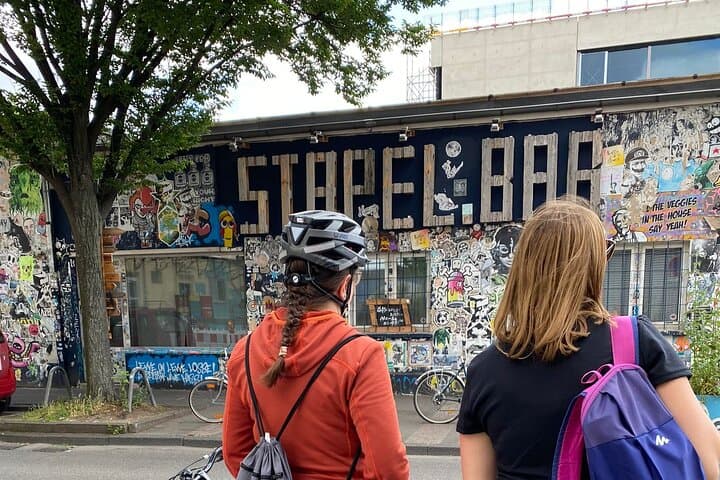

You start at the Eigelstein City Gate, the old stone throat where medieval Cologne once let visitors into the walls. The first pedal strokes push you past tramlines and graffiti-creased facades, and the city opens like a layered map: punchy stencils in a back alley, a mural swallowing an entire block, stickers tucked under lampposts.
You start at the Eigelstein City Gate, the old stone throat where medieval Cologne once let visitors into the walls. The first pedal strokes push you past tramlines and graffiti-creased facades, and the city opens like a layered map: punchy stencils in a back alley, a mural swallowing an entire block, stickers tucked under lampposts.
The route threads historic neighborhoods and recent industrial terrain. Eigelstein itself is a remnant of Romanesque defenses; further west the tracks of 19th‑century industry give way to the Belgian Quarter’s cafés and Brüsseler Platz—now a popular canvas. Ehrenfeld grew as a manufacturing and immigrant quarter and has become one of the most active street-art scenes in Germany, where international crews and local stencil artists trade walls and ideas.
Cultural context matters: this is urban art in flux—works appear, fade and get replaced seasonally—so guides point out authorship, political threads and where to look for small paste‑ups and titling systems used by local collectives.
Practicalities govern the ride. Expect roughly three hours on a city bike (or e‑bike option), multiple short stops, flat urban terrain but occasional cobbles and tram tracks. Wear closed shoes, keep a moderate pace in traffic, and carry a lightweight rain layer for sudden showers. Hydrate before and during the tour; pack a phone for photos but be mindful of private property. A small-group format (max 15) keeps conversation easy and lets the guide angle the route toward fresh murals and neighborhood cafés where you can pause for a Kölsch or a coffee.