THE ADVENTURE COLLECTIVE® · Independent discovery and booking for outdoor travel

Walk the streets where Prague’s Cold War era unfolded with a local historian who pairs personal memory with political context. This 2.5-hour semiprivate tour covers Wenceslas Square, Velvet Revolution sites, and brutalist landmarks—ideal for anyone wanting the city’s recent past explained on foot.
Walk the streets where Prague’s Cold War era unfolded with a local historian who pairs personal memory with political context. This 2.5-hour semiprivate tour covers Wenceslas Square, Velvet Revolution sites, and brutalist landmarks—ideal for anyone wanting the city’s recent past explained on foot.
You step onto the broad steps of the National Museum as trams rattle below and the weight of history presses through the square.
Verified experiences and guided adventures in the surrounding area.
Operated by Prague: Local Historian Tours · Prague, Prague
You step onto the broad steps of the National Museum as trams rattle below and the weight of history presses through the square.
This 2½-hour semiprivate walk threads Wenceslas Square, brutalist parliament facades, and quieter side streets where dissidents whispered plans. The Vltava’s riverbanks watch the city change; cobblestones remember protests and hurried footsteps. Your guide—raised in the shadow of 1989—moves between personal memory and public record, pointing out Jan Palach’s sites, the marks of the 1968 Soviet invasion, and the neighborhoods where the secret police left fingerprints on daily life.
Prague’s story is urban geology and political text: Baroque boulevards layered over 20th-century concrete; theatres and cafés that sheltered dissident debate; the National Theatre and Dancing House standing as cultural counterpoints. Expect concise historical context—Cold War timelines, Vaclav Havel’s transition from playwright to president—and cultural notes on how Prague rebuilt identity after 1989.
Practical guidance: this is an easy, predominantly flat walk on uneven cobbles—allow 2–3 hours and wear supportive footwear. The route is wheelchair- and stroller-accessible in many sections, though some alleys have uneven paving. Group size is small (up to six), so bring a charged phone, an ID for entry to any paid stops, and a light layer for Prague’s shifting weather. Bookings require confirmation and allow free cancellation 24 hours prior. Arrive 10 minutes early to meet near the National Museum; your guide will orient you and flag places to linger for photos or local cafés to continue the conversation.
easy.
2–3 hours.
Light walking on mostly flat but uneven city pavements; suitable for most fitness levels
Yes—many sections, including Wenceslas Square and main sidewalks, are accessible; however, some side streets have uneven paving—contact the operator ahead for specific access needs.
The guide conducts the tour in English; inquire during booking if you need another language or an interpreter.
Meeting details are provided at booking confirmation; the group typically meets near the National Museum on Wenceslas Square—arrive 10 minutes early.
You can receive a full refund if you cancel at least 24 hours before the scheduled departure time; bookings require manual confirmation by the operator.
Czechoslovakia lived under Communist rule from 1948 until the Velvet Revolution of 1989, when mass protests and civic leadership, including Vaclav Havel, led to a rapid political transition.
Prague balances tourism with preservation—respect plaques and memorials, stick to sidewalks and established paths, and favor local guides who support cultural stewardship.
Prague: Local Historian Tours operates guided outdoor trips and adventures with an emphasis on safety, stewardship, and memorable experiences.
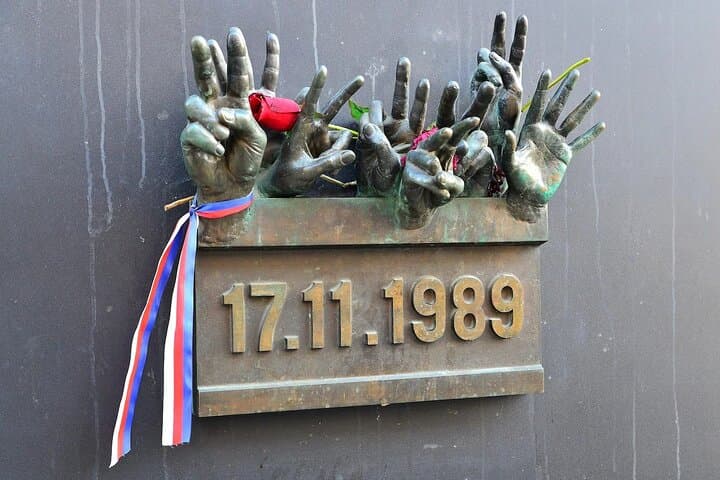

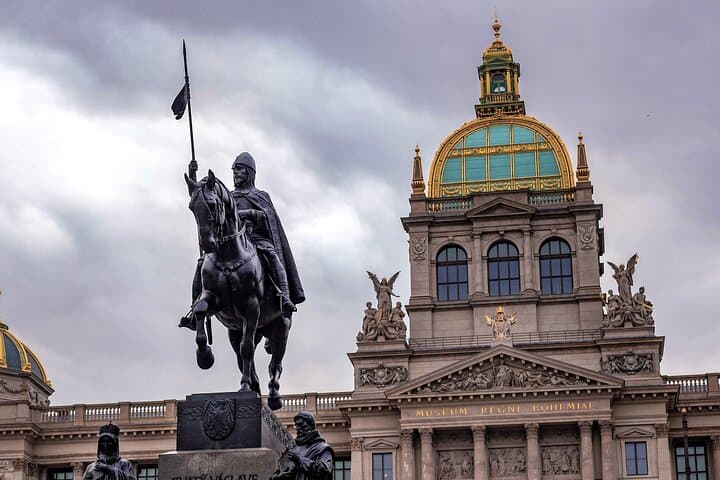

You step onto the broad steps of the National Museum as trams rattle below and the weight of history presses through the square.
You step onto the broad steps of the National Museum as trams rattle below and the weight of history presses through the square.
This 2½-hour semiprivate walk threads Wenceslas Square, brutalist parliament facades, and quieter side streets where dissidents whispered plans. The Vltava’s riverbanks watch the city change; cobblestones remember protests and hurried footsteps. Your guide—raised in the shadow of 1989—moves between personal memory and public record, pointing out Jan Palach’s sites, the marks of the 1968 Soviet invasion, and the neighborhoods where the secret police left fingerprints on daily life.
Prague’s story is urban geology and political text: Baroque boulevards layered over 20th-century concrete; theatres and cafés that sheltered dissident debate; the National Theatre and Dancing House standing as cultural counterpoints. Expect concise historical context—Cold War timelines, Vaclav Havel’s transition from playwright to president—and cultural notes on how Prague rebuilt identity after 1989.
Practical guidance: this is an easy, predominantly flat walk on uneven cobbles—allow 2–3 hours and wear supportive footwear. The route is wheelchair- and stroller-accessible in many sections, though some alleys have uneven paving. Group size is small (up to six), so bring a charged phone, an ID for entry to any paid stops, and a light layer for Prague’s shifting weather. Bookings require confirmation and allow free cancellation 24 hours prior. Arrive 10 minutes early to meet near the National Museum; your guide will orient you and flag places to linger for photos or local cafés to continue the conversation.