THE ADVENTURE COLLECTIVE® · Independent discovery and booking for outdoor travel

A brisk two-day journey from Arequipa to Colca Canyon that pairs dramatic canyon viewpoints with highland wildlife and thermal baths. See condors at Cruz del Condor, visit pre-Inca terraces and overnight in Chivay.
A brisk two-day journey from Arequipa to Colca Canyon that pairs dramatic canyon viewpoints with highland wildlife and thermal baths. See condors at Cruz del Condor, visit pre-Inca terraces and overnight in Chivay.
Sunlight edges over a volcanic skyline as the minivan climbs out of Arequipa, and the air thins to a clean, biting clarity. By late morning the road crests Patapampa and the volcanic chain — Sabancaya, Ampato, Sabancalla — looms like a row of sleeping giants. The landscape here is uncompromising: high puna grass, salt-tinted lagoons and the skeletal terraces that frame the canyon below.
Verified experiences and guided adventures in the surrounding area.
Operated by Aremika Travel · Chivay, Arequipa
Sunlight edges over a volcanic skyline as the minivan climbs out of Arequipa, and the air thins to a clean, biting clarity. By late morning the road crests Patapampa and the volcanic chain — Sabancaya, Ampato, Sabancalla — looms like a row of sleeping giants. The landscape here is uncompromising: high puna grass, salt-tinted lagoons and the skeletal terraces that frame the canyon below.
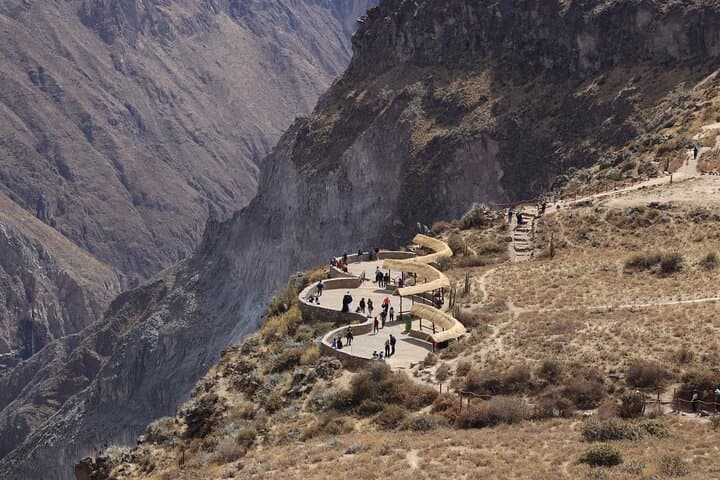
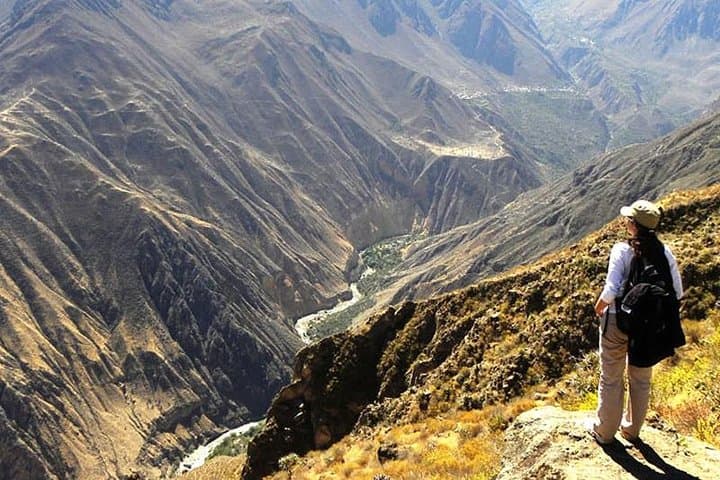
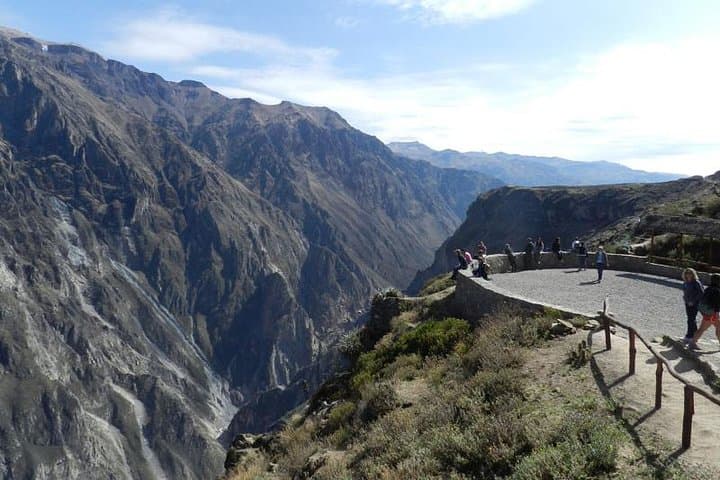
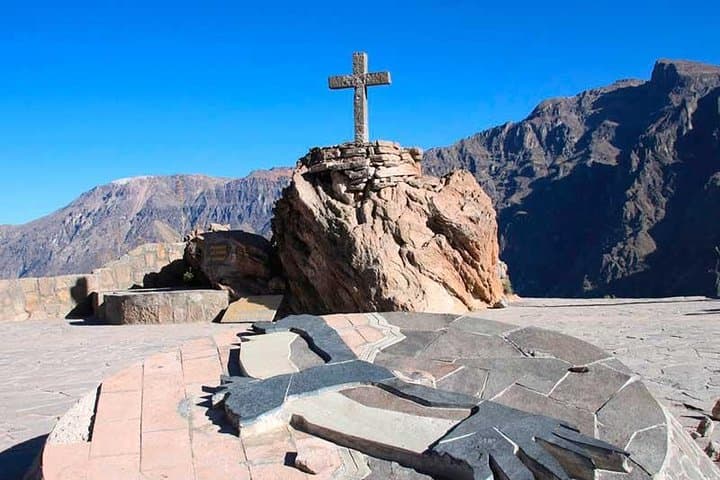
Colca Canyon cuts deeper than many expect, carved by the Colca River over millions of years and flanked by terraces older than the Inca. Local towns like Chivay and Yanque show colonial churches set against pre-Inca agricultural systems; communities still raise llamas, alpacas and vicuñas on the surrounding plateaus. At dawn the Cruz del Condor viewpoint becomes a stage — thermals push birds upward and condors, with wingspans that demand attention, wheel low enough to register on a camera frame.
Practically, this is an accessible two-day loop from Arequipa with one night in Chivay. Expect long drives on paved and secondary roads, short guided walks at viewpoints, and a chance to soak in thermal baths in Chivay to ease altitude strain. Hydration and slow pacing matter more than speed; coca tea and a light breakfast before early-morning viewing help with acclimatization. Footwear should be sturdy for uneven village streets and lookout trails; sun protection is essential at high elevation.
Travelers will leave with landscapes imprinted — terraces, volcanic ridgelines and the unforgettable sight of condors riding the winds — along with practical memories: hot springs, mountain air, and villages that keep living agricultural traditions in full view.
moderate.
2 days / 1 night (≈48 hours).
Moderate — able to endure long vehicle transfers, short walks at altitude and stairs at viewpoints
Altitude can cause headache or nausea for some; guides provide coca tea and recommend slow pacing — if you have severe altitude sensitivity consult a doctor first.
Condors are frequently sighted at dawn on favorable weather days; sightings aren’t guaranteed but early-morning thermals greatly increase the chance.
Thermal baths in Chivay are typically optional; bring swimwear and a towel if you plan to soak — entry may be paid locally.
Walking is short and mostly on lookout paths and village streets — no technical hiking required, but some steps and uneven ground are common.
Pre-Inca terracing and agricultural engineering carved the canyon flanks; Spanish colonial churches later anchored towns like Yanque and Chivay.
Respect local grazing lands and terraces by staying on marked paths; avoid feeding wildlife and support community-run services to keep tourism sustainable.
Aremika Travel operates guided outdoor trips and adventures with an emphasis on safety, stewardship, and memorable experiences.
Sunlight edges over a volcanic skyline as the minivan climbs out of Arequipa, and the air thins to a clean, biting clarity. By late morning the road crests Patapampa and the volcanic chain — Sabancaya, Ampato, Sabancalla — looms like a row of sleeping giants. The landscape here is uncompromising: high puna grass, salt-tinted lagoons and the skeletal terraces that frame the canyon below.
Sunlight edges over a volcanic skyline as the minivan climbs out of Arequipa, and the air thins to a clean, biting clarity. By late morning the road crests Patapampa and the volcanic chain — Sabancaya, Ampato, Sabancalla — looms like a row of sleeping giants. The landscape here is uncompromising: high puna grass, salt-tinted lagoons and the skeletal terraces that frame the canyon below.
Colca Canyon cuts deeper than many expect, carved by the Colca River over millions of years and flanked by terraces older than the Inca. Local towns like Chivay and Yanque show colonial churches set against pre-Inca agricultural systems; communities still raise llamas, alpacas and vicuñas on the surrounding plateaus. At dawn the Cruz del Condor viewpoint becomes a stage — thermals push birds upward and condors, with wingspans that demand attention, wheel low enough to register on a camera frame.
Practically, this is an accessible two-day loop from Arequipa with one night in Chivay. Expect long drives on paved and secondary roads, short guided walks at viewpoints, and a chance to soak in thermal baths in Chivay to ease altitude strain. Hydration and slow pacing matter more than speed; coca tea and a light breakfast before early-morning viewing help with acclimatization. Footwear should be sturdy for uneven village streets and lookout trails; sun protection is essential at high elevation.
Travelers will leave with landscapes imprinted — terraces, volcanic ridgelines and the unforgettable sight of condors riding the winds — along with practical memories: hot springs, mountain air, and villages that keep living agricultural traditions in full view.