THE ADVENTURE COLLECTIVE® · Independent discovery and booking for outdoor travel

A three-day trek from Arequipa down into Colca Canyon explores towering walls, village life, and a palm-lined oasis. Expect long descents and steep ascents, close-up condor sightings, and restorative thermal baths before the return to the high plateau.
A three-day trek from Arequipa down into Colca Canyon explores towering walls, village life, and a palm-lined oasis. Expect long descents and steep ascents, close-up condor sightings, and restorative thermal baths before the return to the high plateau.
At dawn the van slips out of Arequipa and the plateau thins to a hard, wind-cut edge. By midmorning you stand at Cruz del Condor where condors wheel on thermal drafts, their shadows skimming the canyon walls as if testing the depth below. The first day’s zigzag descent drops roughly 1,000–1,400 m over rocky switchbacks to San Juan de Chuccho—about 8–10 km of mixed dirt track and stone steps—where village life greets hikers with terraced fields and adobe houses.
Verified experiences and guided adventures in the surrounding area.
Operated by Arequipa Tour · Cabanaconde, Arequipa Region
At dawn the van slips out of Arequipa and the plateau thins to a hard, wind-cut edge. By midmorning you stand at Cruz del Condor where condors wheel on thermal drafts, their shadows skimming the canyon walls as if testing the depth below. The first day’s zigzag descent drops roughly 1,000–1,400 m over rocky switchbacks to San Juan de Chuccho—about 8–10 km of mixed dirt track and stone steps—where village life greets hikers with terraced fields and adobe houses.
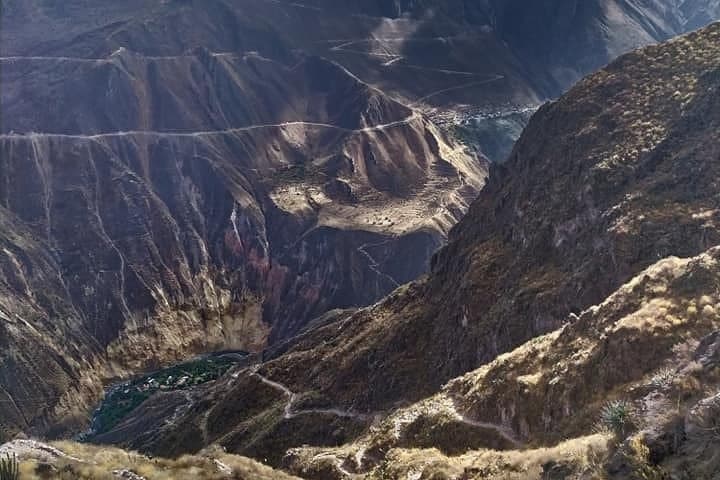
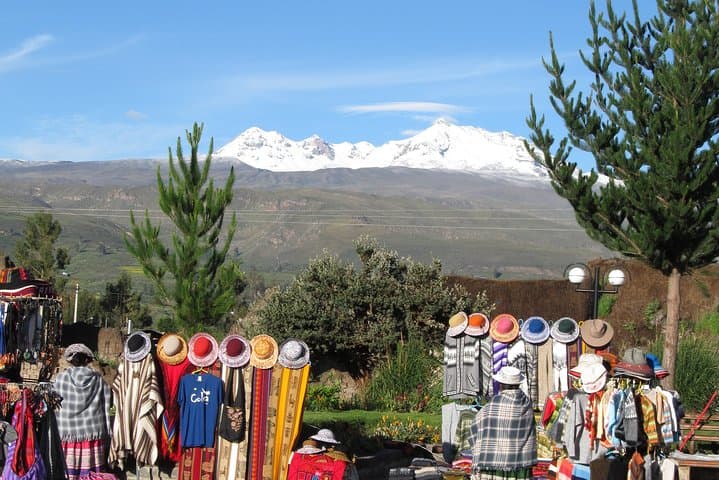
Colca is carved into volcanic and sedimentary layers; its walls expose uplifted Andean geology and deep incision from millennia of river erosion. The canyon’s human story runs parallel: pre-Incan terraces still irrigate small plots, and local communities keep traditional weaving and irrigation techniques alive. Sangalle, the oasis on day two, sits near the canyon floor and offers a stark contrast—palm-shaded pools fed by groundwater that seems to push you toward slow, warm recovery.
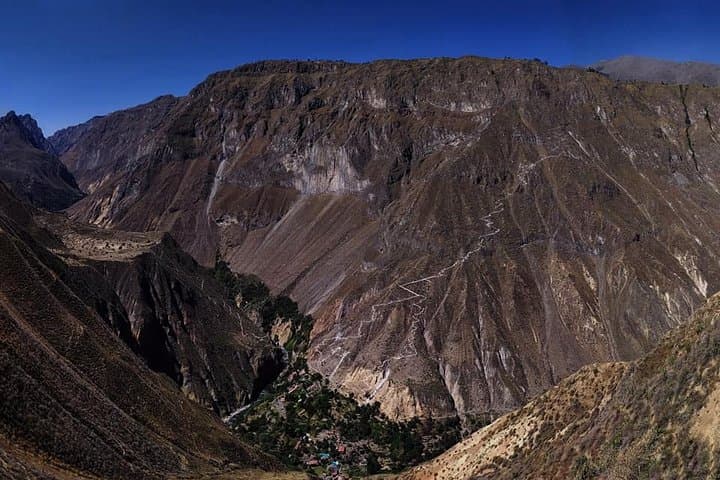
Expect long, steady descents and steep ascents: the return to Cabanaconde on day three is a 3-hour climb with frequent switchbacks and thin air—trail grades can exceed 20% in short pitches. Temperatures swing dramatically between rim and floor; bring layered clothing, sun protection, and at least 2–3 liters of water per day. Acclimatize in Arequipa or Chivay before starting to reduce altitude strain. Footwear with good ankle support and trekking poles make the zigzags easier on knees.
Plan for basic albergue lodging, communal meals, and the chance to soak in 30–35°C thermal baths on the route back to Arequipa. The route is rewarding but demands respect for altitude, weather shifts, and rugged terrain.
challenging.
3 days (2 nights).
Good cardiovascular fitness and experience with sustained uphill/downhill hikes at altitude; able to handle 3–5 hours walking daily with packs.
The ascent is steep and sustained (about 1,000–1,400 m gain) and typically takes 2.5–4 hours; pace yourself and use poles if available.
Yes—Cruz del Condor offers reliable morning sightings when thermals form, though wildlife sightings are never guaranteed.
Two nights in local albergues (family-run lodges) with private or shared facilities as described, basic meals included per itinerary.
Yes—Colca sits at high elevations; acclimatize in Arequipa or Chivay, stay hydrated, and report symptoms to your guide promptly.
Colca’s terraces predate the Inca and reflect centuries of high-altitude agriculture and communal irrigation practices still used by local villages.
Stick to trails and carry out waste—local communities depend on clean water and tourism; support local guides and albergues to keep benefits in the valley.
Arequipa Tour operates guided outdoor trips and adventures with an emphasis on safety, stewardship, and memorable experiences.
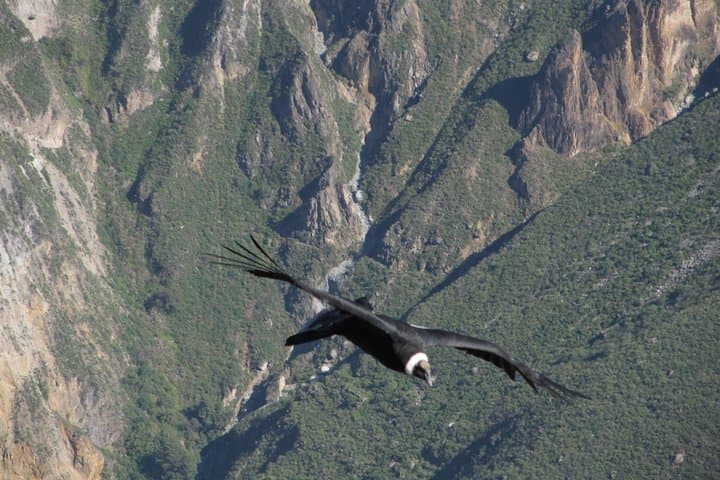
At dawn the van slips out of Arequipa and the plateau thins to a hard, wind-cut edge. By midmorning you stand at Cruz del Condor where condors wheel on thermal drafts, their shadows skimming the canyon walls as if testing the depth below. The first day’s zigzag descent drops roughly 1,000–1,400 m over rocky switchbacks to San Juan de Chuccho—about 8–10 km of mixed dirt track and stone steps—where village life greets hikers with terraced fields and adobe houses.
At dawn the van slips out of Arequipa and the plateau thins to a hard, wind-cut edge. By midmorning you stand at Cruz del Condor where condors wheel on thermal drafts, their shadows skimming the canyon walls as if testing the depth below. The first day’s zigzag descent drops roughly 1,000–1,400 m over rocky switchbacks to San Juan de Chuccho—about 8–10 km of mixed dirt track and stone steps—where village life greets hikers with terraced fields and adobe houses.
Colca is carved into volcanic and sedimentary layers; its walls expose uplifted Andean geology and deep incision from millennia of river erosion. The canyon’s human story runs parallel: pre-Incan terraces still irrigate small plots, and local communities keep traditional weaving and irrigation techniques alive. Sangalle, the oasis on day two, sits near the canyon floor and offers a stark contrast—palm-shaded pools fed by groundwater that seems to push you toward slow, warm recovery.
Expect long, steady descents and steep ascents: the return to Cabanaconde on day three is a 3-hour climb with frequent switchbacks and thin air—trail grades can exceed 20% in short pitches. Temperatures swing dramatically between rim and floor; bring layered clothing, sun protection, and at least 2–3 liters of water per day. Acclimatize in Arequipa or Chivay before starting to reduce altitude strain. Footwear with good ankle support and trekking poles make the zigzags easier on knees.
Plan for basic albergue lodging, communal meals, and the chance to soak in 30–35°C thermal baths on the route back to Arequipa. The route is rewarding but demands respect for altitude, weather shifts, and rugged terrain.