THE ADVENTURE COLLECTIVE® · Independent discovery and booking for outdoor travel

A compact two-day loop from Arequipa to Colca Canyon that pairs condor sightings at Mirador Cruz del Cóndor with thermal baths, volcanic viewpoints and traditional valley culture. Ideal for travelers who want dramatic Andean scenery with practical logistics and moderate effort.
A compact two-day loop from Arequipa to Colca Canyon that pairs condor sightings at Mirador Cruz del Cóndor with thermal baths, volcanic viewpoints and traditional valley culture. Ideal for travelers who want dramatic Andean scenery with practical logistics and moderate effort.
On the road out of Arequipa the high puna spreads like a rough sea: wind-whipped grasses, patchworks of salt flats and the slow geometry of volcanoes pressing the skyline. By late afternoon the small convoy slips into the Reserve of Salinas and Aguada Blanca, where vicuñas and alpacas graze and the air thins enough to make every breath feel deliberate.
Verified experiences and guided adventures in the surrounding area.
Operated by Turismo Liberty Perú · Chivay, Arequipa
On the road out of Arequipa the high puna spreads like a rough sea: wind-whipped grasses, patchworks of salt flats and the slow geometry of volcanoes pressing the skyline. By late afternoon the small convoy slips into the Reserve of Salinas and Aguada Blanca, where vicuñas and alpacas graze and the air thins enough to make every breath feel deliberate.
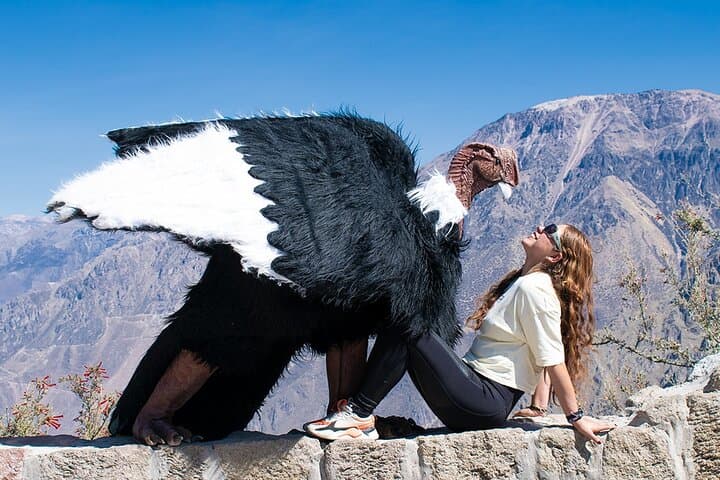
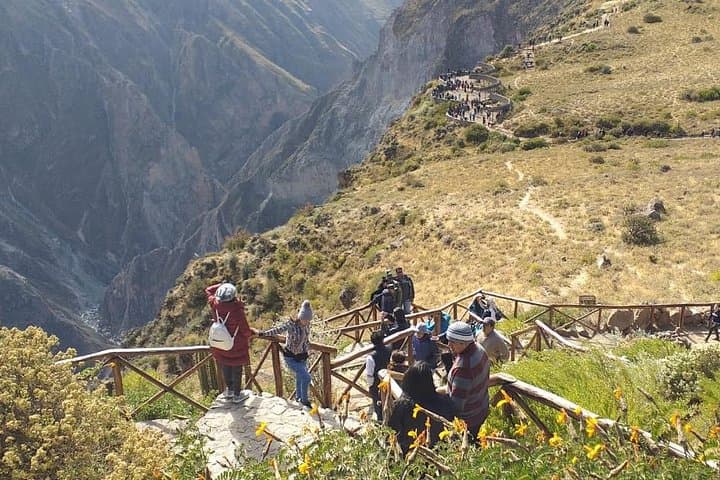
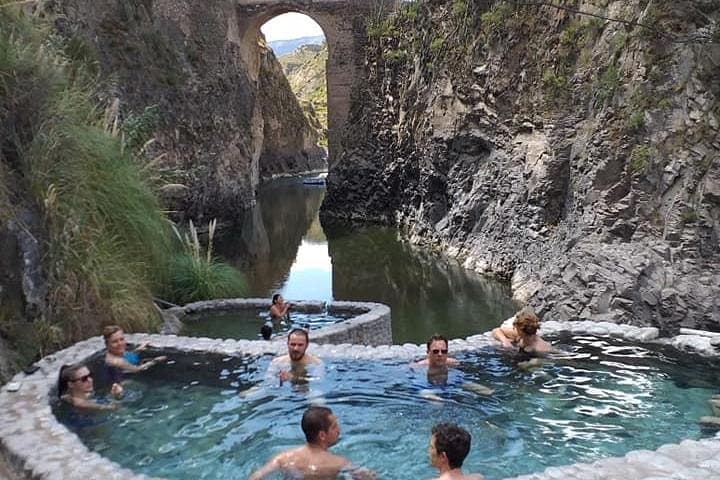
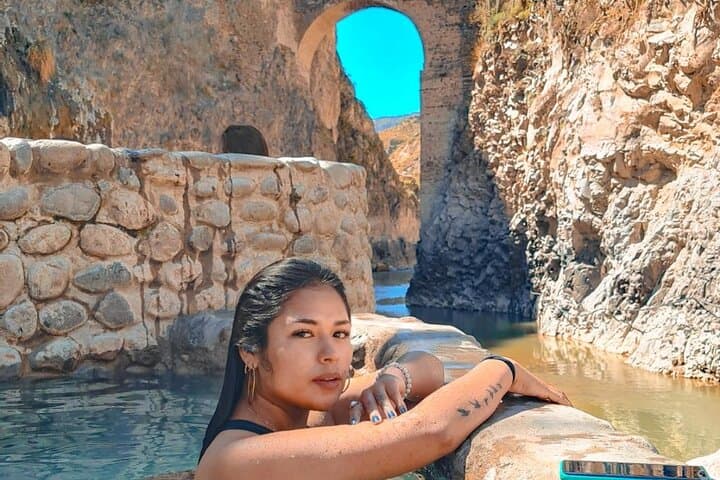
Day one follows gravel and paved roads up to a volcano viewpoint and into Chacapi’s outdoor thermal baths, where steaming pools push warmth into cold Andean air. The second-day prize is Mirador Cruz del Cóndor: a raw rim that lets the canyon show its depth and the condor stage its soaring. The canyon’s geology—deeply carved volcanic and sedimentary layers—tells a slow story of uplift and river persistence, while terraces on the valley floor recall centuries of pre-Columbian irrigation and Spanish-era villages.
Culturally, the Colca Valley is braided with Quechua and Aymara traditions; towns like Chivay keep markets, alpaca weavings and local foodways alive. Practically, travelers should prepare for altitude (3,500–4,900 m on route), sharp daytime sun, and temperature swings: morning frost can yield to intense afternoon sun.
Bring layered clothing, sun protection, and a refillable water bottle; plan for early starts to catch condors on their thermals and to avoid afternoon winds. Lodging on this two-day loop is basic but comfortable, and an air-conditioned vehicle handles the drive. For visitors who want big Andean vistas and wildlife sightings in a compact itinerary, this route delivers reliable spectacle with manageable logistics.
moderate.
24–30 hours.
Moderate fitness required — must handle several hours in a vehicle, short walks at altitude and early starts.
Condors are frequently seen at Cruz del Cóndor, especially in the morning when thermals form, but sightings can’t be guaranteed—weather and wind patterns affect flight.
The route reaches high puna areas and viewpoints; mild altitude symptoms are common—rest, hydrate, and inform your guide if you feel unwell.
Accommodation is basic hotels in the Colca area (examples: Hotel Maravillas, Q'uñi Wasi)—clean and practical rather than luxurious.
Yes—an air-conditioned vehicle is included for transfers and sightseeing on the two-day itinerary.
The Colca Valley holds pre-Incan agricultural terraces and later Spanish colonial settlements; irrigation systems here reflect centuries of continuous farming in high-altitude conditions.
The area overlaps protected reserves that balance tourism with wildlife protection; stick to trails, avoid feeding wildlife and support local guides and community-run services.
Turismo Liberty Perú operates guided outdoor trips and adventures with an emphasis on safety, stewardship, and memorable experiences.
On the road out of Arequipa the high puna spreads like a rough sea: wind-whipped grasses, patchworks of salt flats and the slow geometry of volcanoes pressing the skyline. By late afternoon the small convoy slips into the Reserve of Salinas and Aguada Blanca, where vicuñas and alpacas graze and the air thins enough to make every breath feel deliberate.
On the road out of Arequipa the high puna spreads like a rough sea: wind-whipped grasses, patchworks of salt flats and the slow geometry of volcanoes pressing the skyline. By late afternoon the small convoy slips into the Reserve of Salinas and Aguada Blanca, where vicuñas and alpacas graze and the air thins enough to make every breath feel deliberate.
Day one follows gravel and paved roads up to a volcano viewpoint and into Chacapi’s outdoor thermal baths, where steaming pools push warmth into cold Andean air. The second-day prize is Mirador Cruz del Cóndor: a raw rim that lets the canyon show its depth and the condor stage its soaring. The canyon’s geology—deeply carved volcanic and sedimentary layers—tells a slow story of uplift and river persistence, while terraces on the valley floor recall centuries of pre-Columbian irrigation and Spanish-era villages.
Culturally, the Colca Valley is braided with Quechua and Aymara traditions; towns like Chivay keep markets, alpaca weavings and local foodways alive. Practically, travelers should prepare for altitude (3,500–4,900 m on route), sharp daytime sun, and temperature swings: morning frost can yield to intense afternoon sun.
Bring layered clothing, sun protection, and a refillable water bottle; plan for early starts to catch condors on their thermals and to avoid afternoon winds. Lodging on this two-day loop is basic but comfortable, and an air-conditioned vehicle handles the drive. For visitors who want big Andean vistas and wildlife sightings in a compact itinerary, this route delivers reliable spectacle with manageable logistics.