THE ADVENTURE COLLECTIVE® · Independent discovery and booking for outdoor travel

Walk the hilltop streets of Coimbra with an expert guide and trace centuries of academic and religious history through façades, towers and the Church of Santa Cruz. This 2–2.25 hour outdoor tour is focused on stories and exterior sights rather than monument entries.
Walk the hilltop streets of Coimbra with an expert guide and trace centuries of academic and religious history through façades, towers and the Church of Santa Cruz. This 2–2.25 hour outdoor tour is focused on stories and exterior sights rather than monument entries.
You step out from beneath the carved iron of Porta Férrea and the city immediately rearranges itself — narrow, sun-warm lanes rising toward the university hill, the Mondego river low and patient below. The guide sets the pace, pointing out stone facades traced by centuries of students, merchants and clergy; the tour threads through exterior cloisters, bell towers and the worn steps of Rua Quebra Costas.
Verified experiences and guided adventures in the surrounding area.
Operated by Archer Tours - Walk & Talk with us · Coimbra, Coimbra District
You step out from beneath the carved iron of Porta Férrea and the city immediately rearranges itself — narrow, sun-warm lanes rising toward the university hill, the Mondego river low and patient below. The guide sets the pace, pointing out stone facades traced by centuries of students, merchants and clergy; the tour threads through exterior cloisters, bell towers and the worn steps of Rua Quebra Costas.
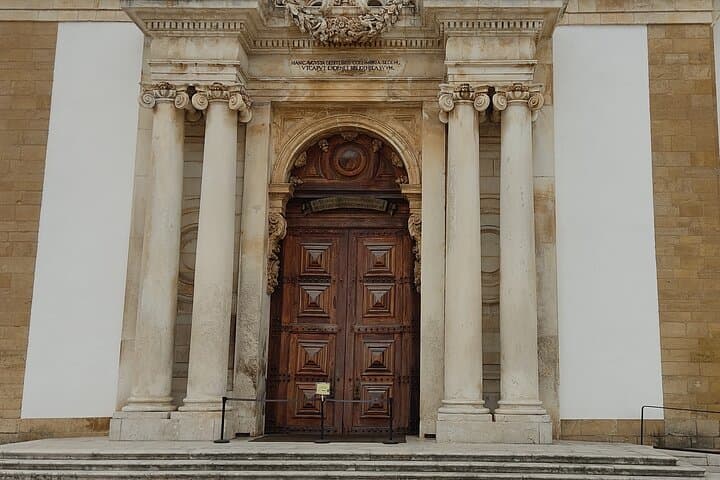
Coimbra’s story is visible in its stones. Founded around a Roman core and remade by medieval monarchs and the University of Coimbra (one of Europe’s oldest), the city wears layers of Romanesque, Gothic and Baroque architecture. The Joanina Library’s gilt echo and the austere weight of Sé Velha show academic power and ecclesiastic history side by side. Student traditions — fado sung by men, the Queima das Fitas festival — animate the present.
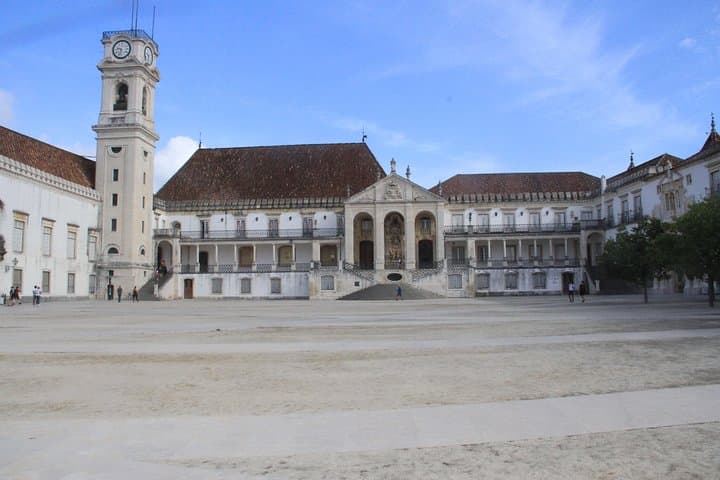
Expect a primarily outdoor walking route of roughly 2–2.25 hours that visits Porta Férrea, façades of the royal palace and faculties, Sé Nova and Sé Velha, Torre de Almedina and Praça do Comércio, with entry to the Church of Santa Cruz when no Mass is scheduled.
Practical notes: wear supportive shoes for cobbles and steep streets, bring water and sun protection in summer, and allow extra time for photos on the hilltop viewpoints. The pace is moderate; stairs and uneven surfaces make this unsuitable for limited mobility. Guides are expert in history and art history and may conduct tours in English when bilingual bookings overlap. This compact, interpretive walk is ideal for culture-minded travelers who prefer storytelling to museum entry lines.
moderate.
2–2.25 hours.
Moderate fitness; able to walk on cobbles and climb multiple flights of stairs.
No — the tour is exterior-focused; entry to the Church of Santa Cruz may be included if there is no Mass, but other monuments are not entered.
Guides are provided in Portuguese and English; if bookings exist in both languages for the same time the tour will be conducted in English unless separate guides are arranged.
Not recommended — the route includes steep, uneven cobbled streets and many steps.
For a full refund cancel at least 24 hours before the scheduled departure time; cancellations within 24 hours are non-refundable.
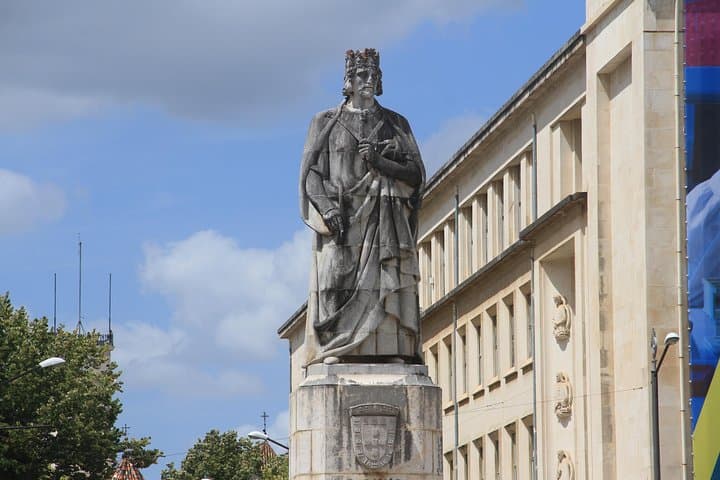
Coimbra served as Portugal’s capital in the 12th century and later became a major medieval university center; the Church of Santa Cruz contains royal tombs of early Portuguese kings.
Stick to marked streets and avoid eroding fragile stonework; local conservation efforts focus on preserving historic facades and managing visitor impact in the university district.
Archer Tours - Walk & Talk with us operates guided outdoor trips and adventures with an emphasis on safety, stewardship, and memorable experiences.

You step out from beneath the carved iron of Porta Férrea and the city immediately rearranges itself — narrow, sun-warm lanes rising toward the university hill, the Mondego river low and patient below. The guide sets the pace, pointing out stone facades traced by centuries of students, merchants and clergy; the tour threads through exterior cloisters, bell towers and the worn steps of Rua Quebra Costas.
You step out from beneath the carved iron of Porta Férrea and the city immediately rearranges itself — narrow, sun-warm lanes rising toward the university hill, the Mondego river low and patient below. The guide sets the pace, pointing out stone facades traced by centuries of students, merchants and clergy; the tour threads through exterior cloisters, bell towers and the worn steps of Rua Quebra Costas.
Coimbra’s story is visible in its stones. Founded around a Roman core and remade by medieval monarchs and the University of Coimbra (one of Europe’s oldest), the city wears layers of Romanesque, Gothic and Baroque architecture. The Joanina Library’s gilt echo and the austere weight of Sé Velha show academic power and ecclesiastic history side by side. Student traditions — fado sung by men, the Queima das Fitas festival — animate the present.
Expect a primarily outdoor walking route of roughly 2–2.25 hours that visits Porta Férrea, façades of the royal palace and faculties, Sé Nova and Sé Velha, Torre de Almedina and Praça do Comércio, with entry to the Church of Santa Cruz when no Mass is scheduled.
Practical notes: wear supportive shoes for cobbles and steep streets, bring water and sun protection in summer, and allow extra time for photos on the hilltop viewpoints. The pace is moderate; stairs and uneven surfaces make this unsuitable for limited mobility. Guides are expert in history and art history and may conduct tours in English when bilingual bookings overlap. This compact, interpretive walk is ideal for culture-minded travelers who prefer storytelling to museum entry lines.