THE ADVENTURE COLLECTIVE® · Independent discovery and booking for outdoor travel

Leap from 8,000 or 15,000 feet above Coffs Harbour and float the final minutes down to a sandy beach, with views over the Solitary Islands Marine Reserve. This beach tandem skydive pairs high-adrenaline freefall with coastal scenery and a professional safety briefing.
Leap from 8,000 or 15,000 feet above Coffs Harbour and float the final minutes down to a sandy beach, with views over the Solitary Islands Marine Reserve. This beach tandem skydive pairs high-adrenaline freefall with coastal scenery and a professional safety briefing.
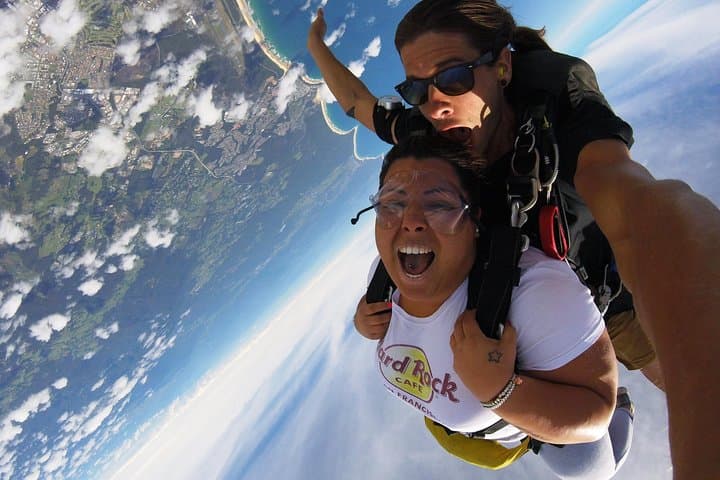
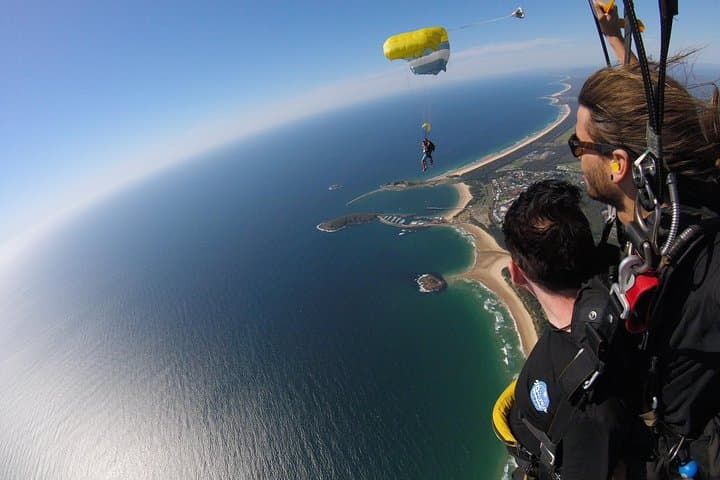
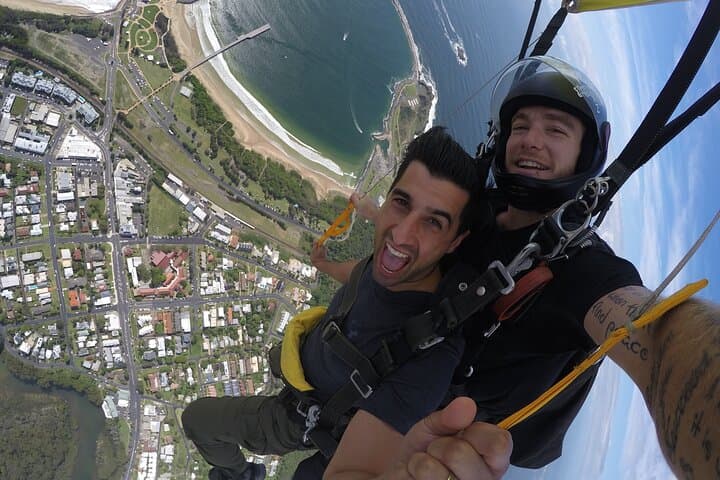
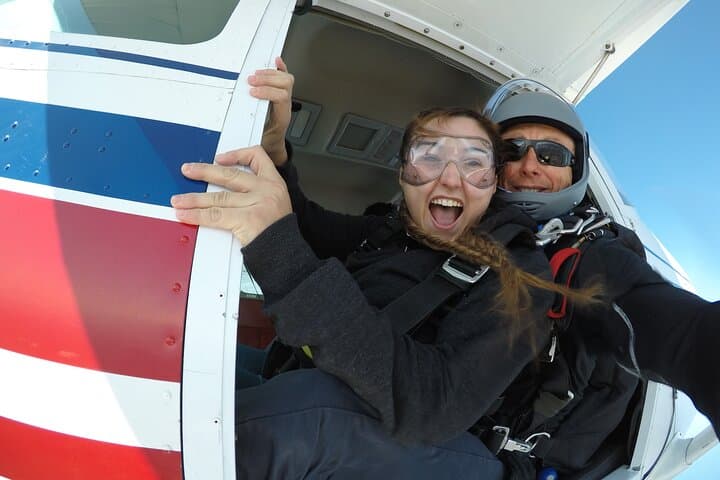
The plane climbs and the coast unfurls — a ribbon of sand, headlands and shimmering blue that seems to hold its breath. At altitude, the Pacific opens beneath you; the Solitary Islands scatter like stepping stones off the Coffs Coast. When the door slides, wind becomes the conductor and the world accelerates. The freefall — whether 8,000 or 15,000 feet — is a short, intense conversation with gravity; once the canopy blooms you drift, the beach rushing up in slow, intimate detail before a soft shore landing.
Verified experiences and guided adventures in the surrounding area.
Operated by Coffs Skydivers · Coffs Harbour, New South Wales
The plane climbs and the coast unfurls — a ribbon of sand, headlands and shimmering blue that seems to hold its breath. At altitude, the Pacific opens beneath you; the Solitary Islands scatter like stepping stones off the Coffs Coast. When the door slides, wind becomes the conductor and the world accelerates. The freefall — whether 8,000 or 15,000 feet — is a short, intense conversation with gravity; once the canopy blooms you drift, the beach rushing up in slow, intimate detail before a soft shore landing.
This stretch of New South Wales sits on Gumbaynggirr country and a maritime history of fishing, shipping and coastguard rescues. Geologically, the coastline alternates eroded headlands and sandy coves carved from Permian and Triassic sandstone, with offshore reefs that support the Solitary Islands Marine Reserve. Locals prize the marine life and surf culture; skydiving operators work with that coastal tempo to stage jumps timed for visibility and sea breezes.
Practical guidance: arrive 30–60 minutes early for paperwork and a safety brief, expect a total booking window of about two hours, and choose the higher altitude if you want a longer freefall and wider views. Maximum weight limits and basic health checks apply; disclose medical conditions. Wear flat, enclosed shoes and layers — it’s colder at altitude. Cameras are provided or handled by instructors; focus on the briefing and breathe during canopy time to enjoy views of reef formations and whales in season.
This is an adrenaline-first, logistics-second experience: short, vivid and undeniably coastal.
moderate.
2 hours.
Suitable for people in normal physical health who can handle short bursts of stress and follow instructor directions; not recommended for those with serious heart or spinal conditions.
Minimum age is 16 (under 18 require a guardian). Maximum weight is typically 90 kg—confirm with operator when booking.
Flights are weather-dependent; operators will offer an alternative date or full refund if your jump is cancelled due to conditions.
No—this is a tandem skydive with a certified instructor who handles deployment and navigation; you follow instructor commands.
Most operators offer professional video/photo packages handled by an instructor or cameraman; bring a strap for personal sunglasses or secure items.
The Coffs Coast sits on Gumbaynggirr land and developed as a timber and banana-planting region before becoming a coastal hub for tourism and fishing.
The Solitary Islands Marine Reserve protects reef habitats—respect no-take zones, avoid touching coral and follow operator guidance to minimize disturbance.
Coffs Skydivers operates guided outdoor trips and adventures with an emphasis on safety, stewardship, and memorable experiences.
The plane climbs and the coast unfurls — a ribbon of sand, headlands and shimmering blue that seems to hold its breath. At altitude, the Pacific opens beneath you; the Solitary Islands scatter like stepping stones off the Coffs Coast. When the door slides, wind becomes the conductor and the world accelerates. The freefall — whether 8,000 or 15,000 feet — is a short, intense conversation with gravity; once the canopy blooms you drift, the beach rushing up in slow, intimate detail before a soft shore landing.
The plane climbs and the coast unfurls — a ribbon of sand, headlands and shimmering blue that seems to hold its breath. At altitude, the Pacific opens beneath you; the Solitary Islands scatter like stepping stones off the Coffs Coast. When the door slides, wind becomes the conductor and the world accelerates. The freefall — whether 8,000 or 15,000 feet — is a short, intense conversation with gravity; once the canopy blooms you drift, the beach rushing up in slow, intimate detail before a soft shore landing.
This stretch of New South Wales sits on Gumbaynggirr country and a maritime history of fishing, shipping and coastguard rescues. Geologically, the coastline alternates eroded headlands and sandy coves carved from Permian and Triassic sandstone, with offshore reefs that support the Solitary Islands Marine Reserve. Locals prize the marine life and surf culture; skydiving operators work with that coastal tempo to stage jumps timed for visibility and sea breezes.
Practical guidance: arrive 30–60 minutes early for paperwork and a safety brief, expect a total booking window of about two hours, and choose the higher altitude if you want a longer freefall and wider views. Maximum weight limits and basic health checks apply; disclose medical conditions. Wear flat, enclosed shoes and layers — it’s colder at altitude. Cameras are provided or handled by instructors; focus on the briefing and breathe during canopy time to enjoy views of reef formations and whales in season.
This is an adrenaline-first, logistics-second experience: short, vivid and undeniably coastal.