THE ADVENTURE COLLECTIVE® · Independent discovery and booking for outdoor travel

Climb, jump, abseil and swim along Mogán’s rugged ocean cliffs on a guided coastering route that finishes with sunset views toward El Teide. This four-hour coastal scramble blends via ferrata, natural pools and exposed ledges — expect active water, basalt rock, and a skilled guide.
Climb, jump, abseil and swim along Mogán’s rugged ocean cliffs on a guided coastering route that finishes with sunset views toward El Teide. This four-hour coastal scramble blends via ferrata, natural pools and exposed ledges — expect active water, basalt rock, and a skilled guide.
Salt spray stings the eyes and the cliff’s lip dares you forward — that’s the first impression on a coastering route along Mogán’s ocean cliffs. Participants thread narrow ledges, clip into via ferrata rungs, and step onto floating bridges while waves hiss against basalt shelves. When the sun slides low, the sea turns molten and El Teide’s silhouette on Tenerife becomes part of the view.
Verified experiences and guided adventures in the surrounding area.
Operated by YUKAN Outdoor Gran Canaria · Puerto de Mogán, Gran Canaria
Salt spray stings the eyes and the cliff’s lip dares you forward — that’s the first impression on a coastering route along Mogán’s ocean cliffs. Participants thread narrow ledges, clip into via ferrata rungs, and step onto floating bridges while waves hiss against basalt shelves. When the sun slides low, the sea turns molten and El Teide’s silhouette on Tenerife becomes part of the view.
Geologically the south coast of Gran Canaria is carved from volcanic flows and marine erosion; the cliffs here are compact layers of basalt and tuff that produce steep faces, natural pools, and jump platforms. Mogán’s coastline carries a maritime history — small fishing coves and the port of Puerto de Mogán grew from traditional tuna and net fisheries into a village shaped by sea trade and modern tourism.
Culturally, the route moves past quiet rock chapels and working terraces; guides often point out old stone anchors and local shellfish beds. Expect the ocean to be an active partner: currents shift near coves and waves can push you toward a breaker, so timing and route choice matter.
Practical guidance: this is a guided, roughly 4‑hour coastal adventure for people in good shape. Wetsuit, helmet and lifejacket are provided; strong swimming, comfortable exposure tolerance, and basic rope-procedure awareness help. Bring sturdy water shoes, a small dry bag, sun protection, and extra water. Morning departures favor calmer seas; sunset trips maximize vistas. Follow your guide’s briefings on jumps and abseils, and watch tide charts — low-to-mid tide often gives the safest access to natural pools. Coastering here is both playful and demanding: treat the sea with respect and it will repay you with raw, kinetic coastline scenery.
challenging.
4 hours.
Participants should be in good aerobic condition, comfortable with exposure, and able to swim in open water.
No formal climbing certification is required; guides teach via ferrata and abseil techniques on-site, but comfort with exposure and basic climbing movements helps.
No — guides offer optional jump points and alternatives; participants can choose easier entries or swim-ins instead.
Typically a wetsuit, helmet, lifejacket, basic snacks and insurance are included; confirm equipment and group size when booking.
Non-swimmers are generally not recommended; strong swimming skills are encouraged and flotation is provided, but open-water movement is required.
Mogán’s coast formed from volcanic flows and centuries of fishing activity; Puerto de Mogán evolved from a working port into a small maritime village with preserved fishery infrastructure.
The coastline is sensitive to trampling and litter; stick to established access points, pack out waste, and respect marine life and shellfish beds.
YUKAN Outdoor Gran Canaria operates guided outdoor trips and adventures with an emphasis on safety, stewardship, and memorable experiences.
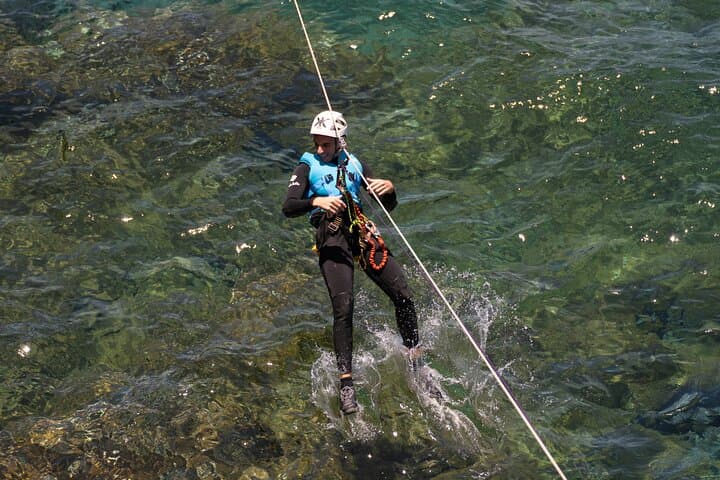
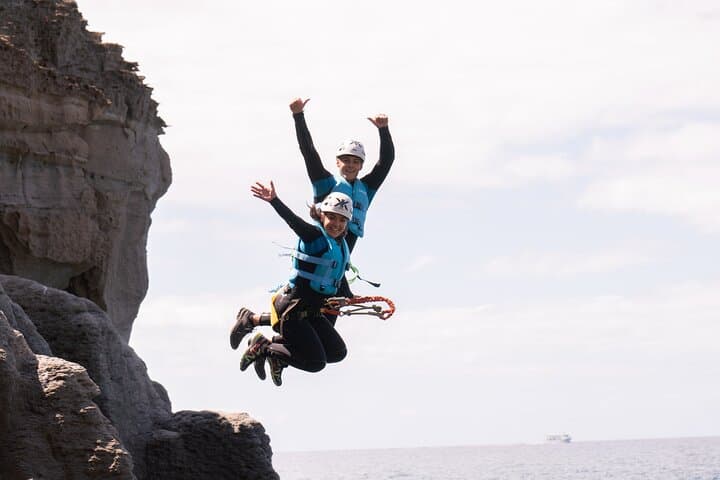
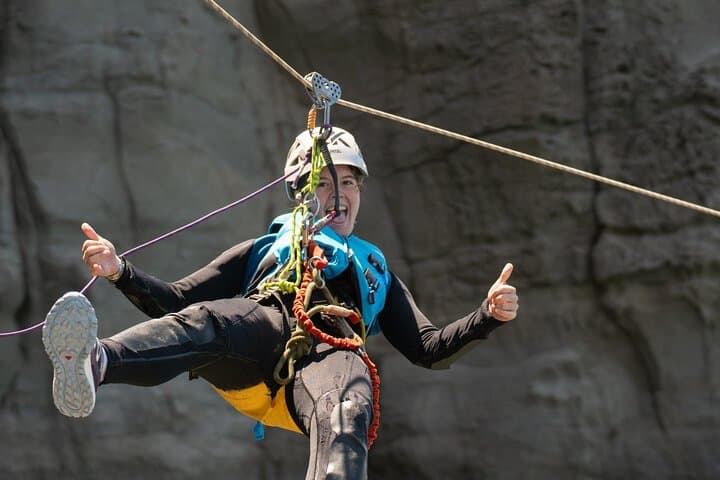
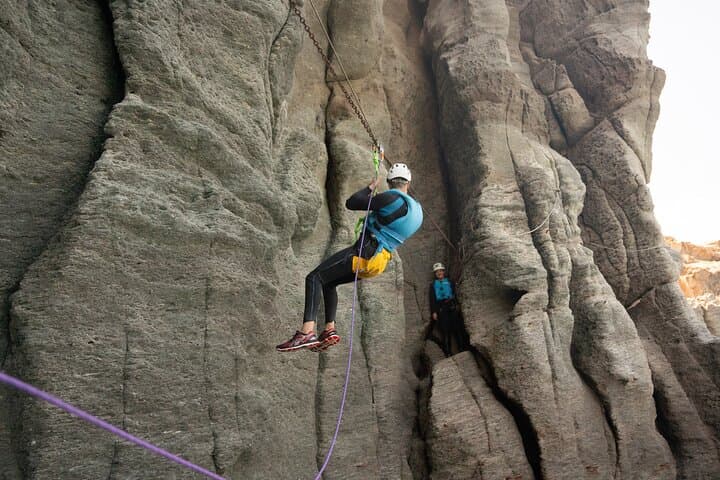
Salt spray stings the eyes and the cliff’s lip dares you forward — that’s the first impression on a coastering route along Mogán’s ocean cliffs. Participants thread narrow ledges, clip into via ferrata rungs, and step onto floating bridges while waves hiss against basalt shelves. When the sun slides low, the sea turns molten and El Teide’s silhouette on Tenerife becomes part of the view.
Salt spray stings the eyes and the cliff’s lip dares you forward — that’s the first impression on a coastering route along Mogán’s ocean cliffs. Participants thread narrow ledges, clip into via ferrata rungs, and step onto floating bridges while waves hiss against basalt shelves. When the sun slides low, the sea turns molten and El Teide’s silhouette on Tenerife becomes part of the view.
Geologically the south coast of Gran Canaria is carved from volcanic flows and marine erosion; the cliffs here are compact layers of basalt and tuff that produce steep faces, natural pools, and jump platforms. Mogán’s coastline carries a maritime history — small fishing coves and the port of Puerto de Mogán grew from traditional tuna and net fisheries into a village shaped by sea trade and modern tourism.
Culturally, the route moves past quiet rock chapels and working terraces; guides often point out old stone anchors and local shellfish beds. Expect the ocean to be an active partner: currents shift near coves and waves can push you toward a breaker, so timing and route choice matter.
Practical guidance: this is a guided, roughly 4‑hour coastal adventure for people in good shape. Wetsuit, helmet and lifejacket are provided; strong swimming, comfortable exposure tolerance, and basic rope-procedure awareness help. Bring sturdy water shoes, a small dry bag, sun protection, and extra water. Morning departures favor calmer seas; sunset trips maximize vistas. Follow your guide’s briefings on jumps and abseils, and watch tide charts — low-to-mid tide often gives the safest access to natural pools. Coastering here is both playful and demanding: treat the sea with respect and it will repay you with raw, kinetic coastline scenery.