THE ADVENTURE COLLECTIVE® · Independent discovery and booking for outdoor travel

Climb, abseil and zip 35 metres above the Atlantic on a rugged Gran Canaria coasteering route that blends sea caves, cliff traverses and Guanche history. This half-day adventure is technical, scenic and weather-dependent—perfect for fit, curious travelers.
Climb, abseil and zip 35 metres above the Atlantic on a rugged Gran Canaria coasteering route that blends sea caves, cliff traverses and Guanche history. This half-day adventure is technical, scenic and weather-dependent—perfect for fit, curious travelers.
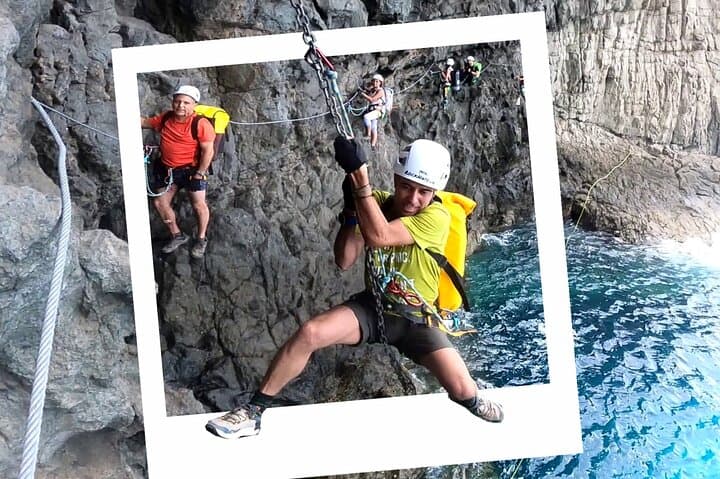
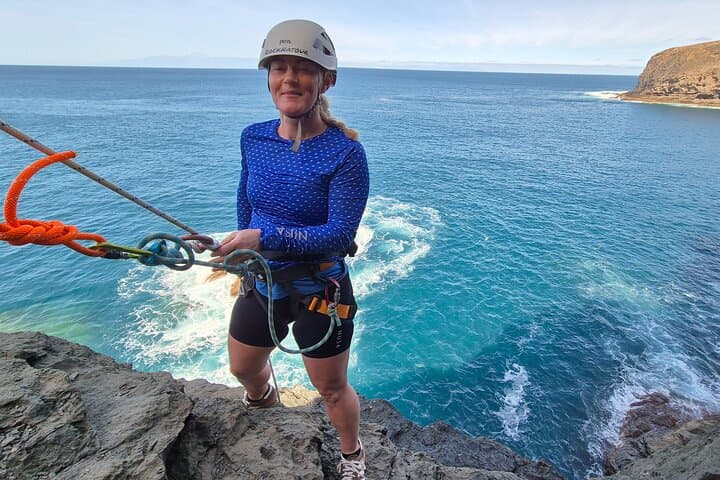
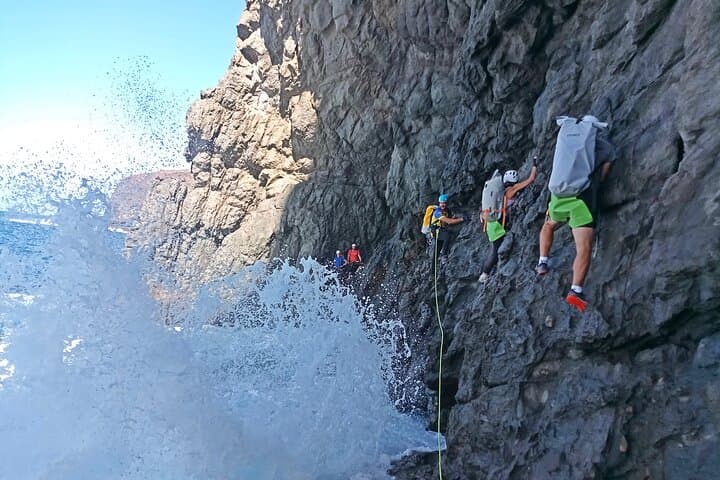
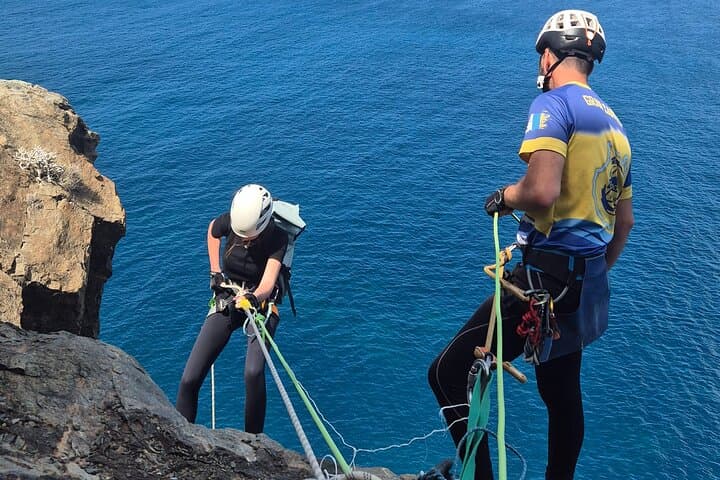
The cliff face smells of salt and warmed stone as you step off the track and into the wind—Gran Canaria’s Atlantic edge doesn’t whisper, it dares. Your group walks a narrow ledge to an ancient aboriginal cave; guides point out cupules and petroglyph-shaped hollows before clipping in for the first abseil. Ropes hiss, the sea below churns, and the coastline becomes a sequence of climbs, chain-assisted traverses and a final zipline that sends you 35 metres over the surf.
Verified experiences and guided adventures in the surrounding area.
Operated by RockNatour Experiences · Agaete, Gran Canaria
The cliff face smells of salt and warmed stone as you step off the track and into the wind—Gran Canaria’s Atlantic edge doesn’t whisper, it dares. Your group walks a narrow ledge to an ancient aboriginal cave; guides point out cupules and petroglyph-shaped hollows before clipping in for the first abseil. Ropes hiss, the sea below churns, and the coastline becomes a sequence of climbs, chain-assisted traverses and a final zipline that sends you 35 metres over the surf.
Geology here is blunt and volcanic: black basalt cliffs hewn by Atlantic swell, reefs and sea caves carved over millennia. The route follows ridgelines carved by past eruptions and subsequent marine erosion, so expect sharp rock bands and pocketed holds. Culturally, this stretch of Gran Canaria recalls the Guanches—aboriginal inhabitants whose caves and shepherd terraces still mark the slopes—and the fishing hamlets that read the sea for wind and swell.
Practically, the trip is a half-day, moderately strenuous outing that mixes short hikes, technical abseils and exposed scrambling; guides provide helmets, harnesses and belays. Sea state and wind drive cancellations; tour operators monitor weather closely. Wear a wetsuit or bring thermal layers if you chill easily, shoes with sticky soles, and a small dry bag for phone and sunscreen. Hydrate, arrive with a light snack, and be ready to learn rope technique on the fly.
This is coastal travel that rewards steady footing and curiosity: the Atlantic will test your balance, the cliffs will ask for trust, and the climb back up will leave you with a clear, earned view of the island.
challenging.
4 hours.
Suitable for people with good cardio and leg strength; expect sustained scrambling, rope work and short swims.
No. Guides teach rope techniques and provide full belay support; basic comfort with exposure and following instructions is required.
Operators monitor sea state and wind; the trip is often cancelled for safety with a refund if cancelled at least 24 hours before departure, and also may cancel closer in if conditions worsen.
Some sections may require short swims or controlled entries into the sea—comfortable swimming ability is recommended but not extensive endurance.
Harnesses, helmets and belay systems are supplied; some providers also give wetsuits but confirm in advance and bring your own water shoes and layers.
The island’s north and west coasts preserve Guanche cave sites and terraces; many routes pass rocks once used as shelter or lookouts by indigenous inhabitants.
Operators limit group sizes and avoid fragile cliff vegetation; stay on established paths and pack out all trash to protect nesting seabirds and coastal habitats.
RockNatour Experiences operates guided outdoor trips and adventures with an emphasis on safety, stewardship, and memorable experiences.
The cliff face smells of salt and warmed stone as you step off the track and into the wind—Gran Canaria’s Atlantic edge doesn’t whisper, it dares. Your group walks a narrow ledge to an ancient aboriginal cave; guides point out cupules and petroglyph-shaped hollows before clipping in for the first abseil. Ropes hiss, the sea below churns, and the coastline becomes a sequence of climbs, chain-assisted traverses and a final zipline that sends you 35 metres over the surf.
The cliff face smells of salt and warmed stone as you step off the track and into the wind—Gran Canaria’s Atlantic edge doesn’t whisper, it dares. Your group walks a narrow ledge to an ancient aboriginal cave; guides point out cupules and petroglyph-shaped hollows before clipping in for the first abseil. Ropes hiss, the sea below churns, and the coastline becomes a sequence of climbs, chain-assisted traverses and a final zipline that sends you 35 metres over the surf.
Geology here is blunt and volcanic: black basalt cliffs hewn by Atlantic swell, reefs and sea caves carved over millennia. The route follows ridgelines carved by past eruptions and subsequent marine erosion, so expect sharp rock bands and pocketed holds. Culturally, this stretch of Gran Canaria recalls the Guanches—aboriginal inhabitants whose caves and shepherd terraces still mark the slopes—and the fishing hamlets that read the sea for wind and swell.
Practically, the trip is a half-day, moderately strenuous outing that mixes short hikes, technical abseils and exposed scrambling; guides provide helmets, harnesses and belays. Sea state and wind drive cancellations; tour operators monitor weather closely. Wear a wetsuit or bring thermal layers if you chill easily, shoes with sticky soles, and a small dry bag for phone and sunscreen. Hydrate, arrive with a light snack, and be ready to learn rope technique on the fly.
This is coastal travel that rewards steady footing and curiosity: the Atlantic will test your balance, the cliffs will ask for trust, and the climb back up will leave you with a clear, earned view of the island.