THE ADVENTURE COLLECTIVE® · Independent discovery and booking for outdoor travel

Cover Roman ports, cable-car cliff grottos and a subterranean Crusader city in one long coastal day from Jerusalem. This practical guide explains what to expect—terrain, history and timing—so you can plan the eight-hour trip with confidence.
Cover Roman ports, cable-car cliff grottos and a subterranean Crusader city in one long coastal day from Jerusalem. This practical guide explains what to expect—terrain, history and timing—so you can plan the eight-hour trip with confidence.
Salt air brushes the windows as you roll north from Jerusalem, the city falling away into the flat, bright plain that meets the Mediterranean. In a single day this coastal sweep delivers Roman stone piers and mosaics at Caesarea, terraced views of Haifa’s Baha'i gardens, the chalk cliffs and carved grottos of Rosh Hanikra, and the layered streets and underground Crusader city of Acre.
Verified experiences and guided adventures in the surrounding area.
Operated by Bein Harim Ltd · Caesarea, Haifa District
Salt air brushes the windows as you roll north from Jerusalem, the city falling away into the flat, bright plain that meets the Mediterranean. In a single day this coastal sweep delivers Roman stone piers and mosaics at Caesarea, terraced views of Haifa’s Baha'i gardens, the chalk cliffs and carved grottos of Rosh Hanikra, and the layered streets and underground Crusader city of Acre.
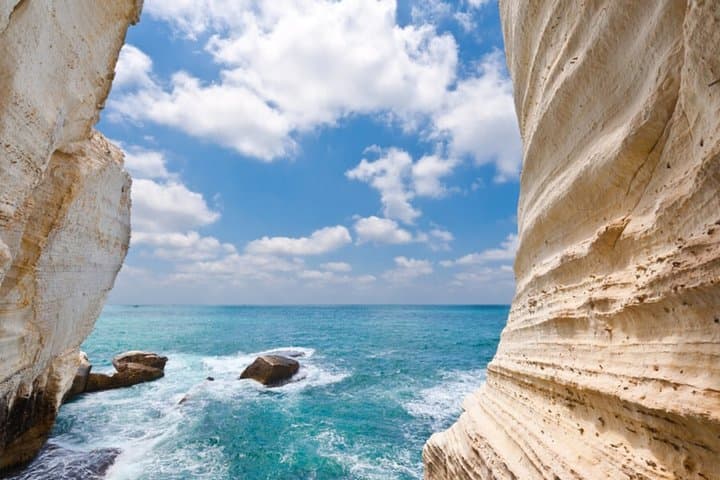
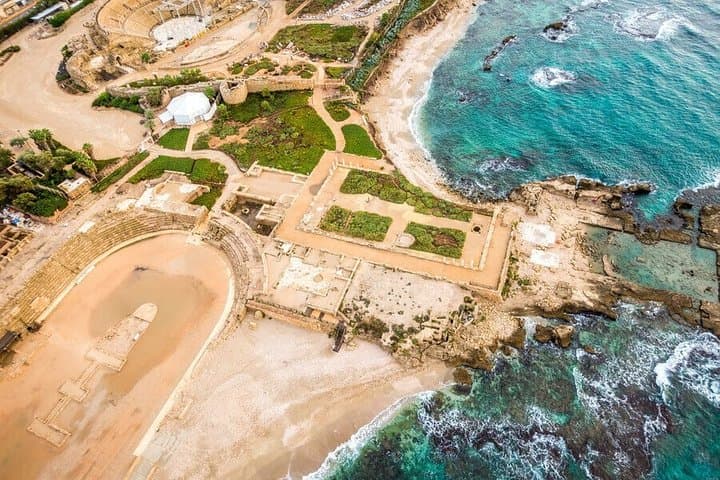
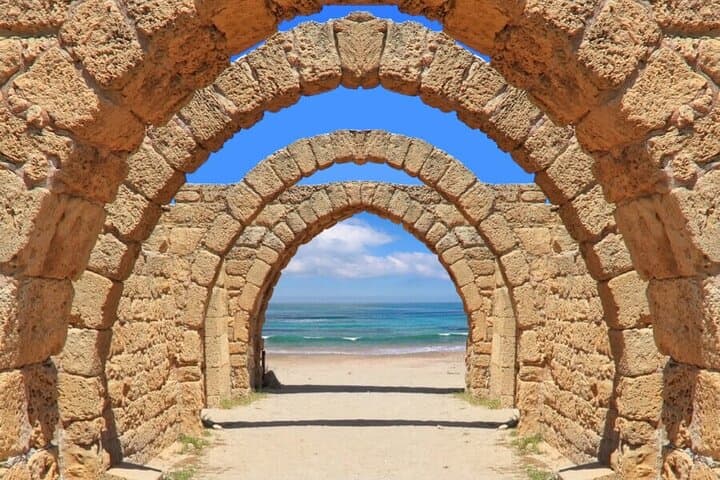
Caesarea was Herod the Great’s maritime statement — a harbor engineered into the sea with theaters, bathhouses and an aqueduct whose remains still define the shoreline. Rosh Hanikra’s white cliffs are sedimentary chalk whittled by waves into grottoes; the cable car drops you to caverns where the Mediterranean still pushes and echoes. Acre (Akko) carries Crusader and Ottoman strata: narrow alleys, stone fortifications, and a subterranean city built for siege and storage.
You’ll move between sites by air-conditioned coach, with guided stops for archaeology and panorama. Expect uneven cobbles, steps in the Crusader tunnels, and a short cable-car descent at Rosh Hanikra. Bring sturdy walking shoes, sun protection and a refillable water bottle; the day is long (about eight hours) and mostly on foot at each stop.
Practical notes: some entrances are included but plan for a simple lunch in a coastal town; this tour is unsuitable for children under four and involves several short walks and stairs. Aim for morning departures to capture softer light on the amphitheater and grottos, and leave time for quiet moments on Acre’s ramparts before the return drive to Jerusalem.
easy.
8 hours.
Suitable for average fitness: must be able to walk short distances on uneven ground and climb stairs.
The tour runs about 8 hours and typically departs from Jerusalem with hotel pickup; confirm exact pickup time with the local operator.
Some admissions are included (Caesarea sites, Rosh Hanikra grottos and Acre’s underground city on this itinerary) — check your booking confirmation for specifics.
Not suitable for children under 4; sites include stairs, uneven surfaces and tight tunnel sections that limit wheelchair access—contact the operator for accessibility details.
No — the tour views the Lebanese border from the Israeli side at Rosh Hanikra; no border crossings are involved and a passport isn’t needed for the viewpoint itself.
Herod the Great built Caesarea as a major Roman port; Acre later became a Crusader stronghold and Ottoman trading hub, leaving layered architecture and underground fortifications.
These coastal and archaeological sites are sensitive—stay on marked paths, avoid touching mosaics or walls, and pack out waste to protect fragile ruins and marine habitats.
Bein Harim Ltd operates guided outdoor trips and adventures with an emphasis on safety, stewardship, and memorable experiences.
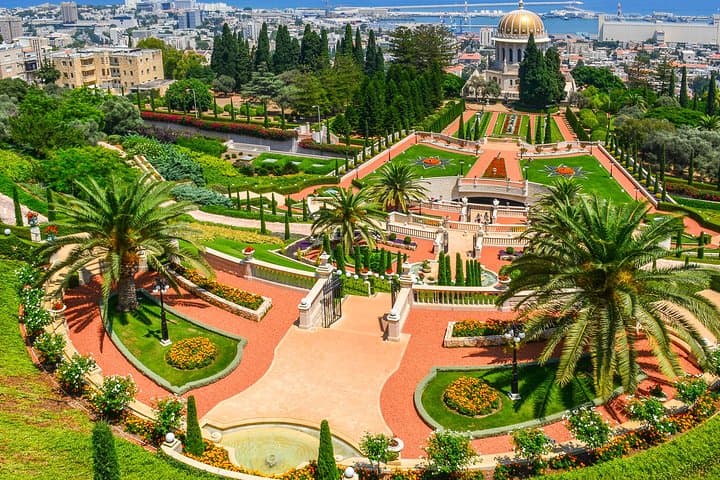
Salt air brushes the windows as you roll north from Jerusalem, the city falling away into the flat, bright plain that meets the Mediterranean. In a single day this coastal sweep delivers Roman stone piers and mosaics at Caesarea, terraced views of Haifa’s Baha'i gardens, the chalk cliffs and carved grottos of Rosh Hanikra, and the layered streets and underground Crusader city of Acre.
Salt air brushes the windows as you roll north from Jerusalem, the city falling away into the flat, bright plain that meets the Mediterranean. In a single day this coastal sweep delivers Roman stone piers and mosaics at Caesarea, terraced views of Haifa’s Baha'i gardens, the chalk cliffs and carved grottos of Rosh Hanikra, and the layered streets and underground Crusader city of Acre.
Caesarea was Herod the Great’s maritime statement — a harbor engineered into the sea with theaters, bathhouses and an aqueduct whose remains still define the shoreline. Rosh Hanikra’s white cliffs are sedimentary chalk whittled by waves into grottoes; the cable car drops you to caverns where the Mediterranean still pushes and echoes. Acre (Akko) carries Crusader and Ottoman strata: narrow alleys, stone fortifications, and a subterranean city built for siege and storage.
You’ll move between sites by air-conditioned coach, with guided stops for archaeology and panorama. Expect uneven cobbles, steps in the Crusader tunnels, and a short cable-car descent at Rosh Hanikra. Bring sturdy walking shoes, sun protection and a refillable water bottle; the day is long (about eight hours) and mostly on foot at each stop.
Practical notes: some entrances are included but plan for a simple lunch in a coastal town; this tour is unsuitable for children under four and involves several short walks and stairs. Aim for morning departures to capture softer light on the amphitheater and grottos, and leave time for quiet moments on Acre’s ramparts before the return drive to Jerusalem.