THE ADVENTURE COLLECTIVE® · Independent discovery and booking for outdoor travel

Clipped to a cable above the Mediterranean, the Cala del Molí via ferrata offers short, exposed traverses and a cable bridge with sweeping sea views. This practical guide explains what to expect, how to prepare, and local context for this coastal cliff route.
Clipped to a cable above the Mediterranean, the Cala del Molí via ferrata offers short, exposed traverses and a cable bridge with sweeping sea views. This practical guide explains what to expect, how to prepare, and local context for this coastal cliff route.
The route runs along the limestone lip of the Costa Brava, waves chiseling the cliff below as you clip in and move sideways along iron rungs and cable bridges. Sea spray and gull calls punctuate the rhythm of heel-to-toe steps while the town of Sant Feliu de Guíxols waits back on the headland.
Verified experiences and guided adventures in the surrounding area.
Operated by Aventura Experience · Sant Feliu de Guíxols, Catalonia
The route runs along the limestone lip of the Costa Brava, waves chiseling the cliff below as you clip in and move sideways along iron rungs and cable bridges. Sea spray and gull calls punctuate the rhythm of heel-to-toe steps while the town of Sant Feliu de Guíxols waits back on the headland.
This equipped via ferrata follows a tradition of coastal routes built into Europe’s cliff faces in the 20th century, adapted here to the region’s fractured Cretaceous limestone and shallow karst shelves. Locals fished these coves for generations; today the road and ferrata reframe the shoreline as an accessible adventure corridor that links geological strata with maritime culture.
Expect short vertical sections, horizontal traverses and at least one cable bridge that exposes you to the Mediterranean swell—terrain that reads as scrambling with fixed protection. Guides rig a continuous lifeline; participants use approved harnesses, lanyards and helmets. Wildlife is coastal: seabirds wheel and lizards sun on ledges. The climb is compact—roughly a few hundred meters of fitted itinerary and about three hours including briefing, transit and photo stops.
Practical tips: start mid-morning for stable light and calmer sea breezes, wear shoes with grippy soles and layered sun protection, and bring water and a light pack. Those with serious back or heart conditions should avoid the route; children can join if comfortable with exposure. Book in advance during summer months—group sizes are small and the route is popular with both beginners and mixed-experience groups.
moderate.
3 hours.
Suitable for people with average fitness who can walk uneven ground, manage short vertical moves and tolerate exposure.
No technical climbing experience is required; guides brief on equipment and technique, but participants should be comfortable with exposure and basic scrambling.
Yes—children can join if physically able and accompanied by an adult; operators often set age or height minimums, so check when booking.
The operator may cancel for strong winds or storms; wet metal increases slipperiness and sea spray can make cable bridges hazardous.
Typical inclusions are guide service, approved harness and lanyards, helmet (sometimes), activity insurance and snacks; confirm specifics with the provider.
Sant Feliu’s coastline has been shaped by fishing and simple cliff paths for centuries; the modern fitted routes are recent adaptations that make exposed coastal rock accessible.
The Costa Brava is managed for both tourism and ecological value—stick to fixed routes, avoid disturbing bird nesting ledges, and pack out any trash.
Aventura Experience operates guided outdoor trips and adventures with an emphasis on safety, stewardship, and memorable experiences.
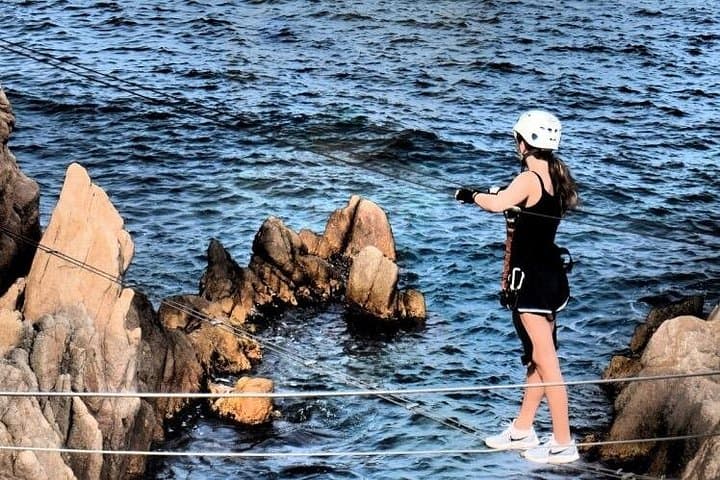
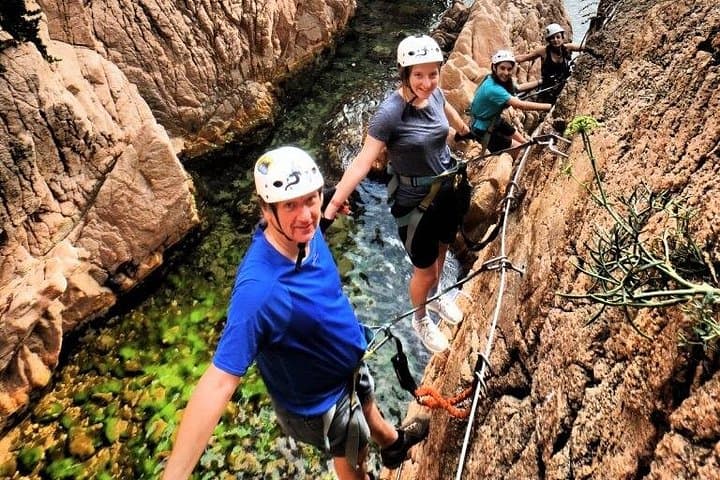
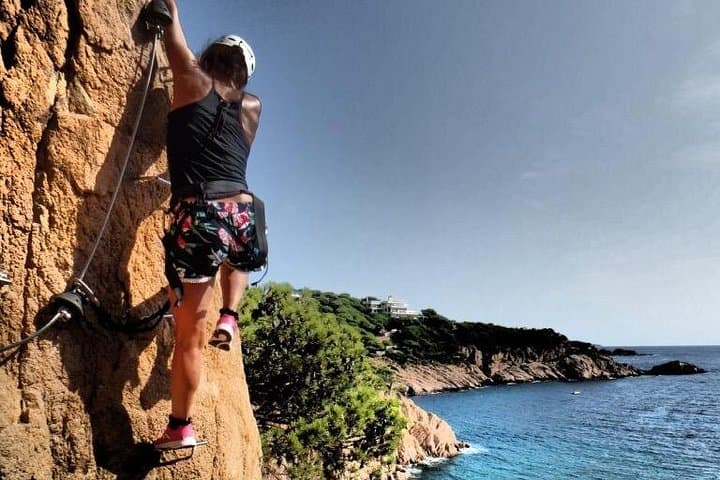
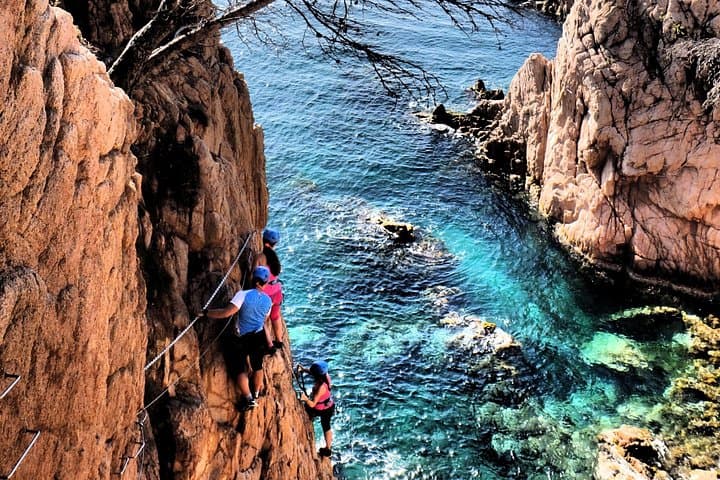
The route runs along the limestone lip of the Costa Brava, waves chiseling the cliff below as you clip in and move sideways along iron rungs and cable bridges. Sea spray and gull calls punctuate the rhythm of heel-to-toe steps while the town of Sant Feliu de Guíxols waits back on the headland.
The route runs along the limestone lip of the Costa Brava, waves chiseling the cliff below as you clip in and move sideways along iron rungs and cable bridges. Sea spray and gull calls punctuate the rhythm of heel-to-toe steps while the town of Sant Feliu de Guíxols waits back on the headland.
This equipped via ferrata follows a tradition of coastal routes built into Europe’s cliff faces in the 20th century, adapted here to the region’s fractured Cretaceous limestone and shallow karst shelves. Locals fished these coves for generations; today the road and ferrata reframe the shoreline as an accessible adventure corridor that links geological strata with maritime culture.
Expect short vertical sections, horizontal traverses and at least one cable bridge that exposes you to the Mediterranean swell—terrain that reads as scrambling with fixed protection. Guides rig a continuous lifeline; participants use approved harnesses, lanyards and helmets. Wildlife is coastal: seabirds wheel and lizards sun on ledges. The climb is compact—roughly a few hundred meters of fitted itinerary and about three hours including briefing, transit and photo stops.
Practical tips: start mid-morning for stable light and calmer sea breezes, wear shoes with grippy soles and layered sun protection, and bring water and a light pack. Those with serious back or heart conditions should avoid the route; children can join if comfortable with exposure. Book in advance during summer months—group sizes are small and the route is popular with both beginners and mixed-experience groups.