THE ADVENTURE COLLECTIVE® · Independent discovery and booking for outdoor travel

Follow coastal tracks and eucalyptus-scented trails on a 2-hour horseback ride just outside Agadir. This beginner-friendly adventure combines dune scenery, shaded forest stretches, and a riverside finish at the mouth of Oued Souss.
Follow coastal tracks and eucalyptus-scented trails on a 2-hour horseback ride just outside Agadir. This beginner-friendly adventure combines dune scenery, shaded forest stretches, and a riverside finish at the mouth of Oued Souss.
Sand, sea breeze and the steady rhythm of hooves set the scene before you even meet your horse. The ride begins roughly 7 km from Agadir, where riders mount up beside low dunes and a stand of tall eucalyptus that smells sharp and resinous. For two hours you follow tracks that edge the beach (horses aren’t permitted on Agadir’s public sand) then cut into shaded gullies toward the mouth of Oued Souss, where the river meets the Atlantic.
Verified experiences and guided adventures in the surrounding area.
Operated by Agadir Local Tours · Agadir, Souss-Massa
Sand, sea breeze and the steady rhythm of hooves set the scene before you even meet your horse. The ride begins roughly 7 km from Agadir, where riders mount up beside low dunes and a stand of tall eucalyptus that smells sharp and resinous. For two hours you follow tracks that edge the beach (horses aren’t permitted on Agadir’s public sand) then cut into shaded gullies toward the mouth of Oued Souss, where the river meets the Atlantic.
This stretch of Morocco’s Atlantic coast is young geologically: sandy spits and barrier dunes formed under wind and wave over thousands of years, while the Souss plain has been a travel corridor since Phoenician and later Berber trade routes. Local guides often point out irrigation canals and eucalyptus windbreaks planted during 20th-century agricultural campaigns; the area’s culture blends Amazigh (Berber) roots with coastal fishing communities.
Expect mostly flat terrain with sandy tracks and compact dirt in the forest — minimal elevation gain but varied footing. The operator provides helmets and hotel pickup for small shared groups (up to about a dozen). Riders should have moderate fitness: you’ll be in the saddle for extended stretches and asked to follow group pacing and guide instructions.
Practical tips: aim for early morning or late afternoon to avoid heat, bring layered sun protection, and secure closed-toe shoes for stirrup security. If you have back issues, pregnancy, or very young infants, this activity is not recommended. With straightforward logistics and strong local knowledge, the ride is an accessible way to see Agadir’s coastal ecology from horseback.
moderate.
2 hours.
Moderate: able to sit and balance in the saddle for extended periods, walk on uneven sand and trails.
Yes. The provider uses well-trained horses and guides offer a brief introduction and basic riding instructions; moderate fitness is recommended.
No. Horses are not permitted on Agadir’s public beach; the route follows nearby dunes and forested tracks instead.
Yes. The tour includes pickup and drop-off from most Agadir hotels via air-conditioned vehicle as stated in the itinerary.
People with serious back problems, pregnant travelers, or those unable to sit unaided for 2 hours should not participate; infants must sit on laps and specialized infant seats may be available.
The Souss estuary has long been a coastal crossroads, linking inland Amazigh agricultural lands with Atlantic fishing communities and trade routes.
The estuary and coastal dunes are ecologically sensitive; stick to marked tracks, avoid disturbing birds at the river mouth, and follow guide instructions to limit erosion.
Agadir Local Tours operates guided outdoor trips and adventures with an emphasis on safety, stewardship, and memorable experiences.
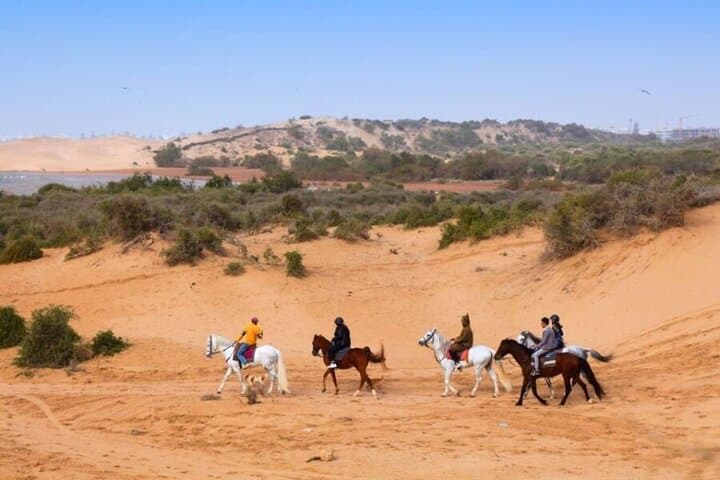
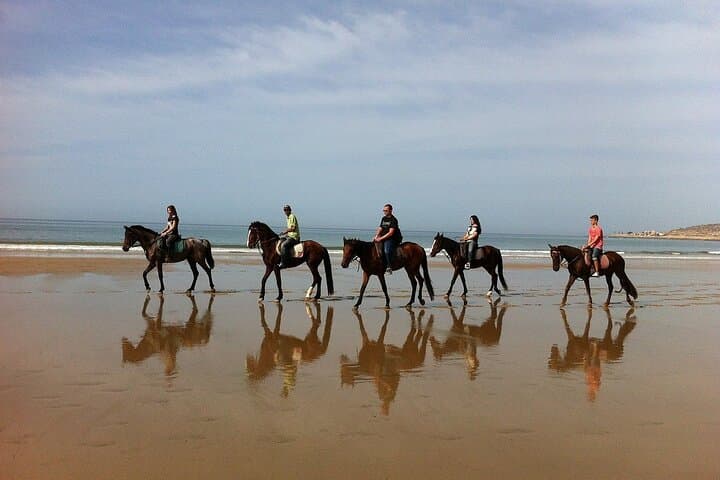
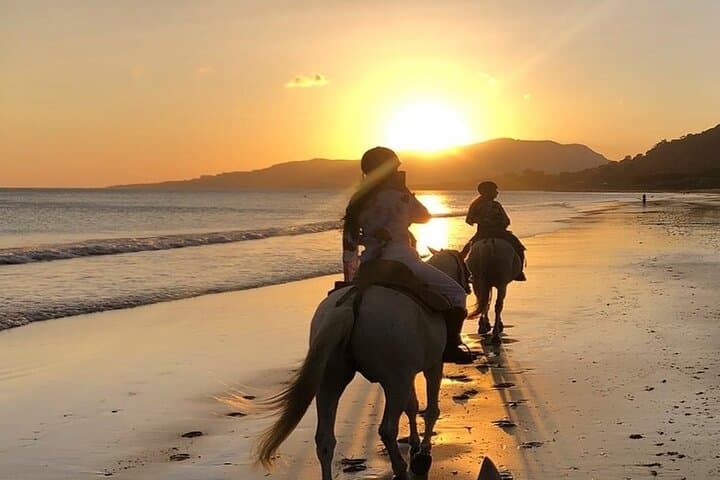
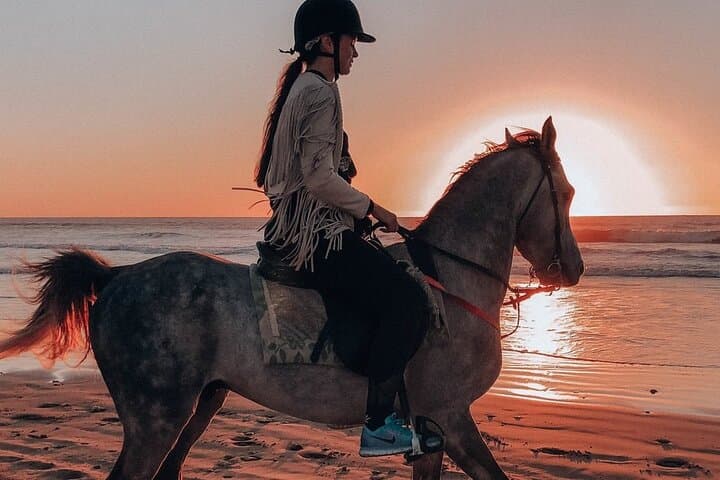
Sand, sea breeze and the steady rhythm of hooves set the scene before you even meet your horse. The ride begins roughly 7 km from Agadir, where riders mount up beside low dunes and a stand of tall eucalyptus that smells sharp and resinous. For two hours you follow tracks that edge the beach (horses aren’t permitted on Agadir’s public sand) then cut into shaded gullies toward the mouth of Oued Souss, where the river meets the Atlantic.
Sand, sea breeze and the steady rhythm of hooves set the scene before you even meet your horse. The ride begins roughly 7 km from Agadir, where riders mount up beside low dunes and a stand of tall eucalyptus that smells sharp and resinous. For two hours you follow tracks that edge the beach (horses aren’t permitted on Agadir’s public sand) then cut into shaded gullies toward the mouth of Oued Souss, where the river meets the Atlantic.
This stretch of Morocco’s Atlantic coast is young geologically: sandy spits and barrier dunes formed under wind and wave over thousands of years, while the Souss plain has been a travel corridor since Phoenician and later Berber trade routes. Local guides often point out irrigation canals and eucalyptus windbreaks planted during 20th-century agricultural campaigns; the area’s culture blends Amazigh (Berber) roots with coastal fishing communities.
Expect mostly flat terrain with sandy tracks and compact dirt in the forest — minimal elevation gain but varied footing. The operator provides helmets and hotel pickup for small shared groups (up to about a dozen). Riders should have moderate fitness: you’ll be in the saddle for extended stretches and asked to follow group pacing and guide instructions.
Practical tips: aim for early morning or late afternoon to avoid heat, bring layered sun protection, and secure closed-toe shoes for stirrup security. If you have back issues, pregnancy, or very young infants, this activity is not recommended. With straightforward logistics and strong local knowledge, the ride is an accessible way to see Agadir’s coastal ecology from horseback.