THE ADVENTURE COLLECTIVE® · Independent discovery and booking for outdoor travel

Swap Marrakech’s ocher heat for Atlantic wind and the compact charm of Essaouira. This full-day trip delivers fortified walls, fresh-caught seafood, argan cooperatives, and wide beaches—ideal for a day of walking, local culture, and seafront air.
Swap Marrakech’s ocher heat for Atlantic wind and the compact charm of Essaouira. This full-day trip delivers fortified walls, fresh-caught seafood, argan cooperatives, and wide beaches—ideal for a day of walking, local culture, and seafront air.
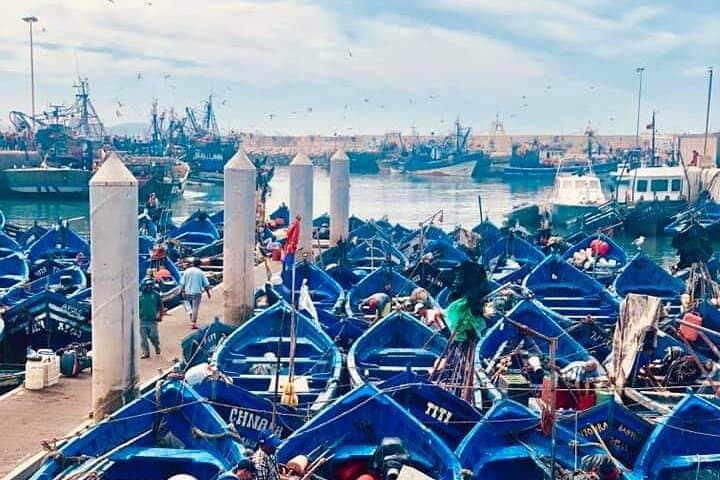
You leave Marrakech at dawn, the Atlas foothills slipping behind as argan-studded scrub rolls by and the Atlantic draws nearer like a cool exhale. By mid-morning the town’s fortifications appear—ocher ramparts punctuated by blue shutters and the steady clack of gulls at the harbor. Essaouira’s wind sculpts the coastline; the breeze pushes the surf, the harbor boats bob as if testing your attention.
Verified experiences and guided adventures in the surrounding area.
Operated by Morocco Daily Trip · Essaouira, Marrakesh-Safi
You leave Marrakech at dawn, the Atlas foothills slipping behind as argan-studded scrub rolls by and the Atlantic draws nearer like a cool exhale. By mid-morning the town’s fortifications appear—ocher ramparts punctuated by blue shutters and the steady clack of gulls at the harbor. Essaouira’s wind sculpts the coastline; the breeze pushes the surf, the harbor boats bob as if testing your attention.
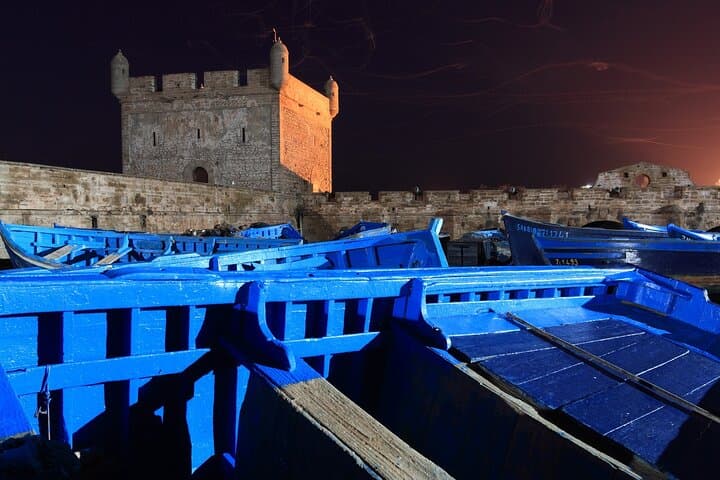
Once called Mogador, Essaouira is a layered place: a 16th-century Portuguese citadel, a centuries-old fishing port, and today a relaxed town where French and Moroccan architecture meet. The argan trees you pass en route are endemic to this region; women's cooperatives have turned traditional oil production into both livelihood and cultural showcase. Geologically, the coast is young—sandy beaches backed by low cliffs and broad tidal flats that reveal themselves at low tide.
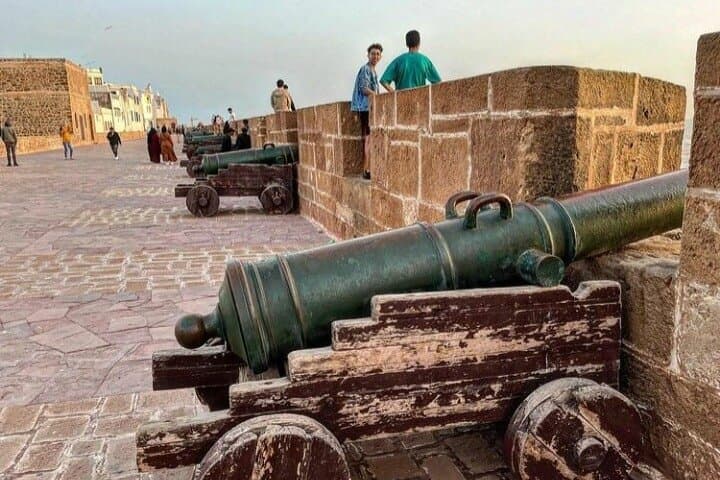
Practicalities are straightforward. The drive from Marrakech is roughly 2.5–3 hours each way over paved roads. Expect about six hours on the ground in Essaouira—ample time to walk the medina (compact but cobbled), visit the Skala ramparts, eat fresh fish at the port, or try surfing or swimming when conditions allow. Wind is a defining factor: it can be exhilarating for kitesurfers and chillier than Marrakech, so layer up.
Bring cash for small purchases, wear good walking shoes for uneven streets, and plan your pick-up around daylight—return to Marrakech is typically in the early evening. For those wanting a quieter visit, arrive early in Essaouira or take a short detour to nearby beaches to escape the midday crowds.
easy.
10–12 hours.
Suitable for most fitness levels—mostly walking on flat and cobbled streets with minimal elevation change
Expect about 2.5–3 hours each way on paved roads, depending on traffic and stops at cooperatives.
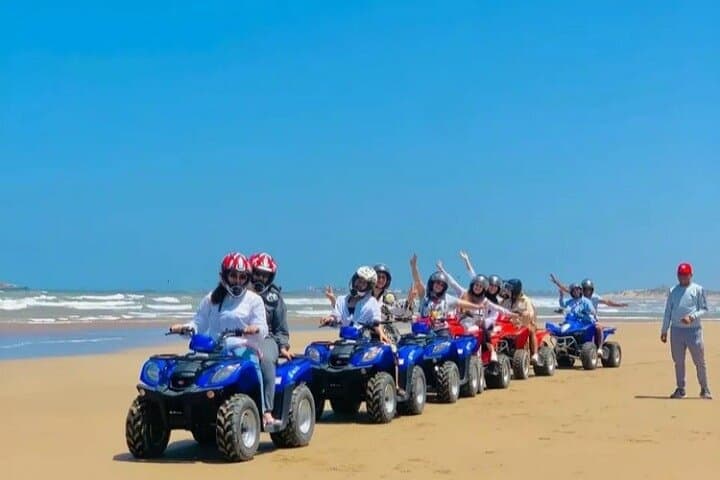
Yes—there are beaches and surf schools; conditions depend on wind and tide, so check locally before entering the water.
Many cooperatives are community-run and offer demonstrations; bring cash if you plan to buy products and ask about fair-practice labeling.
Yes—the medina is compact and walkable, though streets are narrow and cobbled; consider a local guide if you want historical depth.
Essaouira (formerly Mogador) developed as a fortified trading port in the 16th century and later became a cultural crossroads influenced by Portuguese, French, and Moroccan maritime trade.
Argan forests face pressure from overgrazing and land use; supporting certified cooperatives and low-impact tourism helps preserve local ecology and women's livelihoods.
Morocco Daily Trip operates guided outdoor trips and adventures with an emphasis on safety, stewardship, and memorable experiences.
You leave Marrakech at dawn, the Atlas foothills slipping behind as argan-studded scrub rolls by and the Atlantic draws nearer like a cool exhale. By mid-morning the town’s fortifications appear—ocher ramparts punctuated by blue shutters and the steady clack of gulls at the harbor. Essaouira’s wind sculpts the coastline; the breeze pushes the surf, the harbor boats bob as if testing your attention.
You leave Marrakech at dawn, the Atlas foothills slipping behind as argan-studded scrub rolls by and the Atlantic draws nearer like a cool exhale. By mid-morning the town’s fortifications appear—ocher ramparts punctuated by blue shutters and the steady clack of gulls at the harbor. Essaouira’s wind sculpts the coastline; the breeze pushes the surf, the harbor boats bob as if testing your attention.
Once called Mogador, Essaouira is a layered place: a 16th-century Portuguese citadel, a centuries-old fishing port, and today a relaxed town where French and Moroccan architecture meet. The argan trees you pass en route are endemic to this region; women's cooperatives have turned traditional oil production into both livelihood and cultural showcase. Geologically, the coast is young—sandy beaches backed by low cliffs and broad tidal flats that reveal themselves at low tide.
Practicalities are straightforward. The drive from Marrakech is roughly 2.5–3 hours each way over paved roads. Expect about six hours on the ground in Essaouira—ample time to walk the medina (compact but cobbled), visit the Skala ramparts, eat fresh fish at the port, or try surfing or swimming when conditions allow. Wind is a defining factor: it can be exhilarating for kitesurfers and chillier than Marrakech, so layer up.
Bring cash for small purchases, wear good walking shoes for uneven streets, and plan your pick-up around daylight—return to Marrakech is typically in the early evening. For those wanting a quieter visit, arrive early in Essaouira or take a short detour to nearby beaches to escape the midday crowds.