THE ADVENTURE COLLECTIVE® · Independent discovery and booking for outdoor travel

Follow the Atlantic from Agadir to Essaouira for a full-day escape: coastal beaches, argan groves with tree-climbing goats, a working fishing port and centuries-old ramparts guarding the medina. Expect long but scenic drives and plenty of walking in town.
Follow the Atlantic from Agadir to Essaouira for a full-day escape: coastal beaches, argan groves with tree-climbing goats, a working fishing port and centuries-old ramparts guarding the medina. Expect long but scenic drives and plenty of walking in town.
A morning drive unspools along the Atlantic: salt in the air, low hills of the Anti-Atlas sliding past, and the road curving toward Essaouira’s pale ramparts. The day trip begins with coastal pulls over Tamri’s wild beach where waves press at the sand, then moves inland through argan country where goats clamber among thorny trees as if the landscape dared them onward.
Verified experiences and guided adventures in the surrounding area.
Operated by Amallay Adventures · Essaouira, Marrakesh-Safi
A morning drive unspools along the Atlantic: salt in the air, low hills of the Anti-Atlas sliding past, and the road curving toward Essaouira’s pale ramparts. The day trip begins with coastal pulls over Tamri’s wild beach where waves press at the sand, then moves inland through argan country where goats clamber among thorny trees as if the landscape dared them onward.
Essaouira (historically Mogador) is a fortified port with layers of history — Portuguese and later 18th-century Moroccan fortifications built under Sultan Sidi Mohammed ben Abdallah. The city’s geology is simple: exposed coastal plains, wind-polished sands, and a rocky shoreline that funnels the Atlantic’s trade winds into the harbor.
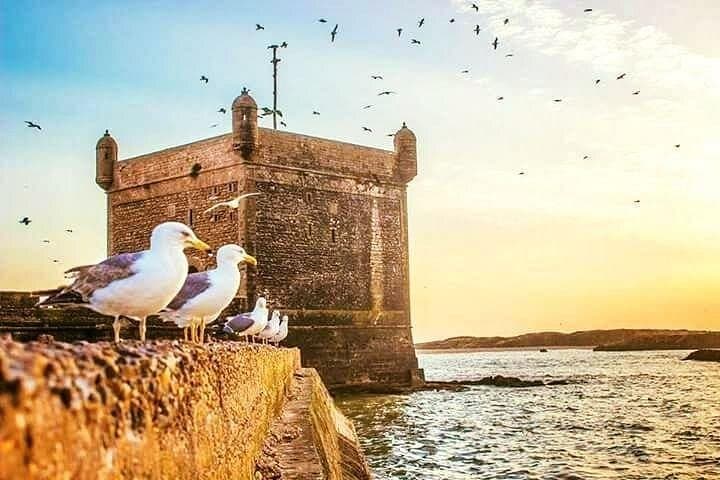
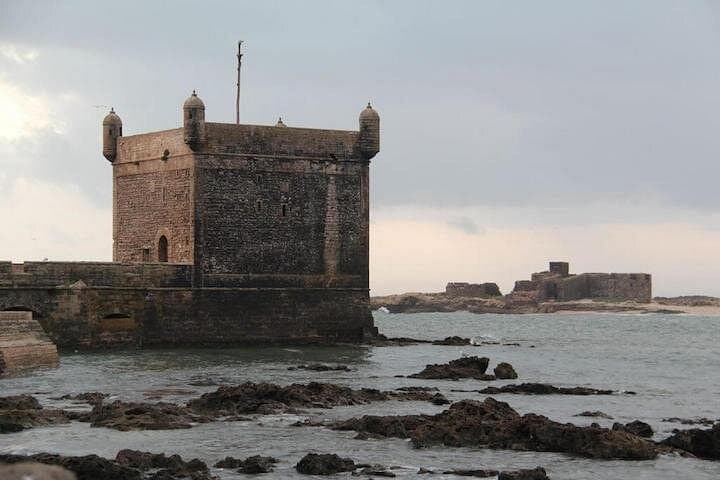
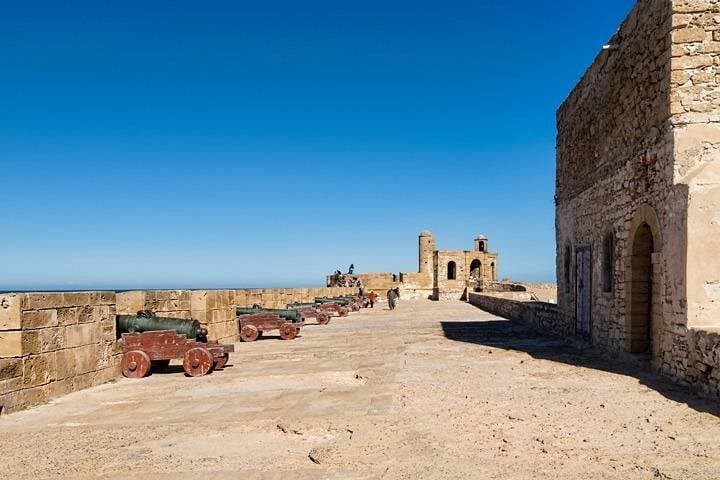
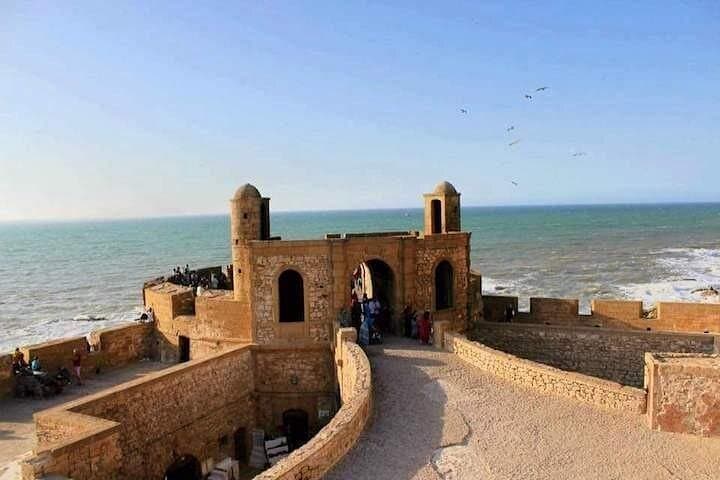
On arrival, explore the working port and Bab El Marsa with its Sqala canons set on sea-facing battlements, watch fishing boats land the day’s catch, and slip through the medina’s low-arched streets to discover argan cooperatives and cedarwood workshops. Local culture is pragmatic and maritime: fish markets, open-air stalls and cooperative-run argan presses that link traditional production to modern markets.
Practical guidance: expect roughly 2.5–3 hours driving each way (about 170–180 km one way, depending on route), with multiple stops for photos and short walks. Wear sturdy walking shoes for cobbled alleys, bring windproof layers for the ramparts, carry Moroccan dirhams for small purchases, and plan a full day — travel time is significant but the sights reward the distance.
easy.
11 hours.
Suitable for most fitness levels — mainly driving with periods of walking around the medina and port
Expect about 2.5–3 hours one-way depending on stops and traffic; total tour time is roughly 11 hours including return.
Yes — the itinerary includes free time in the medina and port to walk, shop and eat independently.
Streets are narrow and often cobbled; moderate mobility is needed but the tour is rated easy overall and accessible areas exist.
Visiting an argan oil cooperative is a common stop on this route; purchases are optional and usually paid in cash or card depending on the vendor.
Essaouira (Mogador) has Portuguese origins in the 16th century and was purpose-built in the 18th century as a regulated Atlantic trading port under Sultan Sidi Mohammed ben Abdallah.
Argan forests are ecologically sensitive; support local cooperatives that promote sustainable harvests and avoid single-use plastics on beaches to reduce marine pollution.
Amallay Adventures operates guided outdoor trips and adventures with an emphasis on safety, stewardship, and memorable experiences.
A morning drive unspools along the Atlantic: salt in the air, low hills of the Anti-Atlas sliding past, and the road curving toward Essaouira’s pale ramparts. The day trip begins with coastal pulls over Tamri’s wild beach where waves press at the sand, then moves inland through argan country where goats clamber among thorny trees as if the landscape dared them onward.
A morning drive unspools along the Atlantic: salt in the air, low hills of the Anti-Atlas sliding past, and the road curving toward Essaouira’s pale ramparts. The day trip begins with coastal pulls over Tamri’s wild beach where waves press at the sand, then moves inland through argan country where goats clamber among thorny trees as if the landscape dared them onward.
Essaouira (historically Mogador) is a fortified port with layers of history — Portuguese and later 18th-century Moroccan fortifications built under Sultan Sidi Mohammed ben Abdallah. The city’s geology is simple: exposed coastal plains, wind-polished sands, and a rocky shoreline that funnels the Atlantic’s trade winds into the harbor.
On arrival, explore the working port and Bab El Marsa with its Sqala canons set on sea-facing battlements, watch fishing boats land the day’s catch, and slip through the medina’s low-arched streets to discover argan cooperatives and cedarwood workshops. Local culture is pragmatic and maritime: fish markets, open-air stalls and cooperative-run argan presses that link traditional production to modern markets.
Practical guidance: expect roughly 2.5–3 hours driving each way (about 170–180 km one way, depending on route), with multiple stops for photos and short walks. Wear sturdy walking shoes for cobbled alleys, bring windproof layers for the ramparts, carry Moroccan dirhams for small purchases, and plan a full day — travel time is significant but the sights reward the distance.