THE ADVENTURE COLLECTIVE® · Independent discovery and booking for outdoor travel

Ride coastal roads, Dutch canals and fishing villages on a private 6-hour cycle from Colombo to Negombo. Expect flat terrain, lagoon views, and scheduled stops at markets and heritage sites.
Ride coastal roads, Dutch canals and fishing villages on a private 6-hour cycle from Colombo to Negombo. Expect flat terrain, lagoon views, and scheduled stops at markets and heritage sites.
You push off from Colombo’s busy edge and the city noise peels away: palms lean over the road, gulls circle the lagoon, and the breeze from the Indian Ocean cools the back of your neck.
Verified experiences and guided adventures in the surrounding area.
You push off from Colombo’s busy edge and the city noise peels away: palms lean over the road, gulls circle the lagoon, and the breeze from the Indian Ocean cools the back of your neck.
This private cycling expedition threads coastal roads, salt pans and fishing villages between Colombo and Negombo, offering close-up access to Dutch-era canals, a working fish market and low, reedy lagoons. The corridor sits on a flat coastal plain formed by river sediments and lagoon deposits; the landscape is honest and open, with long sightlines and frequent water views. Dutch-era drainage works and the Negombo canal reveal the colonial imprint on local transport and trade, while the fishing culture—catamarans, nets, and morning markets—keeps the route lively.
Expect roughly 35–40 km of riding one-way with minimal elevation gain; the operator schedules 6–7 hours to allow for cultural stops, photos and a market visit. Terrain is mostly paved coastal and service roads with occasional sandy lanes; light coastal wind can slow you in open stretches. Ride early to avoid midday heat, carry a puncture kit, and be ready for mixed traffic: tuk-tuks and local buses share narrow lanes.
Practical details matter: hydrate often, apply reef-safe sunscreen, and wear visible clothing. Cash small bills for market purchases and keep interactions respectful—this is a working coastline, not a postcard set. The reward is straightforward: open skies, a living shoreline, and a pace that turns routine travel into a close, readable coastal story.
moderate.
6–7 hours.
Good aerobic fitness for 35–40 km with frequent stops; comfortable handling on mixed traffic roads helps.
The cycling portion covers roughly 35–40 km one-way; the operator plans 6–7 hours to include stops and local visits.
The coastal plain is predominantly flat with minimal elevation gain—ideal for steady-paced road cycling.
Riders should have basic road cycling experience and comfort in mixed traffic; true novices may find the traffic and distance challenging.
Carry small cash notes for the fish market and street vendors; some small eateries accept cards but cash is more practical.
The Colombo–Negombo corridor shows clear Dutch colonial influence—canals and drainage schemes from the 17th–18th centuries shaped local settlement and fisheries.
Negombo’s lagoons and marshes are ecologically sensitive; avoid riding on soft banks, pack out all trash, and respect local fishing operations to minimize impact.
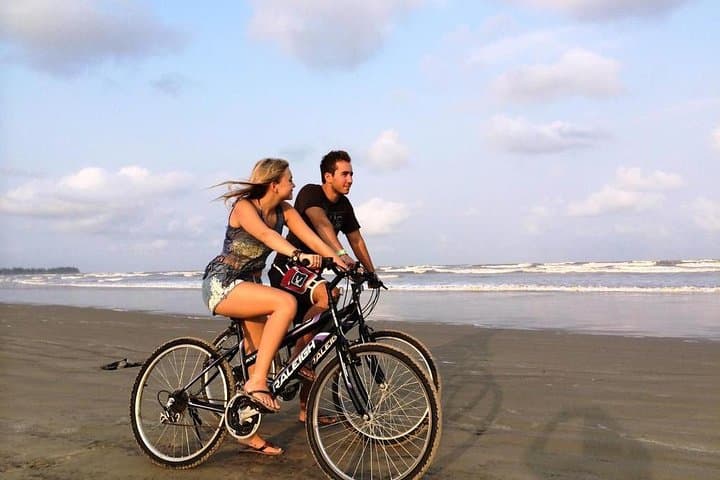
You push off from Colombo’s busy edge and the city noise peels away: palms lean over the road, gulls circle the lagoon, and the breeze from the Indian Ocean cools the back of your neck.
You push off from Colombo’s busy edge and the city noise peels away: palms lean over the road, gulls circle the lagoon, and the breeze from the Indian Ocean cools the back of your neck.
This private cycling expedition threads coastal roads, salt pans and fishing villages between Colombo and Negombo, offering close-up access to Dutch-era canals, a working fish market and low, reedy lagoons. The corridor sits on a flat coastal plain formed by river sediments and lagoon deposits; the landscape is honest and open, with long sightlines and frequent water views. Dutch-era drainage works and the Negombo canal reveal the colonial imprint on local transport and trade, while the fishing culture—catamarans, nets, and morning markets—keeps the route lively.
Expect roughly 35–40 km of riding one-way with minimal elevation gain; the operator schedules 6–7 hours to allow for cultural stops, photos and a market visit. Terrain is mostly paved coastal and service roads with occasional sandy lanes; light coastal wind can slow you in open stretches. Ride early to avoid midday heat, carry a puncture kit, and be ready for mixed traffic: tuk-tuks and local buses share narrow lanes.
Practical details matter: hydrate often, apply reef-safe sunscreen, and wear visible clothing. Cash small bills for market purchases and keep interactions respectful—this is a working coastline, not a postcard set. The reward is straightforward: open skies, a living shoreline, and a pace that turns routine travel into a close, readable coastal story.