THE ADVENTURE COLLECTIVE® · Independent discovery and booking for outdoor travel

A customizable half-day private drive from Lisbon to Cascais that threads Peninha’s high chapel, the dramatic cliffs of Cabo da Roca, surf-swept Praia do Guincho and Boca do Inferno—perfect for travelers who want local stories, coastal geology, and room to move.
A customizable half-day private drive from Lisbon to Cascais that threads Peninha’s high chapel, the dramatic cliffs of Cabo da Roca, surf-swept Praia do Guincho and Boca do Inferno—perfect for travelers who want local stories, coastal geology, and room to move.
Morning light skims the Atlantic and the driver eases the van onto a two-lane road that climbs from Lisbon’s glass-and-stone avenues toward the low, wild ridges of the Sintra-Cascais Natural Park. Windows lowered, the air tastes of salt and pine; gulls wheel above chalk cliffs that refuse to be still. A private tour like this trades crowds for elbow room and local knowledge—your driver is part historian, part weather-reader, pointing out the cliffs where waves have gnawed at bedrock for millennia and the lighthouse that still warns ships away from Europe’s western edge.
Verified experiences and guided adventures in the surrounding area.
Operated by Magic Tours · Cascais, Lisboa
Morning light skims the Atlantic and the driver eases the van onto a two-lane road that climbs from Lisbon’s glass-and-stone avenues toward the low, wild ridges of the Sintra-Cascais Natural Park. Windows lowered, the air tastes of salt and pine; gulls wheel above chalk cliffs that refuse to be still. A private tour like this trades crowds for elbow room and local knowledge—your driver is part historian, part weather-reader, pointing out the cliffs where waves have gnawed at bedrock for millennia and the lighthouse that still warns ships away from Europe’s western edge.
The route moves like a short story of Portugal’s Atlantic edge. Peninha’s small chapel sits nearly 500 meters up on granite that survived ancient mountain-building and later weathered into the rounded forms that define the Sintra massif. Its romantic-revival palace, added in 1918, reads like a later flourish on an older sacred site. A short drive west drops you toward Cabo da Roca, the westernmost point of continental Europe—an exposed promontory that has been a maritime marker since at least the 17th century, when forts and watch posts guarded Lisbon’s approaches. Geologically the cliffs are evidence of tectonic drama and relentless coastal erosion; they give the coastline its dramatic verticality and make for sweeping views that are worth the short walk from the parking area.
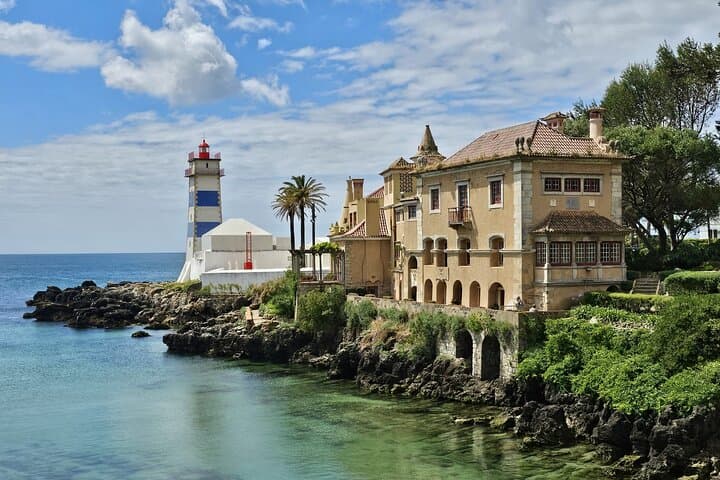
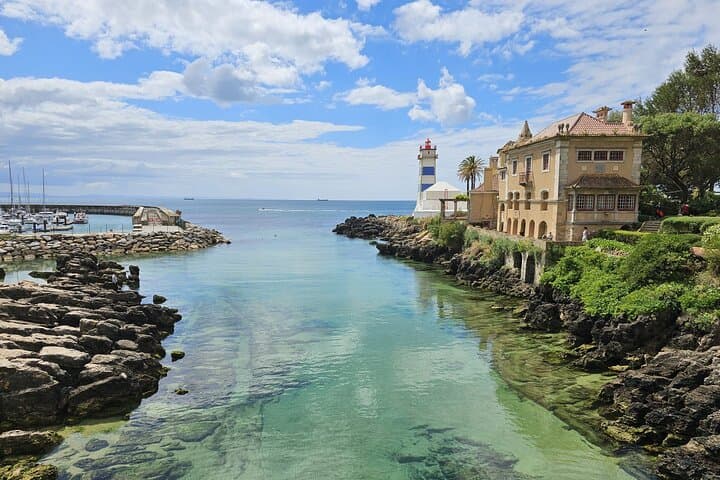
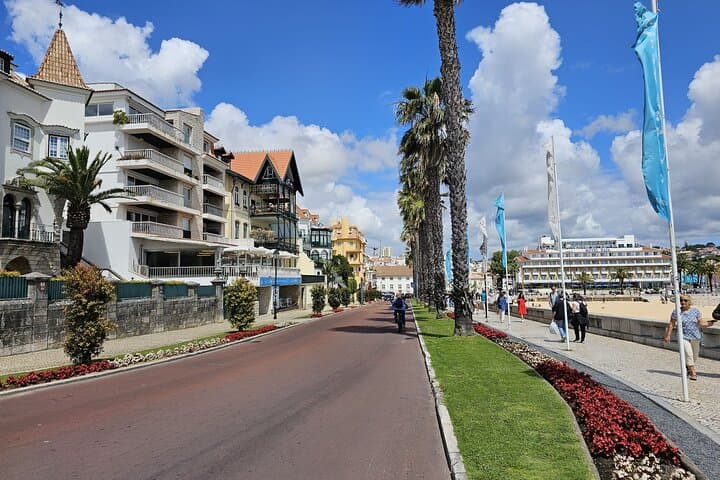
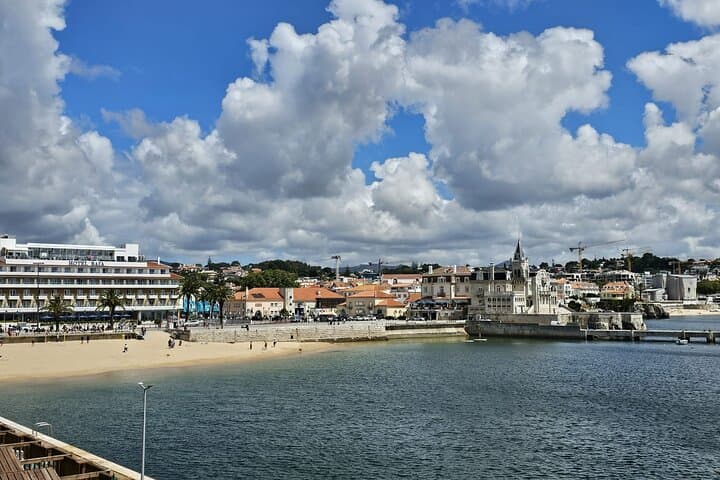
Boca do Inferno is the day’s punctuation: an amphitheater of jagged rock that roars when Atlantic swell finds its throat. Praia do Guincho, about eight kilometers away, is where wind and sand conspire to create one of Portugal’s premier surf and kite-surf fields—bring binoculars if you want to watch riders in action. Finally, Cascais town reconnects the traveler with human scale: a former royal retreat turned salt-of-the-earth fishing port with narrow streets, seafood restaurants and a small but compelling museum scene.
Practical note: this private excursion is three to four hours and works well as a half-day. It’s low-impact physically but weather plays an oversized role—windproof layers and sturdy shoes make the short cliffside walks comfortable. Leave mornings or late afternoons for softer light and smaller crowds; mid-day can be bright and brisk, especially on the headlands.
Local tips: ask your driver about hidden coves accessible only by foot, or where the best grilled fish is on the way back into Cascais. Carry reusable water and a power bank; Wi‑Fi is often included, but signal drops on the cliffs. If you want a more intimate experience, book a private tour that includes a stop at a local café or the Condes de Castro Guimarães Museum. This route is as much about stories—the chapel apparition, coastal defenses, royal comings and goings—as it is about views, and a good driver will stitch those threads into a compact, memorable half-day.
easy.
3–4 hours.
Minimal fitness required; able to walk short uneven trails and climb steps at viewpoints
The scheduled meeting point is Hard Rock Cafe Lisboa on Avenida da Liberdade; pickup from hotels in Lisbon can be requested in advance.
The tour runs approximately 3–4 hours (180–240 minutes) depending on traffic and chosen stops.
No—entrance fees to museums and certain attractions are not included unless specified in your booking; the tour covers transport and guided stops.
Yes—infants and small children can ride in strollers and infant seats are available; some viewpoints require short walks over uneven ground.
The supplier does not collect passengers on the south bank of the Tagus; pickup must be arranged from Lisbon north of the river or the meeting point provided.
For a full refund cancel at least 24 hours before departure; cancellations within 24 hours are non-refundable.
Cabo da Roca and surrounding headlands were strategic defense points from the 17th century onward; Cascais served as a royal retreat in the 19th century, shaping its elegant seaside character.
The route runs through the Sintra-Cascais Natural Park—stick to marked paths, avoid disturbing nesting birds, and support local businesses that follow sustainable practices.
Magic Tours operates guided outdoor trips and adventures with an emphasis on safety, stewardship, and memorable experiences.
Morning light skims the Atlantic and the driver eases the van onto a two-lane road that climbs from Lisbon’s glass-and-stone avenues toward the low, wild ridges of the Sintra-Cascais Natural Park. Windows lowered, the air tastes of salt and pine; gulls wheel above chalk cliffs that refuse to be still. A private tour like this trades crowds for elbow room and local knowledge—your driver is part historian, part weather-reader, pointing out the cliffs where waves have gnawed at bedrock for millennia and the lighthouse that still warns ships away from Europe’s western edge.
Morning light skims the Atlantic and the driver eases the van onto a two-lane road that climbs from Lisbon’s glass-and-stone avenues toward the low, wild ridges of the Sintra-Cascais Natural Park. Windows lowered, the air tastes of salt and pine; gulls wheel above chalk cliffs that refuse to be still. A private tour like this trades crowds for elbow room and local knowledge—your driver is part historian, part weather-reader, pointing out the cliffs where waves have gnawed at bedrock for millennia and the lighthouse that still warns ships away from Europe’s western edge.
The route moves like a short story of Portugal’s Atlantic edge. Peninha’s small chapel sits nearly 500 meters up on granite that survived ancient mountain-building and later weathered into the rounded forms that define the Sintra massif. Its romantic-revival palace, added in 1918, reads like a later flourish on an older sacred site. A short drive west drops you toward Cabo da Roca, the westernmost point of continental Europe—an exposed promontory that has been a maritime marker since at least the 17th century, when forts and watch posts guarded Lisbon’s approaches. Geologically the cliffs are evidence of tectonic drama and relentless coastal erosion; they give the coastline its dramatic verticality and make for sweeping views that are worth the short walk from the parking area.
Boca do Inferno is the day’s punctuation: an amphitheater of jagged rock that roars when Atlantic swell finds its throat. Praia do Guincho, about eight kilometers away, is where wind and sand conspire to create one of Portugal’s premier surf and kite-surf fields—bring binoculars if you want to watch riders in action. Finally, Cascais town reconnects the traveler with human scale: a former royal retreat turned salt-of-the-earth fishing port with narrow streets, seafood restaurants and a small but compelling museum scene.
Practical note: this private excursion is three to four hours and works well as a half-day. It’s low-impact physically but weather plays an oversized role—windproof layers and sturdy shoes make the short cliffside walks comfortable. Leave mornings or late afternoons for softer light and smaller crowds; mid-day can be bright and brisk, especially on the headlands.
Local tips: ask your driver about hidden coves accessible only by foot, or where the best grilled fish is on the way back into Cascais. Carry reusable water and a power bank; Wi‑Fi is often included, but signal drops on the cliffs. If you want a more intimate experience, book a private tour that includes a stop at a local café or the Condes de Castro Guimarães Museum. This route is as much about stories—the chapel apparition, coastal defenses, royal comings and goings—as it is about views, and a good driver will stitch those threads into a compact, memorable half-day.