THE ADVENTURE COLLECTIVE® · Independent discovery and booking for outdoor travel

Set an alarm for 4:00 AM and watch Da Lat’s valley fill with a glowing blanket of cloud. This half-day tour pairs a sunrise cloud sea at Cầu Đất with visits to tea hills, high-tech strawberry farms, persimmon gardens, and a valley-view cafe.
Set an alarm for 4:00 AM and watch Da Lat’s valley fill with a glowing blanket of cloud. This half-day tour pairs a sunrise cloud sea at Cầu Đất with visits to tea hills, high-tech strawberry farms, persimmon gardens, and a valley-view cafe.
Before the sun breaks the horizon, a narrow road climbs out of Da Lat and the valley waits like a low sea. Travelers arrive around 4:00 AM to watch clouds pool in the basin while first light edges the tea-covered ridges; turbines on Cầu Đất catch a pale, mechanical blink against that glow.
Verified experiences and guided adventures in the surrounding area.
Operated by Tiger Tourist · Da Lat, Lam Dong
Before the sun breaks the horizon, a narrow road climbs out of Da Lat and the valley waits like a low sea. Travelers arrive around 4:00 AM to watch clouds pool in the basin while first light edges the tea-covered ridges; turbines on Cầu Đất catch a pale, mechanical blink against that glow.
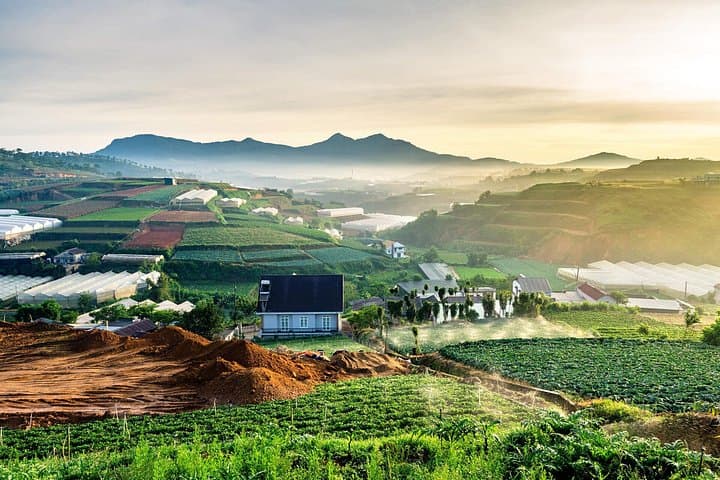
The region’s highland soils and cool montane climate made it a magnet for French-era plantations; today tea terraces, modern strawberry greenhouses, and scattered persimmon gardens trace human patterns across volcanic slopes. Geology here favors steep ridgelines and deep, fertile soil that holds morning mist and releases it as the day warms.
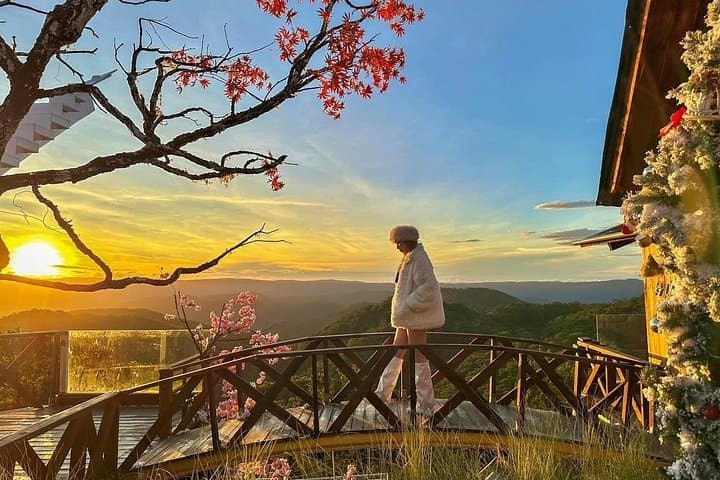
Cultural notes show in simple ways: wooden cafes built in a Northwest Vietnamese style, small family farms that sell fruit at roadside stalls, and guides who can point out irrigation channels and high-tech propagation used in local strawberry production. The tour stitches viewpoints, a tea hill walk, farm visits, and a final coffee stop with valley views into a compact morning.
Practically: expect 5–6 hours of mostly gentle, low-altitude walking and short stops; a courtesy bus handles transfers. Dress in layered clothing for a 4:00 AM chill, bring a headlamp and sturdy shoes for muddy farm tracks, and keep a small daypack for water and camera gear. Photography windows are tight—arrive early, move deliberately, and follow the guide’s directions around private fields. Respect planted rows and composure at working farms: the best shots come from patient observation, not trampling.
easy.
5–6 hours.
Suitable for most fitness levels; requires short periods of standing, gentle walking on uneven farm tracks, and getting on/off a small bus.
The tour begins around 4:00 AM to reach the Cầu Đất viewpoint for sunrise and lasts approximately 5–6 hours.
Yes—courtesy bus transportation between pickup points and attractions is included in the tour price.
Lunch is included; bottled water (500 ml per person) is provided during the tour.
The tour is described as physically easy, but it’s not wheelchair accessible; infants must sit on an adult’s lap and those with serious heart conditions should avoid strenuous early-morning exposure.
Da Lat’s highlands were developed during the French colonial period for plantations; tea and berry cultivation evolved on volcanic soils and cool temperatures favored by elevation.
Stick to marked paths and avoid trampling crops; support local farms by buying produce and following guides’ rules to minimize disturbance.
Tiger Tourist operates guided outdoor trips and adventures with an emphasis on safety, stewardship, and memorable experiences.
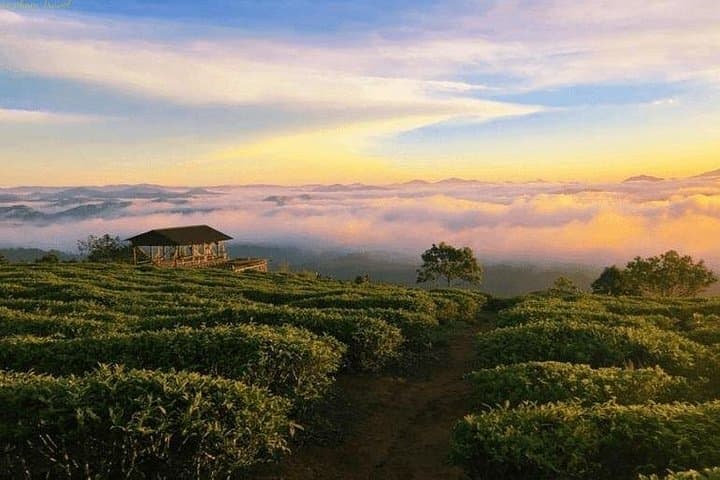
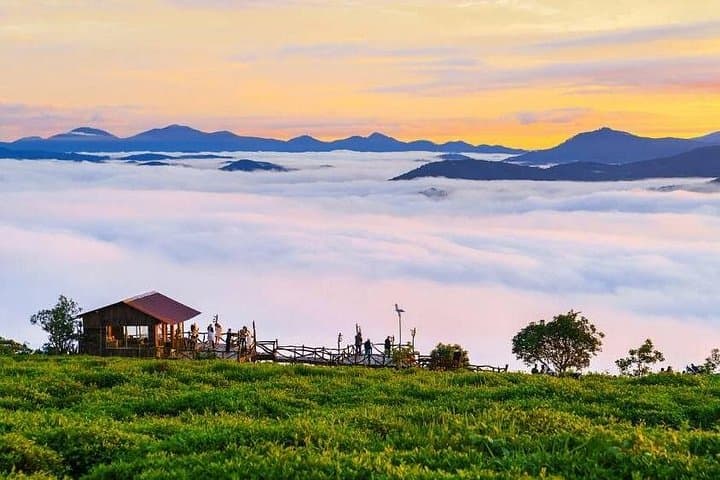
Before the sun breaks the horizon, a narrow road climbs out of Da Lat and the valley waits like a low sea. Travelers arrive around 4:00 AM to watch clouds pool in the basin while first light edges the tea-covered ridges; turbines on Cầu Đất catch a pale, mechanical blink against that glow.
Before the sun breaks the horizon, a narrow road climbs out of Da Lat and the valley waits like a low sea. Travelers arrive around 4:00 AM to watch clouds pool in the basin while first light edges the tea-covered ridges; turbines on Cầu Đất catch a pale, mechanical blink against that glow.
The region’s highland soils and cool montane climate made it a magnet for French-era plantations; today tea terraces, modern strawberry greenhouses, and scattered persimmon gardens trace human patterns across volcanic slopes. Geology here favors steep ridgelines and deep, fertile soil that holds morning mist and releases it as the day warms.
Cultural notes show in simple ways: wooden cafes built in a Northwest Vietnamese style, small family farms that sell fruit at roadside stalls, and guides who can point out irrigation channels and high-tech propagation used in local strawberry production. The tour stitches viewpoints, a tea hill walk, farm visits, and a final coffee stop with valley views into a compact morning.
Practically: expect 5–6 hours of mostly gentle, low-altitude walking and short stops; a courtesy bus handles transfers. Dress in layered clothing for a 4:00 AM chill, bring a headlamp and sturdy shoes for muddy farm tracks, and keep a small daypack for water and camera gear. Photography windows are tight—arrive early, move deliberately, and follow the guide’s directions around private fields. Respect planted rows and composure at working farms: the best shots come from patient observation, not trampling.