THE ADVENTURE COLLECTIVE® · Independent discovery and booking for outdoor travel

Ride from Seoul to the edge of the DMZ for rare, unobstructed views of North Korea — and a latte at the closest Starbucks to the border. This half-day tour pairs checkpoint procedures and observatory stops with trails, memorials, and bird-rich riverbanks.
Ride from Seoul to the edge of the DMZ for rare, unobstructed views of North Korea — and a latte at the closest Starbucks to the border. This half-day tour pairs checkpoint procedures and observatory stops with trails, memorials, and bird-rich riverbanks.
A cold wind off the Jogang River pushes against the bus windows as the skyline of Seoul shrinks behind you. The road narrows and the landscape opens into scrub, low ridgelines and wide agricultural flats; somewhere ahead lies a boundary few travel to see up close. On this half-day tour, visitors stand where geopolitics meets quiet nature — an observatory terrace, a canopy walkway, and yes, a small Starbucks where patrons can sip coffee with North Korea visible across the water.
Verified experiences and guided adventures in the surrounding area.
Operated by VIP TRAVEL Co.Ltd · Paju, Gyeonggi-do
A cold wind off the Jogang River pushes against the bus windows as the skyline of Seoul shrinks behind you. The road narrows and the landscape opens into scrub, low ridgelines and wide agricultural flats; somewhere ahead lies a boundary few travel to see up close. On this half-day tour, visitors stand where geopolitics meets quiet nature — an observatory terrace, a canopy walkway, and yes, a small Starbucks where patrons can sip coffee with North Korea visible across the water.
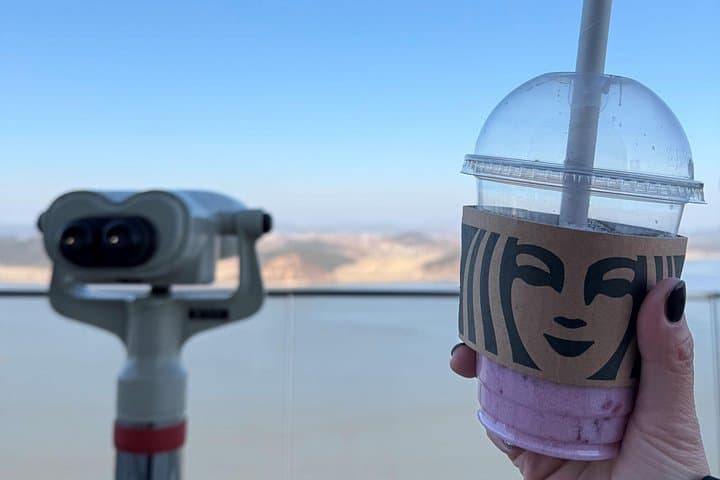
The area around the DMZ is layered history: twentieth-century battlefields, post-war artifacts, and memorials that remember the Korean War’s fierce fights. Geologically the flat Imjin and Jogang river valleys form natural lines of sight; the river itself acts like an old photograph divider, reflecting villages and fields across the border. Culturally, the spot is both solemn and strangely ordinary — coffee cups and binoculars alongside bells and altars that call for reunification.
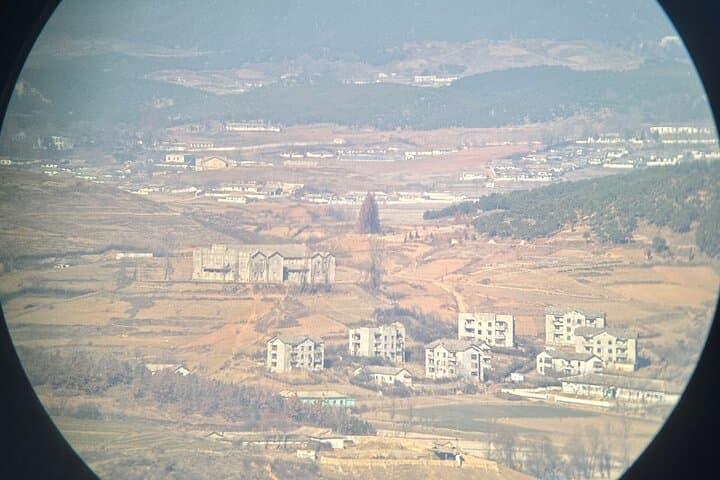
Expect short, guided walks, checkpoint formalities and clear views when weather permits; binoculars reveal settlements about 1.4 km away. Wildlife is cautious but present — migratory birds use the no-man’s land as a refuge, and the park’s gardens host quiet species. Practical notes: bring your passport (required), layer for wind on the observatory, and plan for modest walking on paved and boardwalk surfaces. Photography is allowed but follow guide instructions near sensitive areas. The tour is an accessible, contemplative half-day that pairs frontline history with unexpected natural sights.
easy.
5 hours.
Light fitness — minimal walking on paved paths and boardwalks; comfortable for most travelers
Yes — all participants must present a valid passport at the checkpoint; you cannot enter without it.
Photography is generally allowed from public observatory areas, but always follow the guide’s instructions near sensitive installations.
Yes — the tour is classified as easy with minimal walking, but infants should sit on laps and participants should be able to board the bus and walk short distances.
There is a small café (the Starbucks near the observatory) and outdoor seating; bring water for the bus ride and any personal needs.
The DMZ was established after the 1953 armistice and has since become a heavily fortified boundary; nearby parks and memorials commemorate battles and the long division of the peninsula.
Restricted military zones have inadvertently become wildlife refuges; visitors should stick to marked paths and follow guides to minimize disturbance to sensitive habitats.
VIP TRAVEL Co.Ltd operates guided outdoor trips and adventures with an emphasis on safety, stewardship, and memorable experiences.
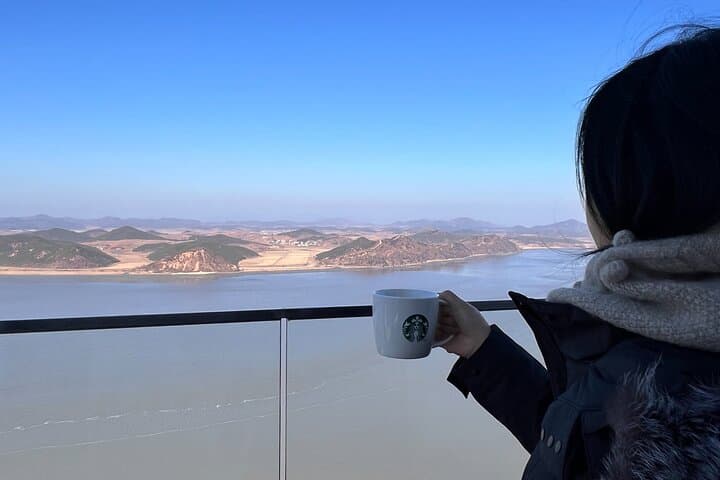
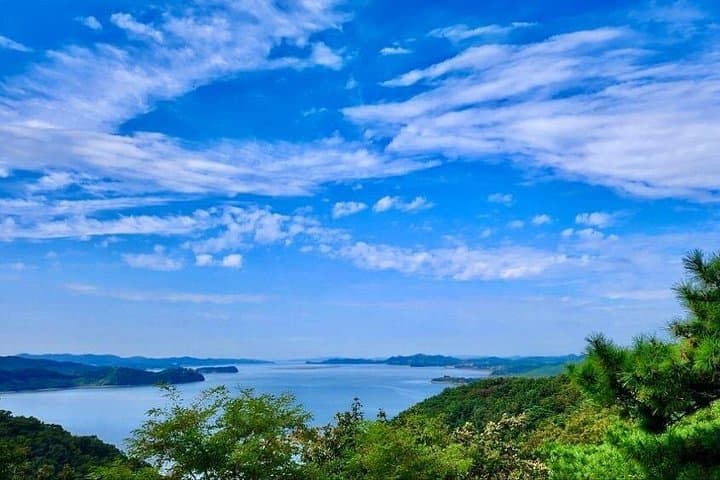
A cold wind off the Jogang River pushes against the bus windows as the skyline of Seoul shrinks behind you. The road narrows and the landscape opens into scrub, low ridgelines and wide agricultural flats; somewhere ahead lies a boundary few travel to see up close. On this half-day tour, visitors stand where geopolitics meets quiet nature — an observatory terrace, a canopy walkway, and yes, a small Starbucks where patrons can sip coffee with North Korea visible across the water.
A cold wind off the Jogang River pushes against the bus windows as the skyline of Seoul shrinks behind you. The road narrows and the landscape opens into scrub, low ridgelines and wide agricultural flats; somewhere ahead lies a boundary few travel to see up close. On this half-day tour, visitors stand where geopolitics meets quiet nature — an observatory terrace, a canopy walkway, and yes, a small Starbucks where patrons can sip coffee with North Korea visible across the water.
The area around the DMZ is layered history: twentieth-century battlefields, post-war artifacts, and memorials that remember the Korean War’s fierce fights. Geologically the flat Imjin and Jogang river valleys form natural lines of sight; the river itself acts like an old photograph divider, reflecting villages and fields across the border. Culturally, the spot is both solemn and strangely ordinary — coffee cups and binoculars alongside bells and altars that call for reunification.
Expect short, guided walks, checkpoint formalities and clear views when weather permits; binoculars reveal settlements about 1.4 km away. Wildlife is cautious but present — migratory birds use the no-man’s land as a refuge, and the park’s gardens host quiet species. Practical notes: bring your passport (required), layer for wind on the observatory, and plan for modest walking on paved and boardwalk surfaces. Photography is allowed but follow guide instructions near sensitive areas. The tour is an accessible, contemplative half-day that pairs frontline history with unexpected natural sights.