THE ADVENTURE COLLECTIVE® · Independent discovery and booking for outdoor travel

Summit an active Chilean volcano on a guided day climb from Pucón. This full-day ascent mixes steep snow travel, volcanic geology and the option to explore glacier caves when crater access is restricted.
Summit an active Chilean volcano on a guided day climb from Pucón. This full-day ascent mixes steep snow travel, volcanic geology and the option to explore glacier caves when crater access is restricted.
A thin wind strips snow from the upper slopes as climbers file past black lava bands, headlamps bobbing like tired stars on the last push to Villarrica’s crater. From the valley near Pucón the volcano rises with a raw, rugged profile — steep snowfields giving way to jagged volcanic rock and, when conditions allow, the steaming rim of one of South America’s most active summits.
Verified experiences and guided adventures in the surrounding area.
Operated by Terra Volcano Pucon · Pucón, La Araucanía
A thin wind strips snow from the upper slopes as climbers file past black lava bands, headlamps bobbing like tired stars on the last push to Villarrica’s crater. From the valley near Pucón the volcano rises with a raw, rugged profile — steep snowfields giving way to jagged volcanic rock and, when conditions allow, the steaming rim of one of South America’s most active summits.
Villarrica’s eruptions and lava flows have shaped local terrain for millennia; the mountain also holds significance for the Mapuche people who live beneath its slopes. Geologically, Villarrica is a stratovolcano with a persistent lava lake during active periods and remote glaciers carved into its flanks. Guides often point out moraines, recent lava flows and the high-elevation glacier that can be explored if crater access is restricted.
Practically, a guided ascent is a full-day, high-energy undertaking: expect 6–8 hours round-trip, steep switchbacks, snow and ice above ~1,800–2,000 meters, and rapidly changing weather. Certified guides provide crampons, helmets, ice axes and often boots — still bring your own layered clothing, sturdy mountaineering boots and a tested tolerance for altitude and cold. Check volcanic activity reports and park regulations before booking; operators will alter routes when gas emissions or instability make the crater unsafe, substituting glacier treks or rim viewing. Hydrate, break early to avoid afternoon winds, and follow your guide’s pacing — summits are earned step by steady step.
challenging.
6–8 hours.
Requires good aerobic fitness, experience with sustained uphill hiking and comfort at high effort in cold conditions.
Beginners can attempt the route with a certified guide if they have good fitness and no major medical issues, but experience with crampon use and sustained uphill hiking improves safety and comfort.
Guides will change the itinerary—common alternatives include extended glacier treks, crater rim viewing from a safe distance, or other high-elevation routes when crater access is restricted.
Typical inclusions are certified guides, crampons, helmets, ice axes, gaiters, trekking poles, backpacks, some operators supply boots and outer layers, plus park fees and private transport.
Operators generally require participants to be in good cardiovascular health; the tour is not recommended for pregnant travelers or those with serious heart or back conditions—check booking requirements for specific age limits.
Villarrica has a long record of eruptions and is central to local Mapuche culture; repeated lava flows and glacial sculpting define its modern profile.
The volcano sits within Villarrica National Park; stay on authorized routes, follow guide instructions to minimize erosion, and be mindful of glacier retreat and sensitive alpine habitats.
Terra Volcano Pucon operates guided outdoor trips and adventures with an emphasis on safety, stewardship, and memorable experiences.
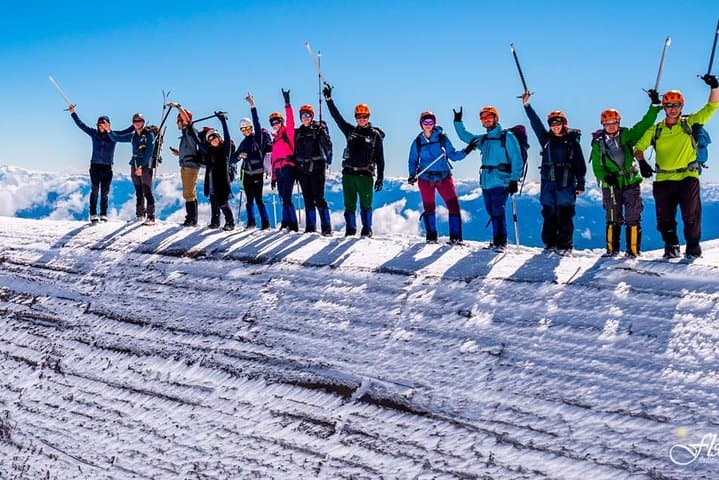
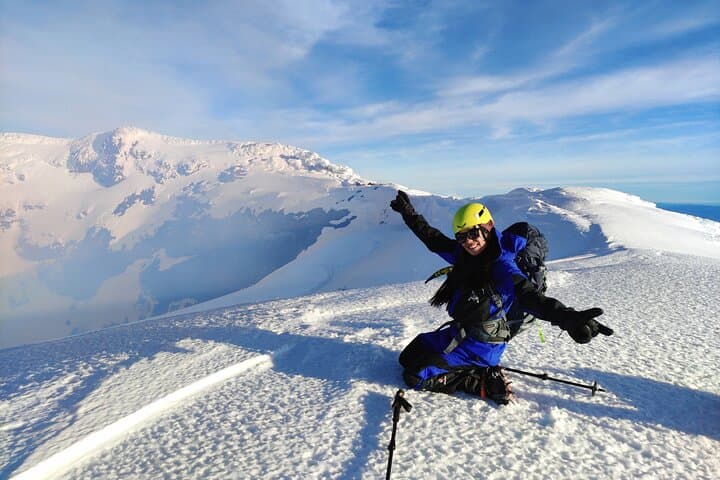
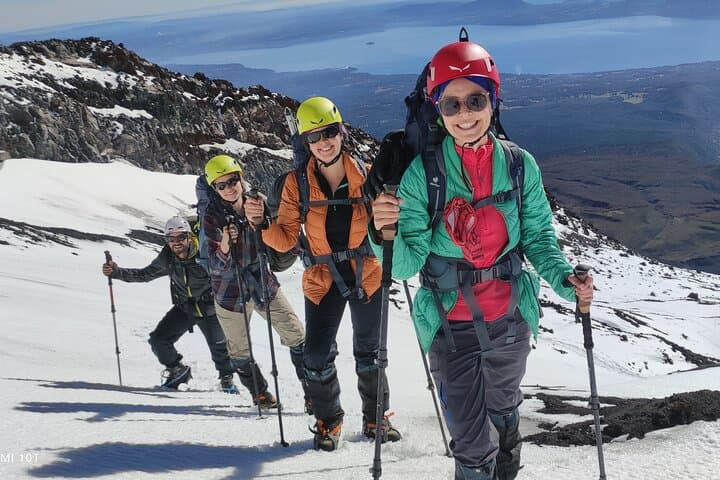
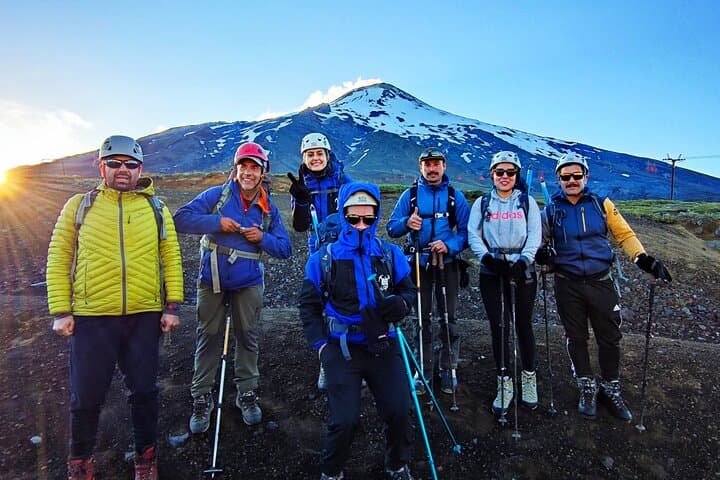
A thin wind strips snow from the upper slopes as climbers file past black lava bands, headlamps bobbing like tired stars on the last push to Villarrica’s crater. From the valley near Pucón the volcano rises with a raw, rugged profile — steep snowfields giving way to jagged volcanic rock and, when conditions allow, the steaming rim of one of South America’s most active summits.
A thin wind strips snow from the upper slopes as climbers file past black lava bands, headlamps bobbing like tired stars on the last push to Villarrica’s crater. From the valley near Pucón the volcano rises with a raw, rugged profile — steep snowfields giving way to jagged volcanic rock and, when conditions allow, the steaming rim of one of South America’s most active summits.
Villarrica’s eruptions and lava flows have shaped local terrain for millennia; the mountain also holds significance for the Mapuche people who live beneath its slopes. Geologically, Villarrica is a stratovolcano with a persistent lava lake during active periods and remote glaciers carved into its flanks. Guides often point out moraines, recent lava flows and the high-elevation glacier that can be explored if crater access is restricted.
Practically, a guided ascent is a full-day, high-energy undertaking: expect 6–8 hours round-trip, steep switchbacks, snow and ice above ~1,800–2,000 meters, and rapidly changing weather. Certified guides provide crampons, helmets, ice axes and often boots — still bring your own layered clothing, sturdy mountaineering boots and a tested tolerance for altitude and cold. Check volcanic activity reports and park regulations before booking; operators will alter routes when gas emissions or instability make the crater unsafe, substituting glacier treks or rim viewing. Hydrate, break early to avoid afternoon winds, and follow your guide’s pacing — summits are earned step by steady step.