THE ADVENTURE COLLECTIVE® · Independent discovery and booking for outdoor travel

Spend four hours learning to climb on the limestone slabs above the Athabasca River. Guided instruction, gear provided, and routes for beginners to stronger climbers make the Morro Slabs an ideal introduction to alpine rock in Jasper.
Spend four hours learning to climb on the limestone slabs above the Athabasca River. Guided instruction, gear provided, and routes for beginners to stronger climbers make the Morro Slabs an ideal introduction to alpine rock in Jasper.
The rope hums as it slides through a belay device and the Athabasca river keeps time a few dozen meters away—its current a cold, relentless metronome. You step onto the foot of a broad limestone slab, toes searching for a seam, and feel the rock push back in the clean, tactile language climbers understand. The sky over Jasper is a hard, clear dome and beyond the river the Rockies rise in layers of grey and ochre.
Verified experiences and guided adventures in the surrounding area.
Operated by Rockaboo Mountain Adventures · Jasper, Alberta
The rope hums as it slides through a belay device and the Athabasca river keeps time a few dozen meters away—its current a cold, relentless metronome. You step onto the foot of a broad limestone slab, toes searching for a seam, and feel the rock push back in the clean, tactile language climbers understand. The sky over Jasper is a hard, clear dome and beyond the river the Rockies rise in layers of grey and ochre.
This four-hour climbing session takes you to Morro Slabs, a short drive from town where vertical faces meet river edge. The limestone here was once sea floor; over hundreds of millions of years it lithified, folded, and was exposed by tectonic uplift and glacial scraping. Human history in this landscape runs deep: Indigenous groups traveled these valleys for millennia and later European fur traders threaded the Athabasca corridor into early maps. Jasper itself became a protected landscape in the early 20th century as railway and tourism pressed into the mountains—today those protections mean climbs are set against a backdrop of intact alpine ecosystems.
Guides with local knowledge translate geology into technique. They show how to read pocket lines in the limestone, teach rope commands, and set anchors that respect both safety and the rock. The site’s proximity to the Athabasca gives climbs a wild quality—the river dares you to look down and keeps the air cool enough that chalk doesn’t bake onto your hands.
Practicalities matter: meet at the Rockaboo office on Patricia Street for gear fitting and a short safety briefing. The group then moves by private vehicle to the crag, followed by a ten-minute approach. Guides provide helmets, harnesses, and shoes and will coach belaying and lowering. Routes range from easy introductions to more athletic lines; instructors tailor coaching to the group. Trips run daily from early June through mid-September and operate in most weather—bring layers and be prepared for sudden mountain changes.
If you’re new to outdoor climbing, this is a managed, approachable way to learn technical movement on real rock. If you’re experienced, the guides will still offer route beta and efficient top-rope systems to make the most of limited time. Above all, leave no trace: stick to approaches, avoid fixed gear alterations, and pack out all trash. When you descend, take a final look across the river—the rocks you just climbed will glint different in the late light, and the memory of a solid foothold will stay with you longer than any photo.
moderate.
4 hours.
Basic aerobic fitness; able to hike a short distance and stand on feet for climbing moves. Good balance and willingness to try movement on rock help.
No. The guides teach rope systems, belaying, and basic climbing moves; beginners are welcome.
Comfortable athletic clothing, approach shoes or trail runners, and layers for cooler moments—climbing shoes, harness, and helmet are supplied.
Age requirements are set by the operator—bookings ask for ages; check at booking but family groups with confident teens are common.
Trips may be canceled for safety; the cancellation policy allows full refund 24 hours prior. Guides may adapt plans for light rain but heavy weather stops roped work.
Shared outings cap at six participants, keeping coaching focused and rope systems efficient.
Personal gear can be used if it meets safety standards—let the operator know in advance and have it inspected by the guide.
This climb sits within Jasper National Park, created in 1907; the valley has long histories of Indigenous use and later mapping by railway-era explorers.
Climbers are asked to follow Leave No Trace and local route ethics: avoid adding permanent bolts, stick to established approaches, and pack out all gear and waste.
Rockaboo Mountain Adventures operates guided outdoor trips and adventures with an emphasis on safety, stewardship, and memorable experiences.
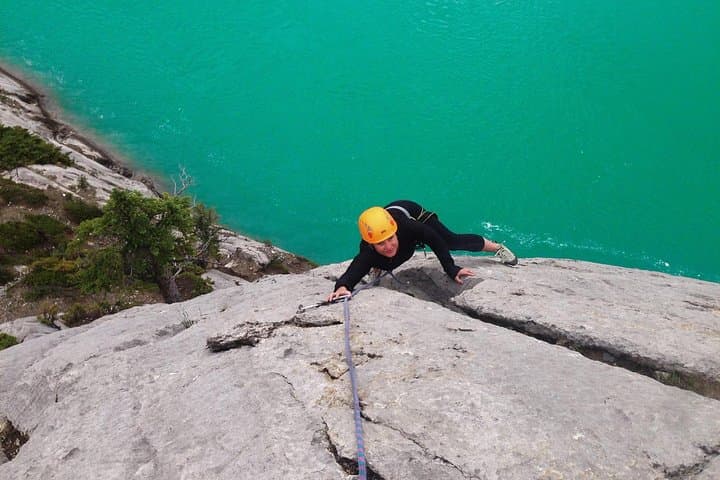


The rope hums as it slides through a belay device and the Athabasca river keeps time a few dozen meters away—its current a cold, relentless metronome. You step onto the foot of a broad limestone slab, toes searching for a seam, and feel the rock push back in the clean, tactile language climbers understand. The sky over Jasper is a hard, clear dome and beyond the river the Rockies rise in layers of grey and ochre.
The rope hums as it slides through a belay device and the Athabasca river keeps time a few dozen meters away—its current a cold, relentless metronome. You step onto the foot of a broad limestone slab, toes searching for a seam, and feel the rock push back in the clean, tactile language climbers understand. The sky over Jasper is a hard, clear dome and beyond the river the Rockies rise in layers of grey and ochre.
This four-hour climbing session takes you to Morro Slabs, a short drive from town where vertical faces meet river edge. The limestone here was once sea floor; over hundreds of millions of years it lithified, folded, and was exposed by tectonic uplift and glacial scraping. Human history in this landscape runs deep: Indigenous groups traveled these valleys for millennia and later European fur traders threaded the Athabasca corridor into early maps. Jasper itself became a protected landscape in the early 20th century as railway and tourism pressed into the mountains—today those protections mean climbs are set against a backdrop of intact alpine ecosystems.
Guides with local knowledge translate geology into technique. They show how to read pocket lines in the limestone, teach rope commands, and set anchors that respect both safety and the rock. The site’s proximity to the Athabasca gives climbs a wild quality—the river dares you to look down and keeps the air cool enough that chalk doesn’t bake onto your hands.
Practicalities matter: meet at the Rockaboo office on Patricia Street for gear fitting and a short safety briefing. The group then moves by private vehicle to the crag, followed by a ten-minute approach. Guides provide helmets, harnesses, and shoes and will coach belaying and lowering. Routes range from easy introductions to more athletic lines; instructors tailor coaching to the group. Trips run daily from early June through mid-September and operate in most weather—bring layers and be prepared for sudden mountain changes.
If you’re new to outdoor climbing, this is a managed, approachable way to learn technical movement on real rock. If you’re experienced, the guides will still offer route beta and efficient top-rope systems to make the most of limited time. Above all, leave no trace: stick to approaches, avoid fixed gear alterations, and pack out all trash. When you descend, take a final look across the river—the rocks you just climbed will glint different in the late light, and the memory of a solid foothold will stay with you longer than any photo.