THE ADVENTURE COLLECTIVE® · Independent discovery and booking for outdoor travel

Take the stairs up one of the world’s most recognizable monuments on a guided climb to the Eiffel Tower’s second level, with an optional elevator ride to the summit. This tour blends structural history, city panoramas, and a solid cardio challenge—plan for 2–3 hours and security lines.
Take the stairs up one of the world’s most recognizable monuments on a guided climb to the Eiffel Tower’s second level, with an optional elevator ride to the summit. This tour blends structural history, city panoramas, and a solid cardio challenge—plan for 2–3 hours and security lines.
You begin at the foot of the iron lattice, the tower’s shadow cutting a cool wedge across the Champ de Mars. A guide gathers the group, voice low against the city’s hum, and the first steps lead you under ribs of riveted iron that still feel modern despite their 19th-century origin.
Verified experiences and guided adventures in the surrounding area.
Operated by City Wonders Ltd · Paris, Île-de-France
You begin at the foot of the iron lattice, the tower’s shadow cutting a cool wedge across the Champ de Mars. A guide gathers the group, voice low against the city’s hum, and the first steps lead you under ribs of riveted iron that still feel modern despite their 19th-century origin.
Built for the 1889 Exposition Universelle by Gustave Eiffel’s team, the structure was controversial at its birth but engineered to last: wrought iron compressed into a lightweight, wind-piercing frame. As you climb the public stairs—about 674 steps available to the second floor—you’ll pass observation cutouts and maintenance niches that reveal the tower’s bones and the craft of large-scale metalwork.
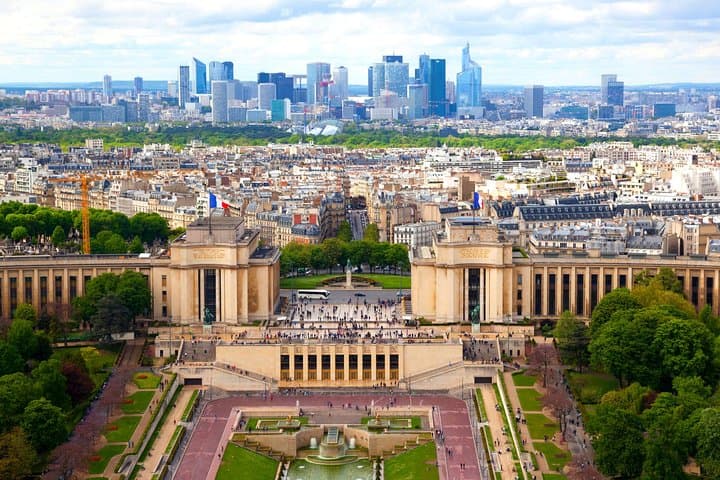
From the second platform (roughly 115 meters up), Paris lays out in a grid of avenues, monuments and river light; the Arc de Triomphe, Seine ribbon, and Sacré-Cœur stake the horizon. The summit (access by elevator if you’ve upgraded) pushes the view further—dependent on capacity and weather—and rewards patience with a wider sweep of the city.
Practical guidance: the tour is physically demanding and can include security and ticket-line waits, especially April–October; plan 2–3 hours. Wear supportive shoes, carry a reusable water bottle, and pack a light layer—the wind on the platforms is sharper than at street level. If you need reduced mobility accommodations, check accessibility before booking: public stairs stop at the second floor and summit ascent is by elevator only when available.
This guided stair climb is equal parts urban history lesson and fitness test: arrive ready to move, and you’ll leave with a clearer sense of how Paris was built and how the Eiffel Tower keeps holding the city’s view.
challenging.
2–3 hours.
Good cardiovascular fitness and leg strength recommended; expect continuous stair climbing and standing on platforms.
There are approximately 674 public steps to the second floor; stairs to the summit are not open to the public and summit access is by elevator when available.
No—summit access is subject to capacity, operational decisions and weather; if the summit is closed you will be refunded for that portion automatically.
Stairs are continuous to the second floor; visitors requiring step-free access should enquire about elevator options—summit access is elevator-only but availability cannot always be guaranteed.
Bring ID, comfortable shoes, a charged phone, and a small water bottle; large backpacks may be subject to additional checks and some items (tripods, large luggage) are restricted by security.
Designed as a temporary entrance arch for the 1889 World’s Fair, the Eiffel Tower was engineered from wrought iron and survived early criticism to become a defining Paris landmark.
Visitor capacity is managed through timed tickets and guided groups to reduce congestion; stick to marked paths and dispose of waste responsibly to protect the Champ de Mars and riverbanks.
City Wonders Ltd operates guided outdoor trips and adventures with an emphasis on safety, stewardship, and memorable experiences.


You begin at the foot of the iron lattice, the tower’s shadow cutting a cool wedge across the Champ de Mars. A guide gathers the group, voice low against the city’s hum, and the first steps lead you under ribs of riveted iron that still feel modern despite their 19th-century origin.
You begin at the foot of the iron lattice, the tower’s shadow cutting a cool wedge across the Champ de Mars. A guide gathers the group, voice low against the city’s hum, and the first steps lead you under ribs of riveted iron that still feel modern despite their 19th-century origin.
Built for the 1889 Exposition Universelle by Gustave Eiffel’s team, the structure was controversial at its birth but engineered to last: wrought iron compressed into a lightweight, wind-piercing frame. As you climb the public stairs—about 674 steps available to the second floor—you’ll pass observation cutouts and maintenance niches that reveal the tower’s bones and the craft of large-scale metalwork.
From the second platform (roughly 115 meters up), Paris lays out in a grid of avenues, monuments and river light; the Arc de Triomphe, Seine ribbon, and Sacré-Cœur stake the horizon. The summit (access by elevator if you’ve upgraded) pushes the view further—dependent on capacity and weather—and rewards patience with a wider sweep of the city.
Practical guidance: the tour is physically demanding and can include security and ticket-line waits, especially April–October; plan 2–3 hours. Wear supportive shoes, carry a reusable water bottle, and pack a light layer—the wind on the platforms is sharper than at street level. If you need reduced mobility accommodations, check accessibility before booking: public stairs stop at the second floor and summit ascent is by elevator only when available.
This guided stair climb is equal parts urban history lesson and fitness test: arrive ready to move, and you’ll leave with a clearer sense of how Paris was built and how the Eiffel Tower keeps holding the city’s view.