THE ADVENTURE COLLECTIVE® · Independent discovery and booking for outdoor travel

Scale Sugarloaf’s granite slopes with guides, then ride the historic cable car down to Morro da Urca. This 3‑hour outing mixes short technical climbing, sweeping bay views, and a civilized finish at Urca’s terraces.
Scale Sugarloaf’s granite slopes with guides, then ride the historic cable car down to Morro da Urca. This 3‑hour outing mixes short technical climbing, sweeping bay views, and a civilized finish at Urca’s terraces.
The city opens below you — the ocean edges the horizon and concrete hills fold into forest — as you start the climb from Praia Vermelha toward Sugarloaf’s 396‑meter crown. Granite underfoot, salt wind in your face, the group moves with measured steps; guides clip harnesses and point out handholds while the cable car quietly traces the skyline you’ll return to from above.
Verified experiences and guided adventures in the surrounding area.
Operated by AVenturismo · Rio de Janeiro, Rio de Janeiro
The city opens below you — the ocean edges the horizon and concrete hills fold into forest — as you start the climb from Praia Vermelha toward Sugarloaf’s 396‑meter crown. Granite underfoot, salt wind in your face, the group moves with measured steps; guides clip harnesses and point out handholds while the cable car quietly traces the skyline you’ll return to from above.
Sugarloaf (Pão de Açúcar) is a geologic monolith of granite and quartz formed by deep erosion that left this sheer, rounded peak jutting from Guanabara Bay. Since the first cable car rides in the early 20th century, the peak has been both a technical playground for climbers and a cultural icon for Rio — a place where urban life, coastal weather, and Atlantic Forest fragments meet.
Expect steep, exposed sections and short technical pitches managed by guides using ropes and helmets; rock crystals glint in sunlight, and small monkeys and seabirds sometimes watch from ledges. After reaching the summit plateau, the view is a full 360: Copacabana, the Sugarloaf islet chain, and the winding bay below. The return via cable car drops you to Morro da Urca, where cafés and terraces let the climb settle in with a cold drink before the short walk back to Praia Vermelha.
Practical notes: be fit for sustained scrambling and 2–3 hours of activity, wear approach shoes with good grip, bring 1–2 liters of water, sun protection, and ID (bookings collect passport info). Mornings are cooler and clearer; afternoon sea breezes can shift quickly. Guides provide technical gear, but personal gloves and layered clothes improve comfort on exposed granite.
challenging.
2–3 hours.
Should be in good cardiovascular shape, comfortable with exposure and short technical moves; not for beginners with severe vertigo.
The route involves scrambling and short rope-protected pitches; guides manage technical sections, but a high level of fitness and comfort on exposed rock are recommended.
Yes—guides supply helmets, harnesses, and ropes; personal gloves are useful but not mandatory.
This tour combines a guided climb to the top and uses the cable car for descent to Morro da Urca; independent cable car rides are also available separately.
Meet at the cable car boarding point near Praia Vermelha; bring your mobile ticket or ID, water, sunscreen, sturdy shoes, and any necessary travel documents.
The Sugarloaf cable car began operation in the early 20th century and quickly became a symbol of Rio; the mountain has long held cultural significance as a navigational and leisure landmark for the city.
High foot traffic and coastal weather threaten fragile vegetation on ledges; stick to routes, pack out waste, and respect local signage to limit erosion and wildlife disturbance.
AVenturismo operates guided outdoor trips and adventures with an emphasis on safety, stewardship, and memorable experiences.
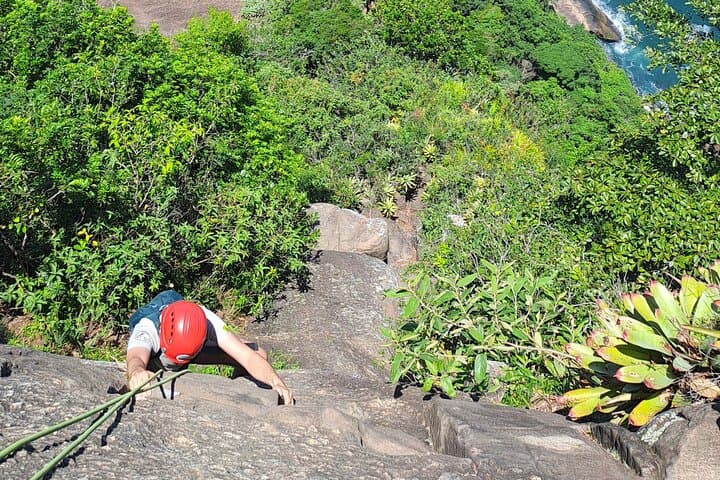
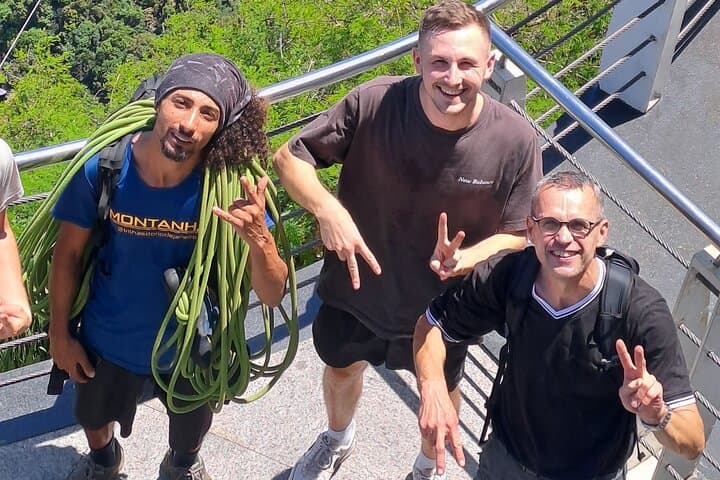
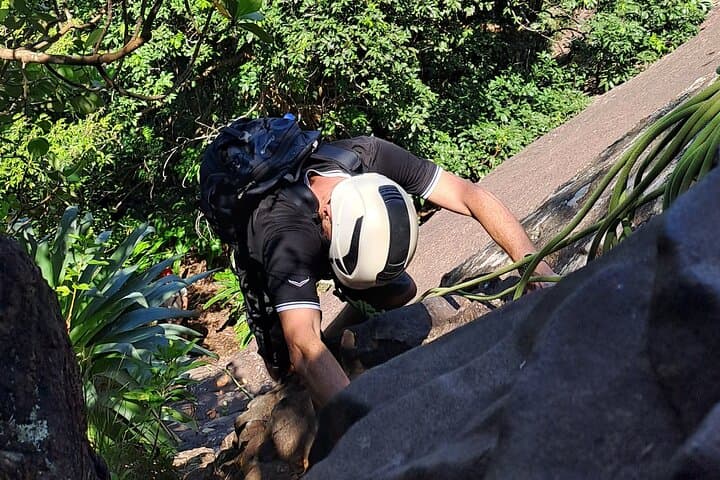
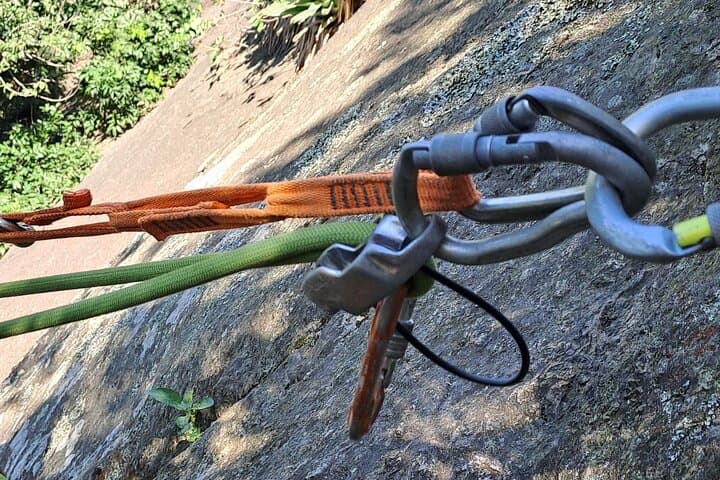
The city opens below you — the ocean edges the horizon and concrete hills fold into forest — as you start the climb from Praia Vermelha toward Sugarloaf’s 396‑meter crown. Granite underfoot, salt wind in your face, the group moves with measured steps; guides clip harnesses and point out handholds while the cable car quietly traces the skyline you’ll return to from above.
The city opens below you — the ocean edges the horizon and concrete hills fold into forest — as you start the climb from Praia Vermelha toward Sugarloaf’s 396‑meter crown. Granite underfoot, salt wind in your face, the group moves with measured steps; guides clip harnesses and point out handholds while the cable car quietly traces the skyline you’ll return to from above.
Sugarloaf (Pão de Açúcar) is a geologic monolith of granite and quartz formed by deep erosion that left this sheer, rounded peak jutting from Guanabara Bay. Since the first cable car rides in the early 20th century, the peak has been both a technical playground for climbers and a cultural icon for Rio — a place where urban life, coastal weather, and Atlantic Forest fragments meet.
Expect steep, exposed sections and short technical pitches managed by guides using ropes and helmets; rock crystals glint in sunlight, and small monkeys and seabirds sometimes watch from ledges. After reaching the summit plateau, the view is a full 360: Copacabana, the Sugarloaf islet chain, and the winding bay below. The return via cable car drops you to Morro da Urca, where cafés and terraces let the climb settle in with a cold drink before the short walk back to Praia Vermelha.
Practical notes: be fit for sustained scrambling and 2–3 hours of activity, wear approach shoes with good grip, bring 1–2 liters of water, sun protection, and ID (bookings collect passport info). Mornings are cooler and clearer; afternoon sea breezes can shift quickly. Guides provide technical gear, but personal gloves and layered clothes improve comfort on exposed granite.