THE ADVENTURE COLLECTIVE® · Independent discovery and booking for outdoor travel

A private day trip from Kandy that pairs the 5th‑century rock fortress of Sigiriya with the ancient murals and Buddha statues of Dambulla’s cave temple. Expect a full, active day of climbing, culture, and wide, unforgettable views.
A private day trip from Kandy that pairs the 5th‑century rock fortress of Sigiriya with the ancient murals and Buddha statues of Dambulla’s cave temple. Expect a full, active day of climbing, culture, and wide, unforgettable views.
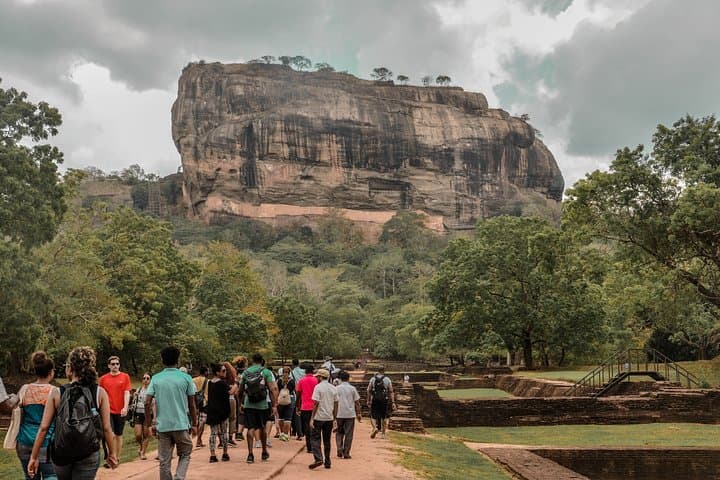
You arrive before the heat sets the rock aglow—dawn rubbing sleep from the paddy fields as the air fills with the scent of wet earth and wood smoke. The silhouette of Sigiriya rises like a weathered monolith from the plain, a squat fortress of red brick and smooth granite that has watched centuries of monsoon and conquest. The first steel staircases creak underfoot and the path narrows; ahead, the painted ladies cling to a shaded rock face, colors stubbornly bright despite a millennium.
Verified experiences and guided adventures in the surrounding area.
Operated by Lakpura LLC · Sigiriya, Central Province
You arrive before the heat sets the rock aglow—dawn rubbing sleep from the paddy fields as the air fills with the scent of wet earth and wood smoke. The silhouette of Sigiriya rises like a weathered monolith from the plain, a squat fortress of red brick and smooth granite that has watched centuries of monsoon and conquest. The first steel staircases creak underfoot and the path narrows; ahead, the painted ladies cling to a shaded rock face, colors stubbornly bright despite a millennium.
Sigiriya is more than a climb: it’s the ruin of King Kasyapa’s 5th-century stronghold, a demonstration of ancient hydraulics, urban planning and politically charged architecture. The rock itself is an ancient volcanic plug—hard granite resisting the slow erosion of the surrounding plains—and the formal water gardens at its base are among the earliest examples of landscaped irrigation systems in South Asia.
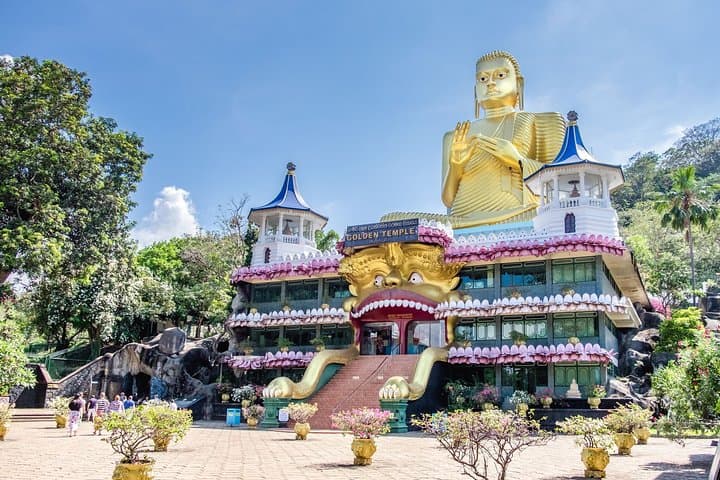
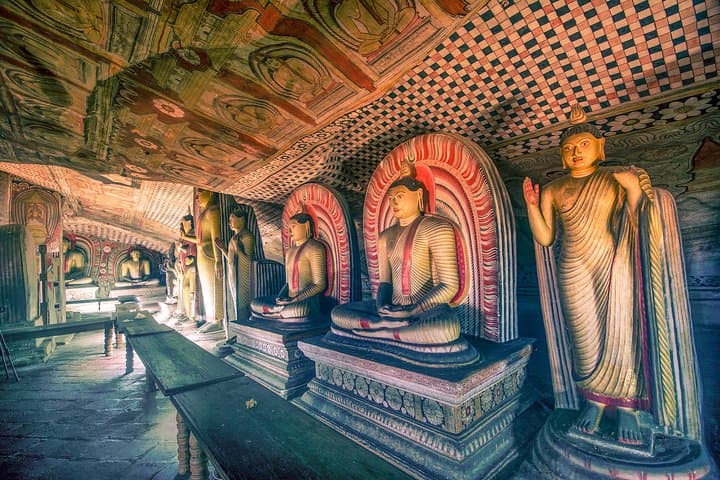
A short drive away, Dambulla’s Golden Temple unfolds inside five vast caverns carved into a granite outcrop. Over 150 Buddha statues and sweeping murals were layered there from the 1st century BCE through later medieval centuries. The caves accumulate centuries of religious practice in the same way the rock keeps its heat: slowly, insistently, with a sense of continuity.
Culturally, this corridor between Kandy and Sigiriya bridges Sri Lanka’s hill-country Buddhism and the island’s ancient secular power centers. Local guides point out peafowl on estate edges and troops of macaques that regard visitors as moving branches; vendors in small towns sell king coconut and flatbread between the bus stops.
Practical guide: the full private tour runs roughly 9–10 hours. Expect about 2–3 hours driving round-trip from Kandy and 2 hours at Sigiriya plus 1.5 hours at Dambulla. The Sigiriya ascent gains roughly 200 meters (about 650 feet) and includes metal stairways and narrow terraces—sturdy footwear and a head for heights help. Dress respectfully for Dambulla and temple areas: shoulders and knees should be covered; footwear is removed for caves.
Start early to avoid midday heat and crowds; morning light also brings out the fresco pigments. Bring at least 1–2 liters of water, sun protection, and a light cover for temple visits. Note physical limits: the climb has steep sections and is not recommended for those with back or heart problems, or for pregnant travelers. Entrance fees and bottled water are included on most private day tours, and pickup from Kandy hotels is common.
Walk steadily, pause on the terraces, and let the panorama of irrigated fields and jungle sink in—the place is as much landscape as history, and both reward a calm, observant pace.
moderate.
9–10 hours.
Moderate fitness: comfortable with several flights of stairs and short steep sections; able to walk 2–4 miles over uneven ground.
The climb gains roughly 200 meters (about 650 feet) and takes 45–90 minutes depending on fitness and stops for photos.
Most private day trips include entrance tickets to Sigiriya and Dambulla and round‑trip transport from Kandy; confirm details when booking.
Children who can manage stairs and steep sections will enjoy it, but families should supervise near edges and narrow walkways.
Cover shoulders and knees; remove footwear before entering cave shrines—light layers and a sarong work well.
Certain areas of Sigiriya and Dambulla are not wheelchair accessible and the ascent involves steep steps—this tour is not recommended for travelers with significant mobility limitations.
Yes—expect to see macaque monkeys around the rock base and peafowl along rural roads; observe from a distance and avoid feeding wildlife.
Sigiriya was King Kasyapa’s 5th‑century AD capital, featuring advanced water gardens and painted rock frescoes; Dambulla’s caves hold religious art and statues from as early as the 1st century BCE.
Both sites face visitor‑impact pressures; stick to marked paths, avoid touching frescoes, and follow guide instructions to help protect murals and rockwork.
Lakpura LLC operates guided outdoor trips and adventures with an emphasis on safety, stewardship, and memorable experiences.
You arrive before the heat sets the rock aglow—dawn rubbing sleep from the paddy fields as the air fills with the scent of wet earth and wood smoke. The silhouette of Sigiriya rises like a weathered monolith from the plain, a squat fortress of red brick and smooth granite that has watched centuries of monsoon and conquest. The first steel staircases creak underfoot and the path narrows; ahead, the painted ladies cling to a shaded rock face, colors stubbornly bright despite a millennium.
You arrive before the heat sets the rock aglow—dawn rubbing sleep from the paddy fields as the air fills with the scent of wet earth and wood smoke. The silhouette of Sigiriya rises like a weathered monolith from the plain, a squat fortress of red brick and smooth granite that has watched centuries of monsoon and conquest. The first steel staircases creak underfoot and the path narrows; ahead, the painted ladies cling to a shaded rock face, colors stubbornly bright despite a millennium.
Sigiriya is more than a climb: it’s the ruin of King Kasyapa’s 5th-century stronghold, a demonstration of ancient hydraulics, urban planning and politically charged architecture. The rock itself is an ancient volcanic plug—hard granite resisting the slow erosion of the surrounding plains—and the formal water gardens at its base are among the earliest examples of landscaped irrigation systems in South Asia.
A short drive away, Dambulla’s Golden Temple unfolds inside five vast caverns carved into a granite outcrop. Over 150 Buddha statues and sweeping murals were layered there from the 1st century BCE through later medieval centuries. The caves accumulate centuries of religious practice in the same way the rock keeps its heat: slowly, insistently, with a sense of continuity.
Culturally, this corridor between Kandy and Sigiriya bridges Sri Lanka’s hill-country Buddhism and the island’s ancient secular power centers. Local guides point out peafowl on estate edges and troops of macaques that regard visitors as moving branches; vendors in small towns sell king coconut and flatbread between the bus stops.
Practical guide: the full private tour runs roughly 9–10 hours. Expect about 2–3 hours driving round-trip from Kandy and 2 hours at Sigiriya plus 1.5 hours at Dambulla. The Sigiriya ascent gains roughly 200 meters (about 650 feet) and includes metal stairways and narrow terraces—sturdy footwear and a head for heights help. Dress respectfully for Dambulla and temple areas: shoulders and knees should be covered; footwear is removed for caves.
Start early to avoid midday heat and crowds; morning light also brings out the fresco pigments. Bring at least 1–2 liters of water, sun protection, and a light cover for temple visits. Note physical limits: the climb has steep sections and is not recommended for those with back or heart problems, or for pregnant travelers. Entrance fees and bottled water are included on most private day tours, and pickup from Kandy hotels is common.
Walk steadily, pause on the terraces, and let the panorama of irrigated fields and jungle sink in—the place is as much landscape as history, and both reward a calm, observant pace.