THE ADVENTURE COLLECTIVE® · Independent discovery and booking for outdoor travel

Learn to climb on the dramatic limestone headland of Punta Campanella with views of Capri. This four-hour guided lesson pairs technical coaching with sea-facing routes and practical skills for new and intermediate climbers.
Learn to climb on the dramatic limestone headland of Punta Campanella with views of Capri. This four-hour guided lesson pairs technical coaching with sea-facing routes and practical skills for new and intermediate climbers.
A morning on Punta Campanella starts with wind carrying salt and the bright silhouette of Capri across open water. Climbers arrive on a stony headland where sun-warmed limestone rises straight from the sea; the route unfolds as a sequence of pockets and crimps, vertical angles and slab, the rock daring you to trust your feet while the Tyrrhenian Sea keeps time beneath.
Verified experiences and guided adventures in the surrounding area.
Operated by Toonado · Massa Lubrense, Campania
A morning on Punta Campanella starts with wind carrying salt and the bright silhouette of Capri across open water. Climbers arrive on a stony headland where sun-warmed limestone rises straight from the sea; the route unfolds as a sequence of pockets and crimps, vertical angles and slab, the rock daring you to trust your feet while the Tyrrhenian Sea keeps time beneath.
The headland marks the geological seam between the Sorrentine Peninsula and Amalfi Coast—limestone carved by marine action and uplifted by tectonics—so routes often feature compact, sharp holds and short, steep pitches that reward technique more than brute force. Historically the promontory was a maritime landmark for Roman and medieval sailors; today it’s a mix of coastal agriculture, quiet fishing coves and protected marine areas.
Culturally, the nearby villages keep climbing modest: locals fish and tend lemons rather than staff basecamps, so expect personal instruction from qualified guides rather than commercial circus-style operations. The atmosphere is direct and practical—clipping draws, checking anchors, listening to the instructor’s commands.
Practically: lessons run about four hours, equipment is provided, and routes are usually single-pitch sport climbs of 10–40 meters above sea level. Sun and sea spray are constant variables—start early to avoid heat, bring water and a light wind shell, and prepare for exposed belays with full attention to rope management. For those who want a technical introduction with unbeatable views of Capri, Punta Campanella is compact, scenic, and focused on learning solid rock skills.
moderate.
4 hours.
Moderate cardiovascular fitness and leg strength; able to manage short coastal approaches and repeated standing on small footholds.
No — this is a guided lesson suitable for beginners and intermediate climbers; instructors teach belaying, knots and movement on rock.
Yes — harness, helmet, ropes and draws are provided as part of the experience.
A moderate level of fitness is recommended: comfortable walking on uneven ground and able to stand on small holds for short periods.
The operator may cancel for heavy rain or unsafe sea spray conditions; cancel at least 24 hours before for a full refund per policy.
Punta Campanella has served as a navigational landmark since Roman times and contains traces of ancient watch posts due to its strategic position between the Gulfs of Naples and Salerno.
The area sits adjacent to marine protected zones—respect local regulations, avoid chalking rock excessively, and carry out all trash to protect coastal ecosystems.
Toonado operates guided outdoor trips and adventures with an emphasis on safety, stewardship, and memorable experiences.
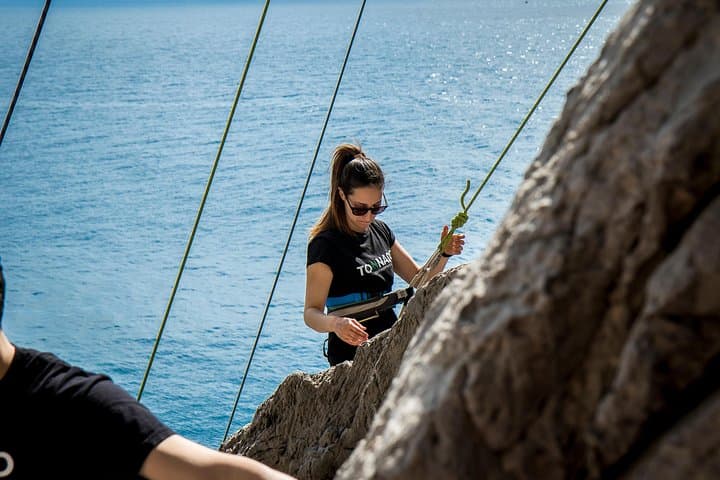
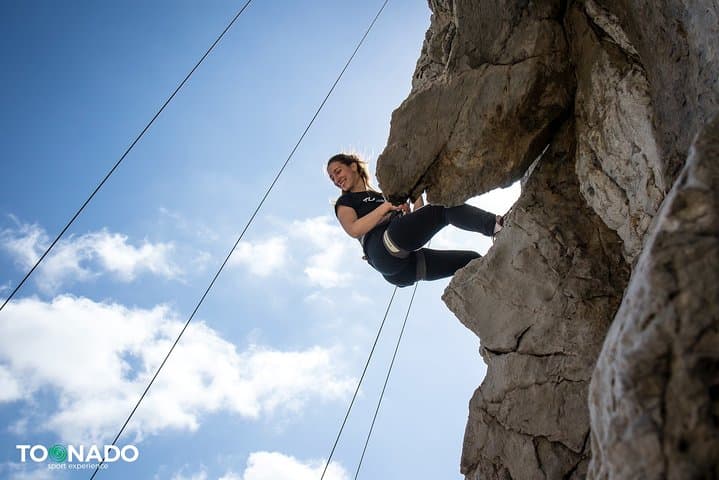
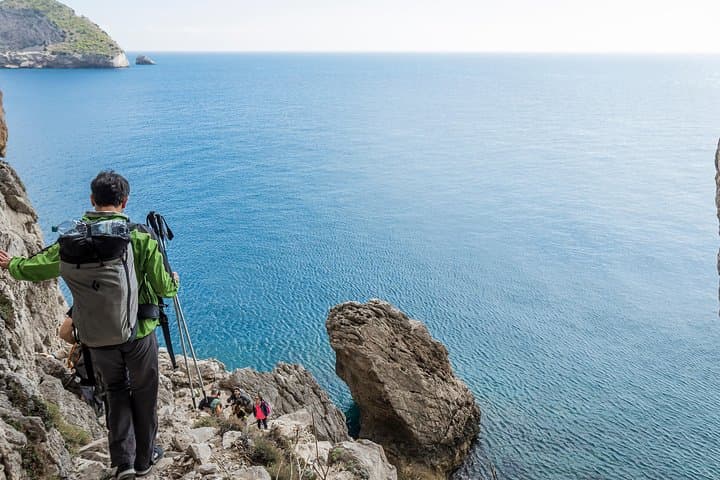
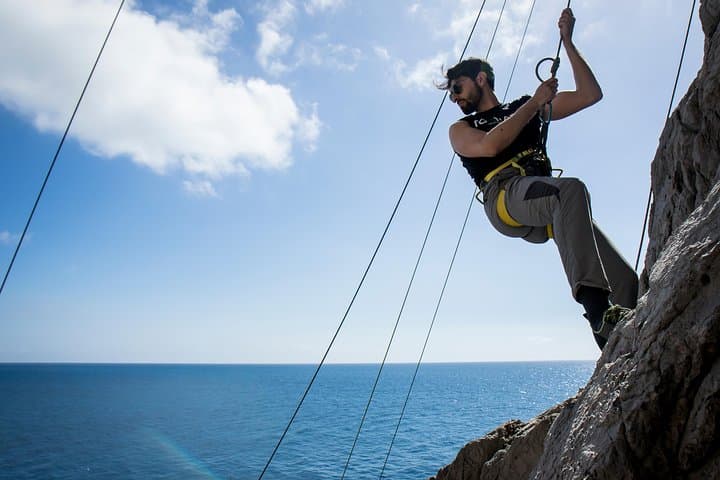
A morning on Punta Campanella starts with wind carrying salt and the bright silhouette of Capri across open water. Climbers arrive on a stony headland where sun-warmed limestone rises straight from the sea; the route unfolds as a sequence of pockets and crimps, vertical angles and slab, the rock daring you to trust your feet while the Tyrrhenian Sea keeps time beneath.
A morning on Punta Campanella starts with wind carrying salt and the bright silhouette of Capri across open water. Climbers arrive on a stony headland where sun-warmed limestone rises straight from the sea; the route unfolds as a sequence of pockets and crimps, vertical angles and slab, the rock daring you to trust your feet while the Tyrrhenian Sea keeps time beneath.
The headland marks the geological seam between the Sorrentine Peninsula and Amalfi Coast—limestone carved by marine action and uplifted by tectonics—so routes often feature compact, sharp holds and short, steep pitches that reward technique more than brute force. Historically the promontory was a maritime landmark for Roman and medieval sailors; today it’s a mix of coastal agriculture, quiet fishing coves and protected marine areas.
Culturally, the nearby villages keep climbing modest: locals fish and tend lemons rather than staff basecamps, so expect personal instruction from qualified guides rather than commercial circus-style operations. The atmosphere is direct and practical—clipping draws, checking anchors, listening to the instructor’s commands.
Practically: lessons run about four hours, equipment is provided, and routes are usually single-pitch sport climbs of 10–40 meters above sea level. Sun and sea spray are constant variables—start early to avoid heat, bring water and a light wind shell, and prepare for exposed belays with full attention to rope management. For those who want a technical introduction with unbeatable views of Capri, Punta Campanella is compact, scenic, and focused on learning solid rock skills.