THE ADVENTURE COLLECTIVE® · Independent discovery and booking for outdoor travel

Scale the third-largest monolith in the world and wander the colonial streets of Tequisquiapan on a full-day guided loop from Querétaro. Expect rocky scrambles, sweeping valley views, and authentic market stops.
Scale the third-largest monolith in the world and wander the colonial streets of Tequisquiapan on a full-day guided loop from Querétaro. Expect rocky scrambles, sweeping valley views, and authentic market stops.
A low sun slices across the face of Peña de Bernal, casting the monolith’s shadow over the cobbled streets of Bernal. Visitors arrive by air-conditioned vehicle and step out into dry scrub framed by volcanic rock; the rock itself looms like a vertical island, its cracked lava surface daring climbers to pick a line and move upward.
Verified experiences and guided adventures in the surrounding area.
Operated by Travis Adventures · Bernal, Querétaro
A low sun slices across the face of Peña de Bernal, casting the monolith’s shadow over the cobbled streets of Bernal. Visitors arrive by air-conditioned vehicle and step out into dry scrub framed by volcanic rock; the rock itself looms like a vertical island, its cracked lava surface daring climbers to pick a line and move upward.
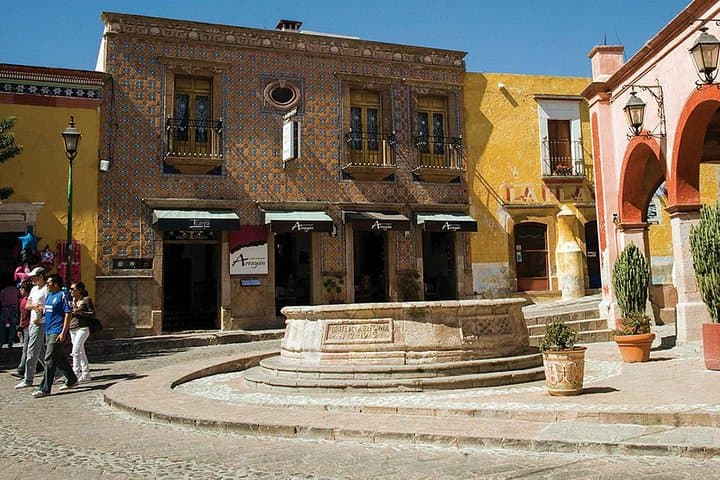
Peña de Bernal is one of the world’s largest monoliths, formed roughly 65 million years ago when viscous lava cooled into the massive plug visible today. The town of Bernal grew at its base, a 17th-century settlement whose church plazas and hand-painted facades reflect Queretaro’s colonial history. A short drive brings travelers to Tequisquiapan, known for its thermal springs, artisanal cheeses, and a monument marking the geographic center of Mexico.
On this full-day itinerary expect 2–3 hours on the rock for hikers and scramblers, plus guided walks through both towns. Terrain shifts from packed dirt trails to steep, rocky scrambles; the ascent rewards with broad valley views and a close study of columnar fractures and weathered basalt.
Practical notes: start early to avoid midday heat, wear grippy shoes and sun protection, and carry water—there are limited potable sources on the ascent. Local guides provide context on geology and town history and make logistics simple for small groups. Cash helps for market stalls in Tequisquiapan. For anyone comfortable on uneven ground, the route offers a compact, high-reward day of geology, culture, and straightforward alpine exposure.
moderate.
10–11 hours.
Suitable for travelers in moderate fitness—able to hike uneven trails, manage short steep scrambles, and stand for extended periods.
The climb involves steep rocky trails and short sections of scrambling—moderate fitness and sure-footedness are recommended, but technical climbing gear is not required for the standard route.
There’s typically a small local fee or voluntary contribution for access and conservation at Peña de Bernal; fees and practices can change, so bring small bills.
The itinerary notes suitability for most fitness levels, but children and seniors should be able to handle uneven ground and steep steps; discuss mobility concerns with the operator before booking.
Local guides commonly speak Spanish and many operator-guides offer English for international visitors—confirm language needs when booking.
Bernal developed around the rock in the 17th century; its church and plaza reflect colonial-era settlement while the monolith has long held spiritual and community significance.
Foot traffic concentrates on a few official routes—stick to marked trails, avoid removing rock or plants, and support local conservation fees that fund trail maintenance.
Travis Adventures operates guided outdoor trips and adventures with an emphasis on safety, stewardship, and memorable experiences.
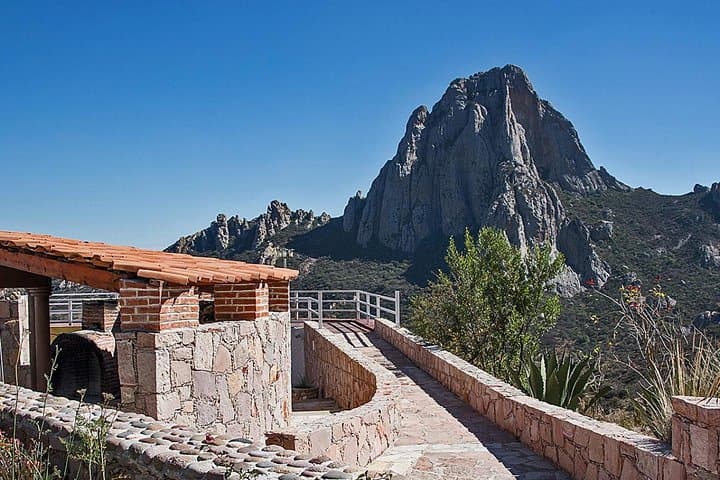
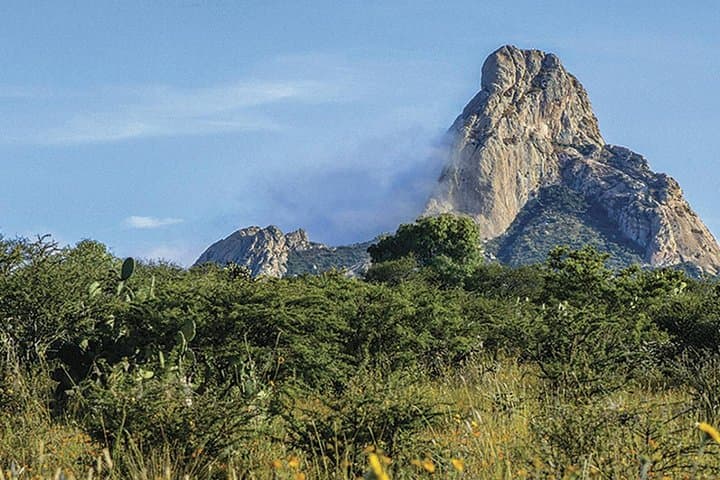
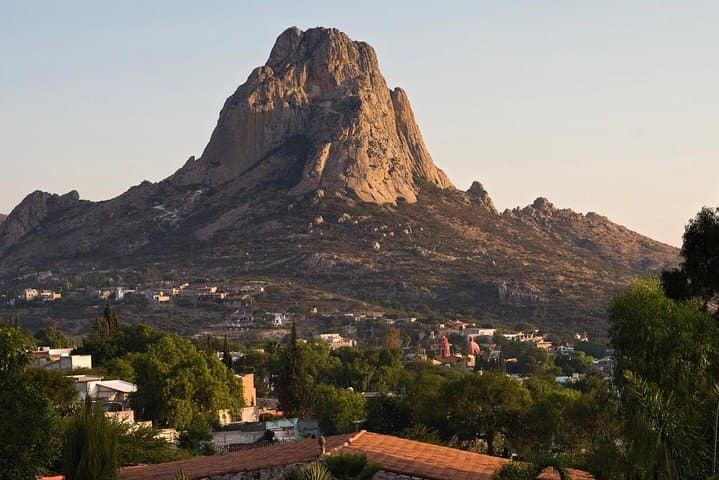
A low sun slices across the face of Peña de Bernal, casting the monolith’s shadow over the cobbled streets of Bernal. Visitors arrive by air-conditioned vehicle and step out into dry scrub framed by volcanic rock; the rock itself looms like a vertical island, its cracked lava surface daring climbers to pick a line and move upward.
A low sun slices across the face of Peña de Bernal, casting the monolith’s shadow over the cobbled streets of Bernal. Visitors arrive by air-conditioned vehicle and step out into dry scrub framed by volcanic rock; the rock itself looms like a vertical island, its cracked lava surface daring climbers to pick a line and move upward.
Peña de Bernal is one of the world’s largest monoliths, formed roughly 65 million years ago when viscous lava cooled into the massive plug visible today. The town of Bernal grew at its base, a 17th-century settlement whose church plazas and hand-painted facades reflect Queretaro’s colonial history. A short drive brings travelers to Tequisquiapan, known for its thermal springs, artisanal cheeses, and a monument marking the geographic center of Mexico.
On this full-day itinerary expect 2–3 hours on the rock for hikers and scramblers, plus guided walks through both towns. Terrain shifts from packed dirt trails to steep, rocky scrambles; the ascent rewards with broad valley views and a close study of columnar fractures and weathered basalt.
Practical notes: start early to avoid midday heat, wear grippy shoes and sun protection, and carry water—there are limited potable sources on the ascent. Local guides provide context on geology and town history and make logistics simple for small groups. Cash helps for market stalls in Tequisquiapan. For anyone comfortable on uneven ground, the route offers a compact, high-reward day of geology, culture, and straightforward alpine exposure.