THE ADVENTURE COLLECTIVE® · Independent discovery and booking for outdoor travel

A challenging day-hike into Tijuca National Park that finishes on the summit of Pedra da Gávea — the world’s largest coastal monolith — with sweeping views over Rio’s beaches. Expect steep forest trails, short exposed scrambling and a harness-assisted final section.
A challenging day-hike into Tijuca National Park that finishes on the summit of Pedra da Gávea — the world’s largest coastal monolith — with sweeping views over Rio’s beaches. Expect steep forest trails, short exposed scrambling and a harness-assisted final section.
You push through warm Atlantic Forest air, ferns brushing your calves, and the trail opens onto a granite wall that seems to rise straight out of the ocean. The climb up Pedra da Gávea is a steady negotiation with slope, rock and sky — the forest pulls back and, as you gain metres, the city and beaches spill wide beneath you: São Conrado’s strip, Ipanema’s curve, Copacabana’s ribbon of sand.
Verified experiences and guided adventures in the surrounding area.
Operated by Aventuras Brasil · Rio de Janeiro, Rio de Janeiro
You push through warm Atlantic Forest air, ferns brushing your calves, and the trail opens onto a granite wall that seems to rise straight out of the ocean. The climb up Pedra da Gávea is a steady negotiation with slope, rock and sky — the forest pulls back and, as you gain metres, the city and beaches spill wide beneath you: São Conrado’s strip, Ipanema’s curve, Copacabana’s ribbon of sand.
Geology here is blunt and old: a single granite-gneiss monolith more than 800 metres above sea level that speaks of deep crustal forces. The stone has drawn human attention for centuries; Tijuca National Park, created to protect these watersheds, was largely reforested in the 19th century after earlier clearing. Local culture mixes urban carioca life with a stubborn outdoor ethic — paragliders above São Conrado, runners in the park, and small climbing communities that maintain the routes.
Practically, expect a full-day outing (about 6–7 hours on most guided itineraries) with steep trails, short exposed scrambling, and a harness-assisted section provided by guides. The summit reward is panoramic and immediate: ocean, city and rainforest stitched at your feet. Go early to avoid afternoon showers and crowds; pack 2–3 litres of water, sturdy boots, sun protection and a light rain layer. Be ready for uneven steps, tree roots and some vertical moves—comfort with exposure matters more than technical rock-climbing skill. Leave no trace, respect fragile vegetation near viewpoints, and follow your guide’s rope commands on exposed sections. Pedra da Gávea is a demanding half-day that feels like a small expedition — sharp, direct and wildly Rio.
challenging.
6–7 hours.
Good cardiovascular fitness and leg strength; comfortable with sustained uphill hiking and short exposed scrambling.
It’s challenging: steep trails, uneven surfaces and short exposed scrambling. No technical climbing is required but you should be comfortable with exposure and sustained uphill walking.
Guided trips commonly include harnesses and carabiners for exposed sections; confirm with your operator but expect basic climbing safety gear to be supplied.
Start early—before 8 AM—so you avoid afternoon storms and crowded summit windows; early starts also improve light for photos.
This hike is not recommended for those with significant back, cardiovascular issues or very young children due to physical exertion and exposed sections; check the operator’s age and health requirements.
Pedra da Gávea sits within Tijuca National Park, an urban forest largely replanted in the 19th century to restore watersheds and protect Rio’s water supply.
Stay on established trails to avoid erosion in the fragile Atlantic Forest; do not feed wildlife or leave trash, as the area faces pressure from rising visitor numbers.
Aventuras Brasil operates guided outdoor trips and adventures with an emphasis on safety, stewardship, and memorable experiences.
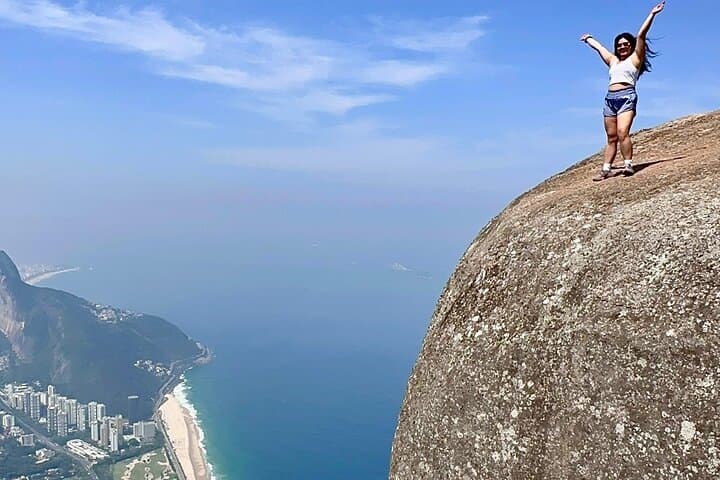
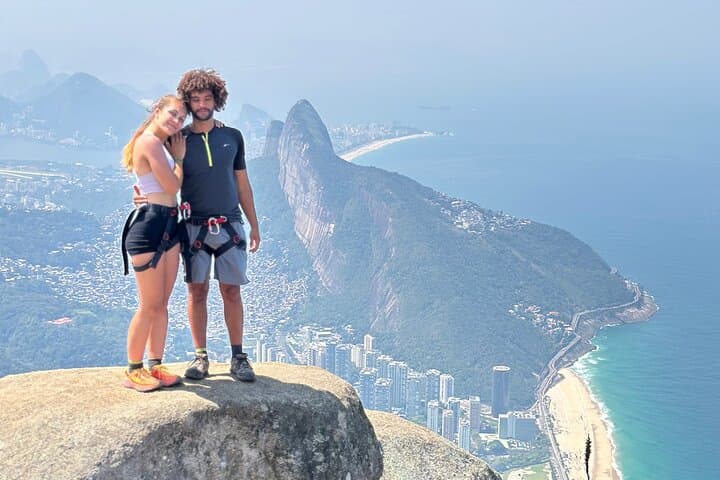
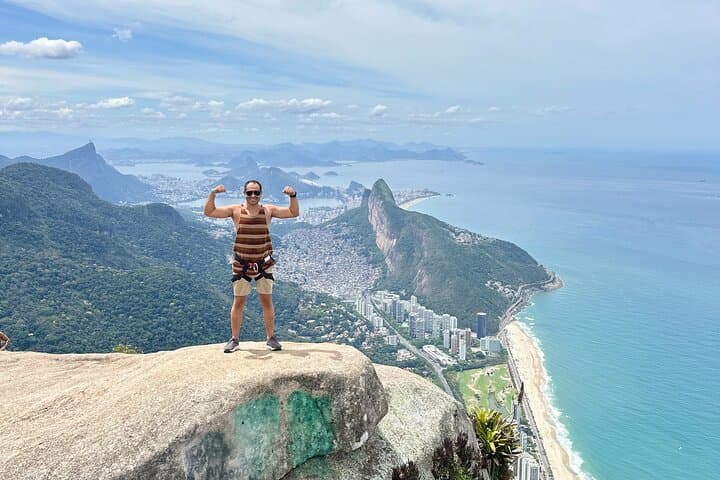
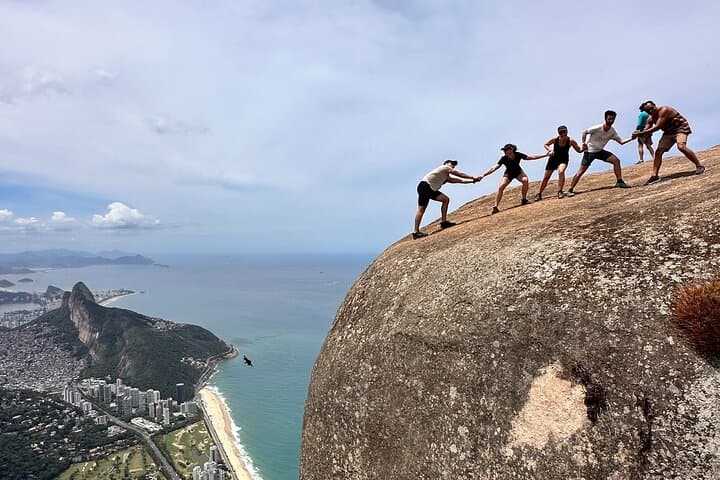
You push through warm Atlantic Forest air, ferns brushing your calves, and the trail opens onto a granite wall that seems to rise straight out of the ocean. The climb up Pedra da Gávea is a steady negotiation with slope, rock and sky — the forest pulls back and, as you gain metres, the city and beaches spill wide beneath you: São Conrado’s strip, Ipanema’s curve, Copacabana’s ribbon of sand.
You push through warm Atlantic Forest air, ferns brushing your calves, and the trail opens onto a granite wall that seems to rise straight out of the ocean. The climb up Pedra da Gávea is a steady negotiation with slope, rock and sky — the forest pulls back and, as you gain metres, the city and beaches spill wide beneath you: São Conrado’s strip, Ipanema’s curve, Copacabana’s ribbon of sand.
Geology here is blunt and old: a single granite-gneiss monolith more than 800 metres above sea level that speaks of deep crustal forces. The stone has drawn human attention for centuries; Tijuca National Park, created to protect these watersheds, was largely reforested in the 19th century after earlier clearing. Local culture mixes urban carioca life with a stubborn outdoor ethic — paragliders above São Conrado, runners in the park, and small climbing communities that maintain the routes.
Practically, expect a full-day outing (about 6–7 hours on most guided itineraries) with steep trails, short exposed scrambling, and a harness-assisted section provided by guides. The summit reward is panoramic and immediate: ocean, city and rainforest stitched at your feet. Go early to avoid afternoon showers and crowds; pack 2–3 litres of water, sturdy boots, sun protection and a light rain layer. Be ready for uneven steps, tree roots and some vertical moves—comfort with exposure matters more than technical rock-climbing skill. Leave no trace, respect fragile vegetation near viewpoints, and follow your guide’s rope commands on exposed sections. Pedra da Gávea is a demanding half-day that feels like a small expedition — sharp, direct and wildly Rio.