THE ADVENTURE COLLECTIVE® · Independent discovery and booking for outdoor travel

Scale Pan di Zucchero by guided multipitch from Masua and stand atop one of the Mediterranean’s tallest sea stacks. This guided route combines solid limestone pitches, a short boat transfer, and sweeping coastal views.
Scale Pan di Zucchero by guided multipitch from Masua and stand atop one of the Mediterranean’s tallest sea stacks. This guided route combines solid limestone pitches, a short boat transfer, and sweeping coastal views.
A rubber dinghy parts the surf and you see it—Pan di Zucchero rising like a vertical island off the jagged Sulcis coast. The rock's compact limestone gleams in the sun; gulls wheel and the sea dares you from below. On a guided multipitch, climbers thread cracks and faces that have been shaped by marine erosion and coastal weathering, reaching ledges where the horizon opens to the Gulf of Iglesias.
Verified experiences and guided adventures in the surrounding area.
Operated by Big Alpine Guide · Iglesias, Sardinia
A rubber dinghy parts the surf and you see it—Pan di Zucchero rising like a vertical island off the jagged Sulcis coast. The rock's compact limestone gleams in the sun; gulls wheel and the sea dares you from below. On a guided multipitch, climbers thread cracks and faces that have been shaped by marine erosion and coastal weathering, reaching ledges where the horizon opens to the Gulf of Iglesias.
This faraglione sits opposite historic mining hamlets and the engineered pier of Porto Flavia, reminders of a 19th–20th century mining culture that carved both shore and economy here. Geologically the stack is a calcarenite and limestone outcrop sculpted by wave action, giving solid pockets and vertical seams popular for long routes graded roughly 5b–6b. Local guides know the lines, tides, and prevailing mistral that can turn a calm crossing into a bumpy boat ride.
Practically: expect a 10–15 minute dinghy transfer from Masua or Nebida, then 3–5 hours on the route with approach, climbing and descent. The guide supplies ropes, helmet, harness and local beta; you may rappel to the boat or follow the miners' descent depending on conditions. Bring a dry bag, sun protection, and extra water; start early to avoid strong midday wind and heat. Be prepared for exposure and sea spray—the rock breathes wind and the surf will be part of the climb. If you’re fit, coachable and comfortable on multi-pitch terrain, this is one of Sardinia’s most memorable sea-stack climbs.
challenging.
4–6 hours.
Moderate to strong cardiovascular fitness and leg strength; comfort on exposed routes required.
Most climbs start with a short rubber dinghy from Masua or Nebida (about 10–15 minutes); confirm exact pickup location with your operator.
Guides can take climbers with limited multipitch experience, but you should be comfortable with exposure and basic rope commands; stronger climbers can attempt harder pitches.
Routes typically range from roughly 5b to 6b; your guide will pick a line that matches the group's ability and conditions.
Operators often cancel if the sea or wind is unsafe; check cancellation policy and have flexible travel plans as all-sales-final policies are common.
The Sulcis-Iglesiente coast has a deep mining history; Porto Flavia and nearby chimneys reflect an industry that once exported ore directly from cliffside galleries.
This coastal zone is sensitive—avoid leaving gear on ledges, minimize chalk dust where possible, and follow guide instructions to protect nesting seabirds and shore habitats.
Big Alpine Guide operates guided outdoor trips and adventures with an emphasis on safety, stewardship, and memorable experiences.
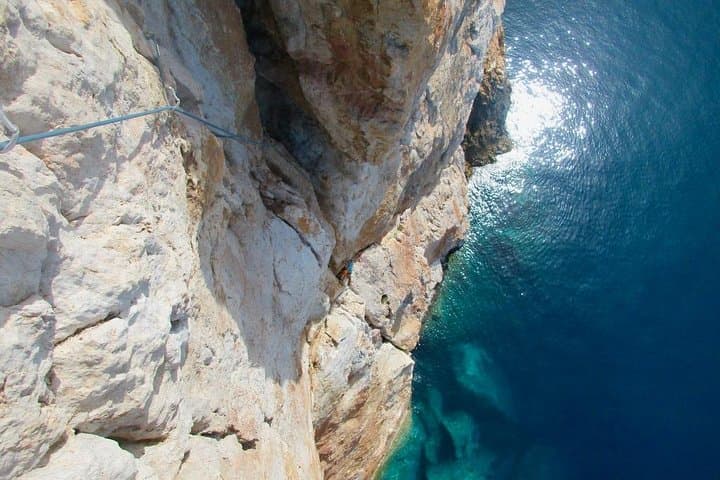
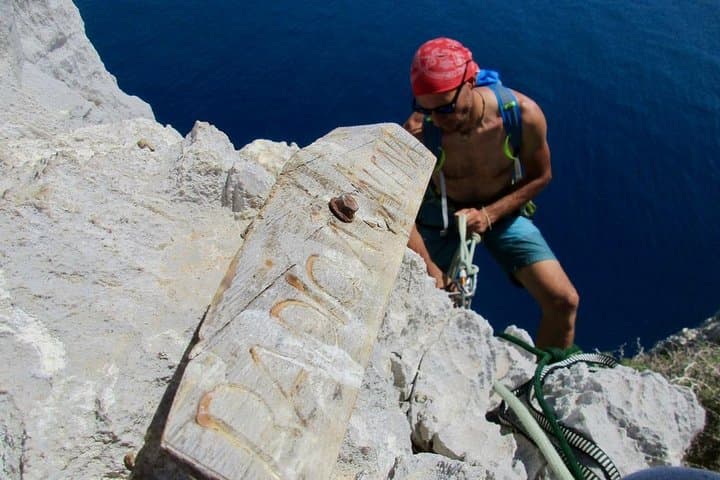
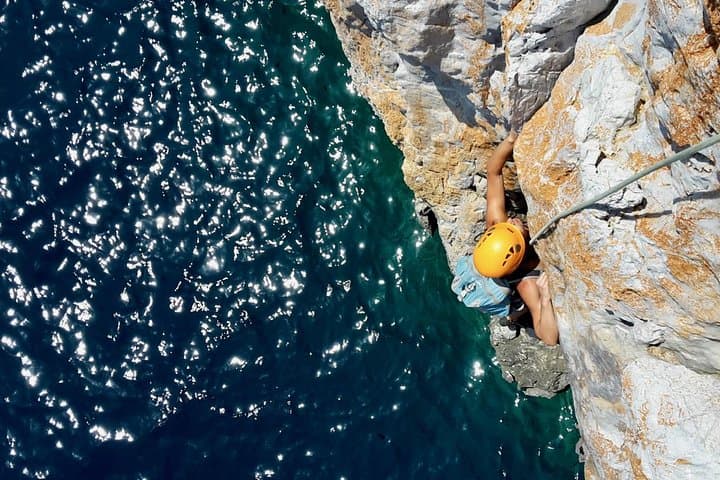
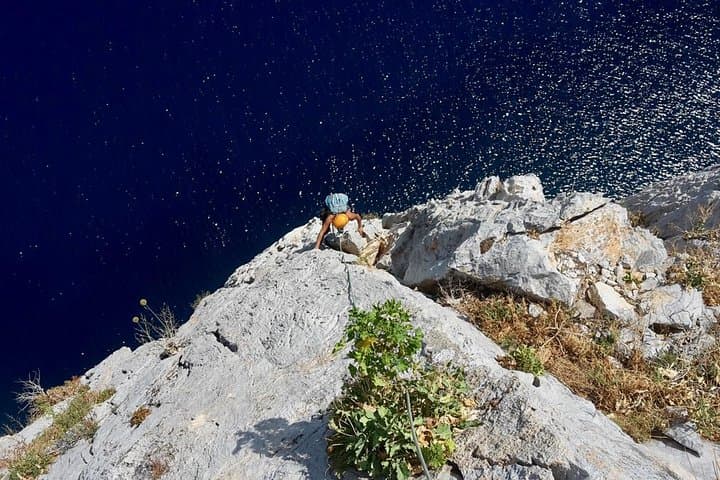
A rubber dinghy parts the surf and you see it—Pan di Zucchero rising like a vertical island off the jagged Sulcis coast. The rock's compact limestone gleams in the sun; gulls wheel and the sea dares you from below. On a guided multipitch, climbers thread cracks and faces that have been shaped by marine erosion and coastal weathering, reaching ledges where the horizon opens to the Gulf of Iglesias.
A rubber dinghy parts the surf and you see it—Pan di Zucchero rising like a vertical island off the jagged Sulcis coast. The rock's compact limestone gleams in the sun; gulls wheel and the sea dares you from below. On a guided multipitch, climbers thread cracks and faces that have been shaped by marine erosion and coastal weathering, reaching ledges where the horizon opens to the Gulf of Iglesias.
This faraglione sits opposite historic mining hamlets and the engineered pier of Porto Flavia, reminders of a 19th–20th century mining culture that carved both shore and economy here. Geologically the stack is a calcarenite and limestone outcrop sculpted by wave action, giving solid pockets and vertical seams popular for long routes graded roughly 5b–6b. Local guides know the lines, tides, and prevailing mistral that can turn a calm crossing into a bumpy boat ride.
Practically: expect a 10–15 minute dinghy transfer from Masua or Nebida, then 3–5 hours on the route with approach, climbing and descent. The guide supplies ropes, helmet, harness and local beta; you may rappel to the boat or follow the miners' descent depending on conditions. Bring a dry bag, sun protection, and extra water; start early to avoid strong midday wind and heat. Be prepared for exposure and sea spray—the rock breathes wind and the surf will be part of the climb. If you’re fit, coachable and comfortable on multi-pitch terrain, this is one of Sardinia’s most memorable sea-stack climbs.