THE ADVENTURE COLLECTIVE® · Independent discovery and booking for outdoor travel

Scale Olumo Rock for sweeping views over Abeokuta, visit a compact museum of local history, and haggle for indigo-dyed cloth at Adire market. This guided day tour mixes easy climbing, cultural context, and market time—ideal for curious travelers.
Scale Olumo Rock for sweeping views over Abeokuta, visit a compact museum of local history, and haggle for indigo-dyed cloth at Adire market. This guided day tour mixes easy climbing, cultural context, and market time—ideal for curious travelers.
You arrive in Abeokuta with the city’s low skyline punctured by a hulking mass of banded granite—Olumo Rock—rising from a sea of market stalls and busy streets. The stone looms like an old guardian; your guide threads through alleys of textile vendors and into a staircut path that leads upward. The climb is steady: carved steps, iron ladders and shaded ledges opening to wide views of the Ogun River and the red-tiled roofs below.
Verified experiences and guided adventures in the surrounding area.
Operated by Motley Travels · Abeokuta, Ogun
You arrive in Abeokuta with the city’s low skyline punctured by a hulking mass of banded granite—Olumo Rock—rising from a sea of market stalls and busy streets. The stone looms like an old guardian; your guide threads through alleys of textile vendors and into a staircut path that leads upward. The climb is steady: carved steps, iron ladders and shaded ledges opening to wide views of the Ogun River and the red-tiled roofs below.
Olumo Rock is both geological landmark and cultural stronghold. Formed as a granite outcrop millions of years ago, it offered refuge to the Egba people during 19th-century internecine conflicts; the on-site museum traces pre-democratic Nigerian artifacts and the town’s role in regional history. Nearby Adire market—famous for hand-dyed fabric—adds sensory texture: dye vats, bartering voices and bolts of indigo.
Expect a half-day to full-day rhythm: a guided ascent to panoramic lookouts, a museum tour that highlights colonial and local governance displays, and a stroll through Adire market for local crafts. The route uses steps and short ladders; wear grippy shoes and bring drinking water. Midday sun can be fierce, and sudden tropical showers are possible in the wet season, so layer smartly.
Practical notes: museums can be humid and crowded, photography is welcomed but be respectful at cultural exhibits, and vendors are open to negotiation. This experience blends moderate hiking, history, and market culture—an accessible day that rewards curiosity and steady pace.
moderate.
11 hours.
Suitable for travelers in average physical condition who can handle stairs and short ladders; allow for repeated stops.
The full experience runs about 11 hours including transport, the climb, museum visit and time at Adire market—expect a full-day outing.
Yes—paths include steps and some ladders but the pace is moderate; people with limited mobility should notify the operator as wheelchair access is claimed for transport but the summit involves stairs.
Admission to the Olumo Rock attractions and the museum is typically included on guided tours, but confirm with your provider before booking.
Absolutely—Adire market sells hand-dyed fabrics and garments; bring cash for easier transactions and be prepared to haggle respectfully.
Olumo Rock served as a natural fortress for the Egba people during 19th-century conflicts; the on-site museum gathers artifacts tracing local governance and pre-democratic history.
Visitors are encouraged to stick to established paths to prevent erosion and avoid leaving waste; local guides work with site stewards to manage foot traffic around sensitive cultural areas.
Motley Travels operates guided outdoor trips and adventures with an emphasis on safety, stewardship, and memorable experiences.
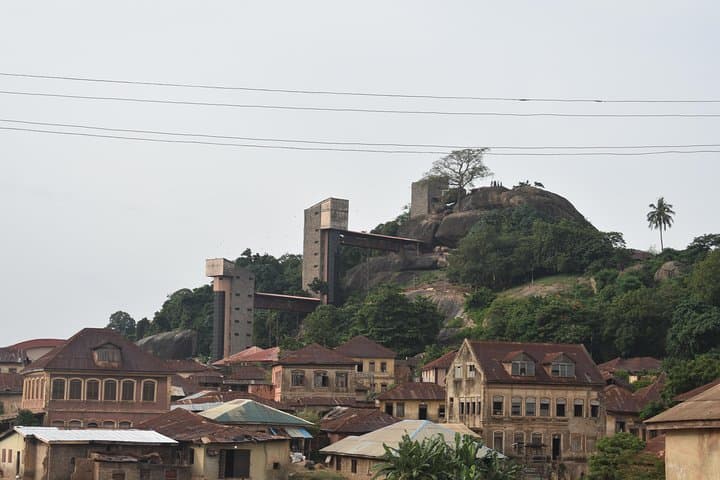
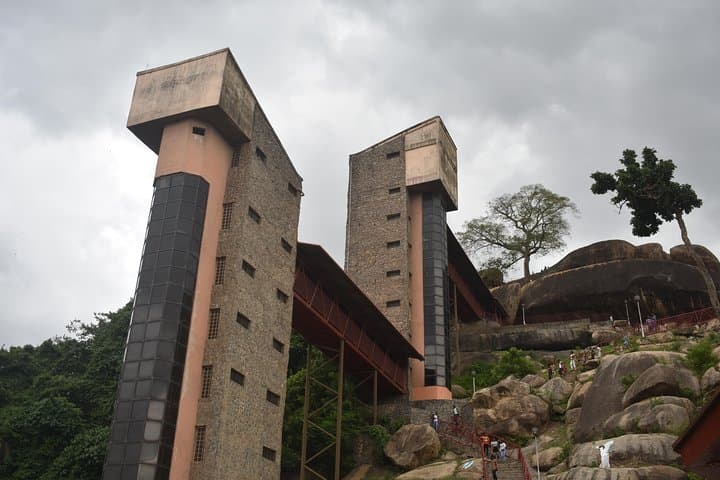


You arrive in Abeokuta with the city’s low skyline punctured by a hulking mass of banded granite—Olumo Rock—rising from a sea of market stalls and busy streets. The stone looms like an old guardian; your guide threads through alleys of textile vendors and into a staircut path that leads upward. The climb is steady: carved steps, iron ladders and shaded ledges opening to wide views of the Ogun River and the red-tiled roofs below.
You arrive in Abeokuta with the city’s low skyline punctured by a hulking mass of banded granite—Olumo Rock—rising from a sea of market stalls and busy streets. The stone looms like an old guardian; your guide threads through alleys of textile vendors and into a staircut path that leads upward. The climb is steady: carved steps, iron ladders and shaded ledges opening to wide views of the Ogun River and the red-tiled roofs below.
Olumo Rock is both geological landmark and cultural stronghold. Formed as a granite outcrop millions of years ago, it offered refuge to the Egba people during 19th-century internecine conflicts; the on-site museum traces pre-democratic Nigerian artifacts and the town’s role in regional history. Nearby Adire market—famous for hand-dyed fabric—adds sensory texture: dye vats, bartering voices and bolts of indigo.
Expect a half-day to full-day rhythm: a guided ascent to panoramic lookouts, a museum tour that highlights colonial and local governance displays, and a stroll through Adire market for local crafts. The route uses steps and short ladders; wear grippy shoes and bring drinking water. Midday sun can be fierce, and sudden tropical showers are possible in the wet season, so layer smartly.
Practical notes: museums can be humid and crowded, photography is welcomed but be respectful at cultural exhibits, and vendors are open to negotiation. This experience blends moderate hiking, history, and market culture—an accessible day that rewards curiosity and steady pace.