THE ADVENTURE COLLECTIVE® · Independent discovery and booking for outdoor travel

A focused four-day combination of trekking Mt. Meru and a short game drive in Arusha National Park. Expect forested approaches, a pre-dawn summit push, simple hut accommodation and wildlife viewing at Momella.
A focused four-day combination of trekking Mt. Meru and a short game drive in Arusha National Park. Expect forested approaches, a pre-dawn summit push, simple hut accommodation and wildlife viewing at Momella.
You step out of the vehicle under a high, cool sky and Mt. Meru fills the horizon like a patient giant—forest sleeves running up its flanks, clouds gathering at the crater rim. The first day’s trail slips through montane forest where sunbeams puncture moss and colobus monkeys watch from high branches. By evening the huts at Mariakamba feel intentionally simple: bunk beds, steaming tea and a guide’s briefing for the night push.
Verified experiences and guided adventures in the surrounding area.
Operated by Furahia Cultural Tourism · Arusha, Arusha Region
You step out of the vehicle under a high, cool sky and Mt. Meru fills the horizon like a patient giant—forest sleeves running up its flanks, clouds gathering at the crater rim. The first day’s trail slips through montane forest where sunbeams puncture moss and colobus monkeys watch from high branches. By evening the huts at Mariakamba feel intentionally simple: bunk beds, steaming tea and a guide’s briefing for the night push.
Geologically Meru is a stratovolcano that rises sharply from the Arusha plains; its layered lava and ash explain the abrupt change from savanna to alpine heath above 3,000 m. Culturally the area is a crossroads—Arusha town has long been a trade hub for Maasai, Meru and Hadzabe communities, and local guides bring knowledge of paths, weather and camp life.
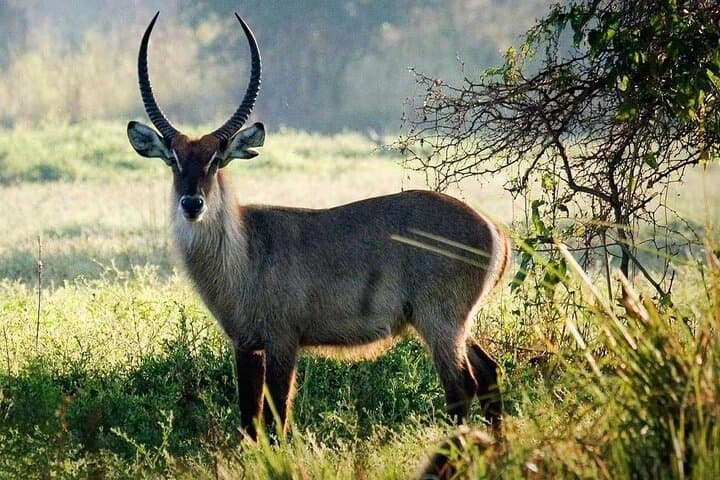
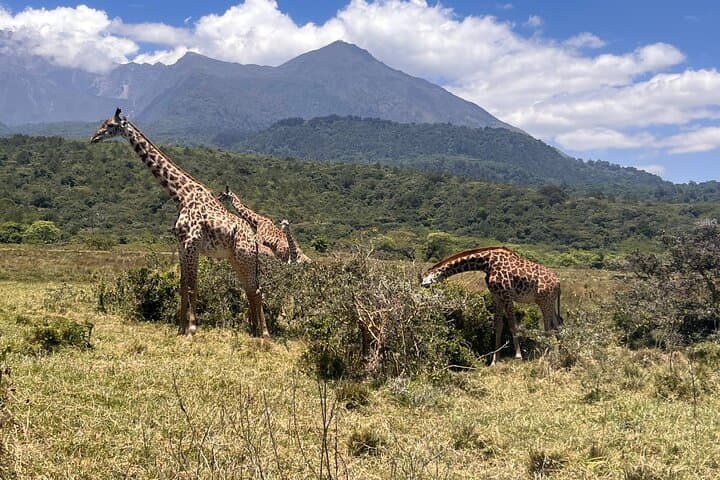
Expect three days of progressive trekking with a pre-dawn summit assault on day three that uses steady pacing to manage altitude. The summit rewards you with dawn over Kilimanjaro’s silhouette to the east and the crater’s inner amphitheater below. Day four eases off with descent and a short game drive at Momella Gate where plains species and lagoon birds reassert themselves.
Practical: train on multi-hour uphill hikes, sleep and eat early the summit night, carry layered clothing and a headlamp, and drink frequently to offset altitude. Local crews run the huts and meals; pack light but include a warm jacket for summit temperatures that can drop below freezing. With attentive guides this itinerary balances climbing and wildlife viewing into a compact, four-day mountain-safari experience.
challenging.
4 days.
Suitable for hikers with regular uphill training and good cardiovascular fitness; previous multi-day trekking experience recommended.
The summit day is the longest and steepest; it begins around 2:00am and includes sustained uphill on loose scree and rocky sections—expect 6–10 hours round trip from high camp.
No technical equipment is required for the standard Meru route—trekking poles, good boots and warm clothes are the essentials.
Dry months (June–October and late December–February) offer firmer trails and more stable summit conditions; afternoons in the wet season can be foggy and slippery.
Local operators typically include park fees, hut reservations and guides in the package; confirm inclusions and tipping norms before departure.
Mount Meru is a prominent stratovolcano in the eastern branch of the Rift; it has long shaped local settlement and trade routes around Arusha and served as a ceremonial landmark for surrounding communities.
Arusha National Park manages visitor impact through gate controls and designated trails—stick to paths, respect wildlife distances and avoid single-use plastics to reduce footprint.
Furahia Cultural Tourism operates guided outdoor trips and adventures with an emphasis on safety, stewardship, and memorable experiences.
You step out of the vehicle under a high, cool sky and Mt. Meru fills the horizon like a patient giant—forest sleeves running up its flanks, clouds gathering at the crater rim. The first day’s trail slips through montane forest where sunbeams puncture moss and colobus monkeys watch from high branches. By evening the huts at Mariakamba feel intentionally simple: bunk beds, steaming tea and a guide’s briefing for the night push.
You step out of the vehicle under a high, cool sky and Mt. Meru fills the horizon like a patient giant—forest sleeves running up its flanks, clouds gathering at the crater rim. The first day’s trail slips through montane forest where sunbeams puncture moss and colobus monkeys watch from high branches. By evening the huts at Mariakamba feel intentionally simple: bunk beds, steaming tea and a guide’s briefing for the night push.
Geologically Meru is a stratovolcano that rises sharply from the Arusha plains; its layered lava and ash explain the abrupt change from savanna to alpine heath above 3,000 m. Culturally the area is a crossroads—Arusha town has long been a trade hub for Maasai, Meru and Hadzabe communities, and local guides bring knowledge of paths, weather and camp life.
Expect three days of progressive trekking with a pre-dawn summit assault on day three that uses steady pacing to manage altitude. The summit rewards you with dawn over Kilimanjaro’s silhouette to the east and the crater’s inner amphitheater below. Day four eases off with descent and a short game drive at Momella Gate where plains species and lagoon birds reassert themselves.
Practical: train on multi-hour uphill hikes, sleep and eat early the summit night, carry layered clothing and a headlamp, and drink frequently to offset altitude. Local crews run the huts and meals; pack light but include a warm jacket for summit temperatures that can drop below freezing. With attentive guides this itinerary balances climbing and wildlife viewing into a compact, four-day mountain-safari experience.