THE ADVENTURE COLLECTIVE® · Independent discovery and booking for outdoor travel

Take an easy, guided visit to Mount Vesuvius’ Gran Cono: a short climb from the park drop-off rewards you with steaming fumaroles and sweeping views of the Bay of Naples. This three-hour tour includes transport and park entry, with roughly 90 minutes to explore the crater rim.
Take an easy, guided visit to Mount Vesuvius’ Gran Cono: a short climb from the park drop-off rewards you with steaming fumaroles and sweeping views of the Bay of Naples. This three-hour tour includes transport and park entry, with roughly 90 minutes to explore the crater rim.
You step off the bus at 1,000 meters and the air shifts—salt from the Bay of Naples below, heat from the volcanic slopes underfoot. A compact trail leads upward through low scrub and hardened lava flows; in 20–30 minutes the Gran Cono looms, its rim rimmed with fumaroles that whisper steam and sulfur.
Verified experiences and guided adventures in the surrounding area.
Operated by Visiting Campania · Pompeii, Campania
You step off the bus at 1,000 meters and the air shifts—salt from the Bay of Naples below, heat from the volcanic slopes underfoot. A compact trail leads upward through low scrub and hardened lava flows; in 20–30 minutes the Gran Cono looms, its rim rimmed with fumaroles that whisper steam and sulfur.
Vesuvius is the volcano that buried Pompeii and Herculaneum in AD 79, and that human story is visible in the landscape: bands of dark lava, terraces where vines cling, and ancient paths now formalized into park trails. Geologically it’s an active stratovolcano—layers of ash and lava—so you’ll notice jagged solidified flows and fresh fumarolic vents near the crater.
Culturally, the mountain is part of Campania’s identity: farmers still grow Lacryma Christi grapes on the lower slopes, and coastal towns like Sorrento and Naples frame the views. Local guides and the national park manage access; visitors must stick to marked trails to limit erosion and avoid unstable ground.
Practical guidance: the advertised tour packs transport and entry, and the uphill walk to the main crater takes about 20–30 minutes on loose, sometimes steep volcanic scree. Wear closed-toe shoes with grip, carry at least 1 liter of water, and expect wind and sun on the rim. Allow about 90 minutes at the park for the climb and crater viewing within the typical 3-hour tour window. Photographs from the rim capture the gulf, Capri, and Sorrento’s cliffs—arrive with batteries charged and sunscreen ready.
moderate.
3 hours.
Moderate fitness: able to walk uphill on loose gravel for 20–30 minutes and stand on uneven ground.
From the bus drop-off at about 1,000 m the main trail to the Gran Cono takes roughly 20–30 minutes at a steady pace; allow extra time for stops and photos.
This tour description includes the entrance fee to Vesuvius National Park—confirm at booking but typical packages cover entry and transport.
The path is steep and on loose volcanic material—children with good stamina may manage it, but it’s not recommended for those with serious mobility limitations.
Tours may be canceled in heavy rain, strong wind, or reduced visibility for safety; check cancellation policies and local forecasts before travel.
Mount Vesuvius famously erupted in AD 79, burying Pompeii and Herculaneum; the cone you visit today has rebuilt over multiple eruptions since.
Vesuvius is protected as a national park—stay on marked trails, carry out all litter, and respect signs to reduce erosion and protect fragile vegetation.
Visiting Campania operates guided outdoor trips and adventures with an emphasis on safety, stewardship, and memorable experiences.
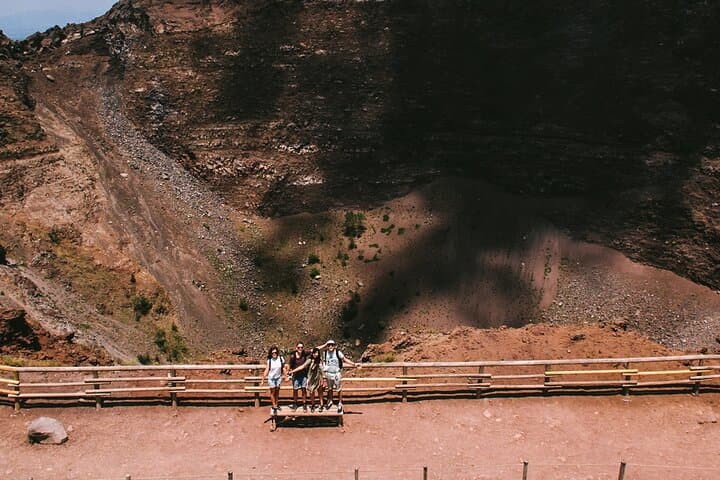
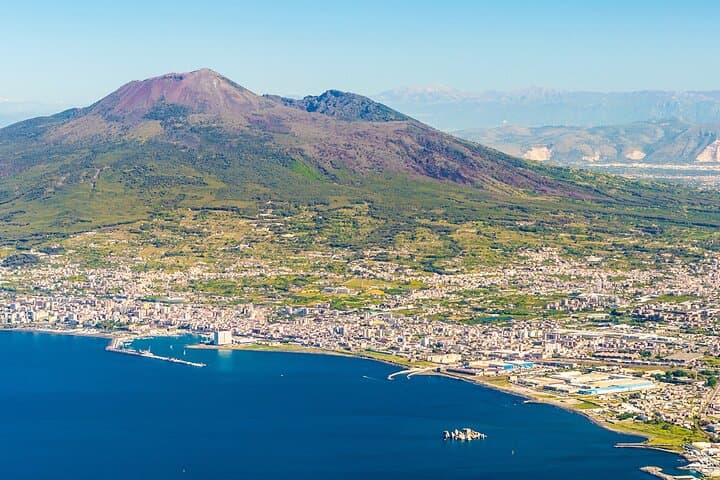
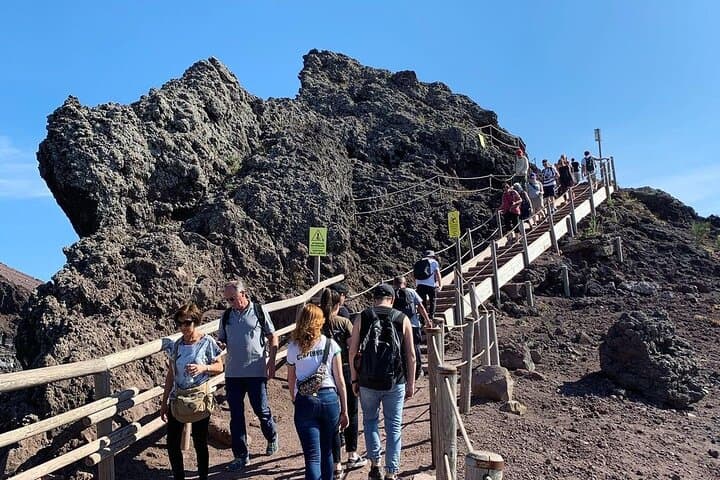
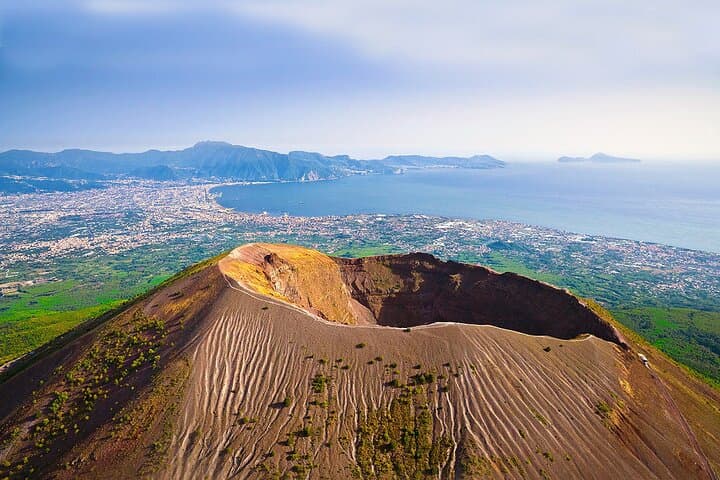
You step off the bus at 1,000 meters and the air shifts—salt from the Bay of Naples below, heat from the volcanic slopes underfoot. A compact trail leads upward through low scrub and hardened lava flows; in 20–30 minutes the Gran Cono looms, its rim rimmed with fumaroles that whisper steam and sulfur.
You step off the bus at 1,000 meters and the air shifts—salt from the Bay of Naples below, heat from the volcanic slopes underfoot. A compact trail leads upward through low scrub and hardened lava flows; in 20–30 minutes the Gran Cono looms, its rim rimmed with fumaroles that whisper steam and sulfur.
Vesuvius is the volcano that buried Pompeii and Herculaneum in AD 79, and that human story is visible in the landscape: bands of dark lava, terraces where vines cling, and ancient paths now formalized into park trails. Geologically it’s an active stratovolcano—layers of ash and lava—so you’ll notice jagged solidified flows and fresh fumarolic vents near the crater.
Culturally, the mountain is part of Campania’s identity: farmers still grow Lacryma Christi grapes on the lower slopes, and coastal towns like Sorrento and Naples frame the views. Local guides and the national park manage access; visitors must stick to marked trails to limit erosion and avoid unstable ground.
Practical guidance: the advertised tour packs transport and entry, and the uphill walk to the main crater takes about 20–30 minutes on loose, sometimes steep volcanic scree. Wear closed-toe shoes with grip, carry at least 1 liter of water, and expect wind and sun on the rim. Allow about 90 minutes at the park for the climb and crater viewing within the typical 3-hour tour window. Photographs from the rim capture the gulf, Capri, and Sorrento’s cliffs—arrive with batteries charged and sunscreen ready.