THE ADVENTURE COLLECTIVE® · Independent discovery and booking for outdoor travel

A six-day Machame ascent delivers rain forest, high plateau, and a long summit night to Uhuru Peak. This guide outlines what to expect on-route, the terrain and acclimatization strategy, and the practical gear and pacing tips to make the climb safer and more enjoyable.
A six-day Machame ascent delivers rain forest, high plateau, and a long summit night to Uhuru Peak. This guide outlines what to expect on-route, the terrain and acclimatization strategy, and the practical gear and pacing tips to make the climb safer and more enjoyable.
The trail eats the horizon long before the peak reveals itself. On the drive out of Moshi the lowland villages slide by — coffee plants, banana groves, children watching — and then the mountain grows, an implacable presence lifting through cloud like an island. The Machame Route begins by dropping you into a living rainforest that pushes back with dripping ferns and colobus monkeys that regard climbers with the calm of old residents. As you move higher the trees thin, the world opens to heather and volcanic scree, and the summit — Uhuru Peak at 5,895 m — keeps its distance, daring you forward.
Verified experiences and guided adventures in the surrounding area.
Operated by Allday In Africa Limited · Moshi, Kilimanjaro Region
The trail eats the horizon long before the peak reveals itself. On the drive out of Moshi the lowland villages slide by — coffee plants, banana groves, children watching — and then the mountain grows, an implacable presence lifting through cloud like an island. The Machame Route begins by dropping you into a living rainforest that pushes back with dripping ferns and colobus monkeys that regard climbers with the calm of old residents. As you move higher the trees thin, the world opens to heather and volcanic scree, and the summit — Uhuru Peak at 5,895 m — keeps its distance, daring you forward.
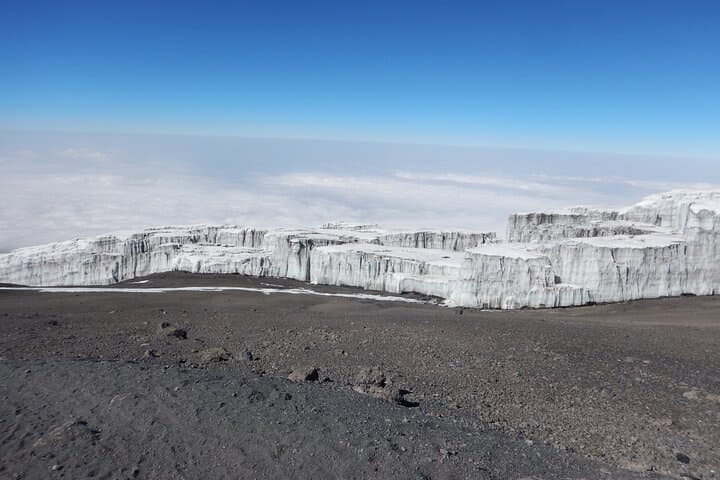
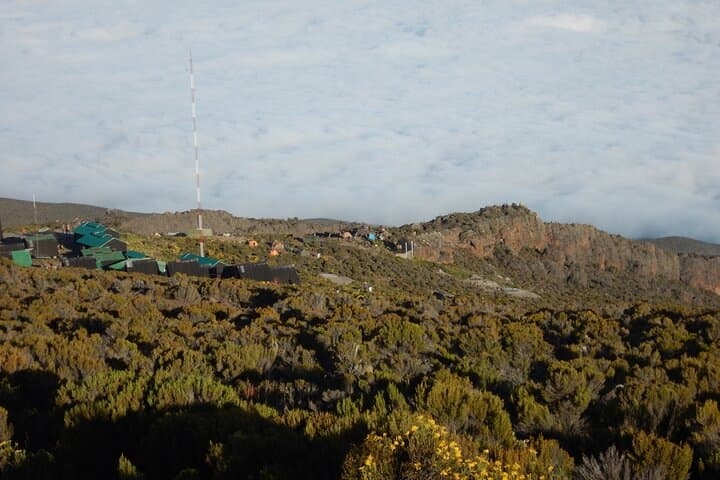
Machame is sometimes called the “whiskey” route for its zigzag profile: steep days with good acclimatization built into the itinerary. Over six days you’ll climb roughly 2,800 vertical meters from the Machame Gate, moving from rainforest (3,100 m) through the Shira Plateau and the Barranco Wall to the stark, wind-swept Barafu Camp around 4,600 m. Summit night starts before midnight with a cold, slow push across loose scree and, in places, snow and ice. The route’s geology reads as pages of Kilimanjaro’s volcanic history — aged lava flows, ash bands and the remnant icefields that still crown Kibo.
Culturally, the mountain is as important as it is tall. The Chagga people have lived on Kilimanjaro’s lower slopes for centuries; porters and guides you’ll travel with often come from those same villages, carrying not just gear but generations of route knowledge. The park itself is a UNESCO-protected landscape, and trekking there involves permits, park fees and a local crew — all part of the economic fabric of the region.
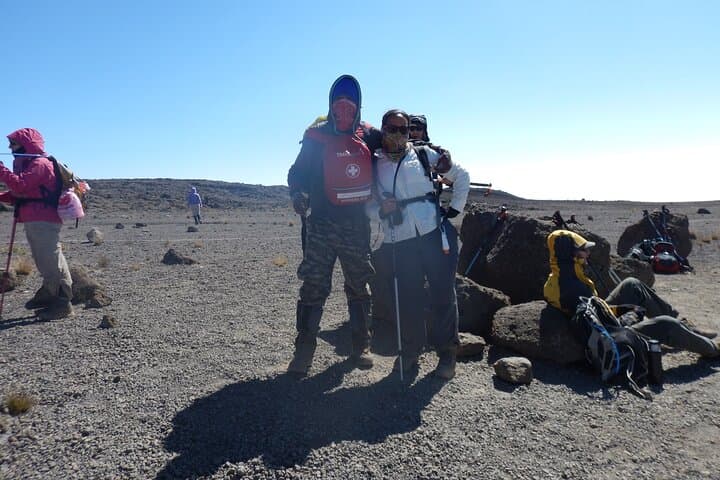
Practically, this is a demanding but non-technical ascent: expect steep, rocky walks, muddy rainforest trails, and a long summit push of 6–8 hours roundtrip from Barafu. The itinerary includes full board (breakfasts, lunches, dinners on most days), tented camps and porter support; pickups are typically available from Arusha or Moshi. Altitude is the real hazard: acute mountain sickness can appear even to fit hikers. Pace conservatively, drink frequently, and carry a warm down jacket for summit night. Trekking poles reduce knee stress on descents and aid balance on loose scree.
Best months are the drier windows (January–March, June–October) when trails firm up and summit odds improve, but weather on Kibo is notoriously changeable. Bring layered clothing, a warm sleeping bag rated to at least -10°C, and a small daypack for summit essentials. Respect the guides’ pace and the mountain’s rules; descending too fast after the summit matters more than summiting fast. When you reach the crater rim at dawn, the cold will be sharp and the view—if clouds lift—one of those alpine moments that justify the effort. Kilimanjaro doesn’t just test legs; it redraws perspective.
challenging.
5–6 days.
Good aerobic fitness; regular hill or stair training and multi-day trekking experience increase chances of success
The standard Machame itinerary runs 5–6 days with built-in acclimatization; this listing uses a 6-day schedule to improve summit odds.
No technical skills are required—the route is non-technical but demands high fitness and experience with long, steep days and altitude.
Success rates vary by season and fitness; a conservative itinerary, good acclimatization and experienced guides increase likelihood but cannot guarantee a summit.
Permits and park fees are usually included through organized operators; confirm with the supplier in advance as they are mandatory for entry.
Healthy older hikers can make the climb with proper conditioning, but those with cardiovascular issues or pregnancy should not attempt it.
Operators may cancel or turn back groups for safety; most providers will evacuate symptomatic climbers and arrange transport back to Moshi or the nearest aid point.
Kilimanjaro has long cultural significance for local Chagga communities; the mountain’s first recorded ascent of the highest peak (Kibo) was in 1889 by Hans Meyer and Ludwig Purtscheller.
Kilimanjaro National Park emphasizes sustainable trekking: stay on trails, pack out waste when possible, and support licensed guides and registered porters to ensure local livelihoods and park protection.
Allday In Africa Limited operates guided outdoor trips and adventures with an emphasis on safety, stewardship, and memorable experiences.
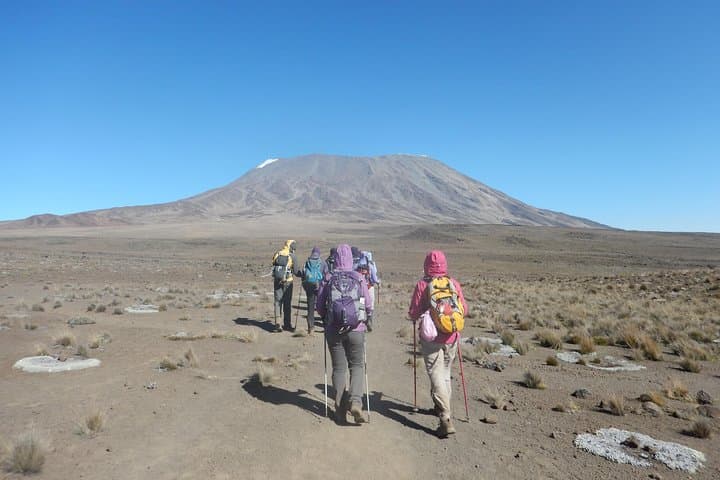
The trail eats the horizon long before the peak reveals itself. On the drive out of Moshi the lowland villages slide by — coffee plants, banana groves, children watching — and then the mountain grows, an implacable presence lifting through cloud like an island. The Machame Route begins by dropping you into a living rainforest that pushes back with dripping ferns and colobus monkeys that regard climbers with the calm of old residents. As you move higher the trees thin, the world opens to heather and volcanic scree, and the summit — Uhuru Peak at 5,895 m — keeps its distance, daring you forward.
The trail eats the horizon long before the peak reveals itself. On the drive out of Moshi the lowland villages slide by — coffee plants, banana groves, children watching — and then the mountain grows, an implacable presence lifting through cloud like an island. The Machame Route begins by dropping you into a living rainforest that pushes back with dripping ferns and colobus monkeys that regard climbers with the calm of old residents. As you move higher the trees thin, the world opens to heather and volcanic scree, and the summit — Uhuru Peak at 5,895 m — keeps its distance, daring you forward.
Machame is sometimes called the “whiskey” route for its zigzag profile: steep days with good acclimatization built into the itinerary. Over six days you’ll climb roughly 2,800 vertical meters from the Machame Gate, moving from rainforest (3,100 m) through the Shira Plateau and the Barranco Wall to the stark, wind-swept Barafu Camp around 4,600 m. Summit night starts before midnight with a cold, slow push across loose scree and, in places, snow and ice. The route’s geology reads as pages of Kilimanjaro’s volcanic history — aged lava flows, ash bands and the remnant icefields that still crown Kibo.
Culturally, the mountain is as important as it is tall. The Chagga people have lived on Kilimanjaro’s lower slopes for centuries; porters and guides you’ll travel with often come from those same villages, carrying not just gear but generations of route knowledge. The park itself is a UNESCO-protected landscape, and trekking there involves permits, park fees and a local crew — all part of the economic fabric of the region.
Practically, this is a demanding but non-technical ascent: expect steep, rocky walks, muddy rainforest trails, and a long summit push of 6–8 hours roundtrip from Barafu. The itinerary includes full board (breakfasts, lunches, dinners on most days), tented camps and porter support; pickups are typically available from Arusha or Moshi. Altitude is the real hazard: acute mountain sickness can appear even to fit hikers. Pace conservatively, drink frequently, and carry a warm down jacket for summit night. Trekking poles reduce knee stress on descents and aid balance on loose scree.
Best months are the drier windows (January–March, June–October) when trails firm up and summit odds improve, but weather on Kibo is notoriously changeable. Bring layered clothing, a warm sleeping bag rated to at least -10°C, and a small daypack for summit essentials. Respect the guides’ pace and the mountain’s rules; descending too fast after the summit matters more than summiting fast. When you reach the crater rim at dawn, the cold will be sharp and the view—if clouds lift—one of those alpine moments that justify the effort. Kilimanjaro doesn’t just test legs; it redraws perspective.