THE ADVENTURE COLLECTIVE® · Independent discovery and booking for outdoor travel

Take the Yoshida Route up Mount Fuji on a two-day, hut-supported climb that times a pre-dawn summit push for sunrise. This trip combines practical acclimatization with the cultural payoff of goraiko—the sunrise over Japan’s highest peak.
Take the Yoshida Route up Mount Fuji on a two-day, hut-supported climb that times a pre-dawn summit push for sunrise. This trip combines practical acclimatization with the cultural payoff of goraiko—the sunrise over Japan’s highest peak.
A low bus hum dissolves on the Fuji Subaru Line as the fifth station's cool air meets the traveler.
Verified experiences and guided adventures in the surrounding area.
Operated by Japan Awaits · Fujiyoshida, Yamanashi
A low bus hum dissolves on the Fuji Subaru Line as the fifth station's cool air meets the traveler.
The trail opens in a fir-and-birch fringe that offers a last green breath before the mountain tightens into volcanic scree and sky. On the Yoshida Route climbers move from a mellow 2,300 m approach through zigzagging switchbacks to the exposed rock bands above 3,000 m, the wind testing resolve as it pushes you toward the crater rim.
This route has guided pilgrims and travelers since the Edo period; the summit (Kengamine, 3,776 m) crowns centuries of worship and the modern rite of goraiko—the sunrise seen from the rim. Geologically Mount Fuji is a stratovolcano: layered lava and ash create steep upper slopes and a hollowed crater at the top. Cultural markers—small shrines and weathered gates—appear alongside modern huts and first-aid posts, blending spiritual significance with practical safety.
Practically, the tour stages an overnight at a mountain hut to aid acclimatization, then a late-night summit push for sunrise, with descent via a separate gravel track. Expect 6–7 hours up, 3–4 hours down; loose volcanic gravel makes trekking poles and steady boots valuable. Weather flips quickly—temperatures can plummet below freezing before dawn even in summer—so layering and a charged headlamp are non-negotiable.
After descent the itinerary often includes an onsen soak to reset tired muscles. For first-time high-altitude trekkers the combination of careful pacing, hydration, and respect for the mountain’s changing moods makes this two-day climb both attainable and memorable.
challenging.
2 days (approx. 48 hours); 6–7 hours ascent, 3–4 hours descent.
Moderate to high aerobic fitness recommended—able to hike several hours with elevation gain and manage cold night conditions
A guide is optional; the tour offers independent climbing with an included hut stay, but guides can be requested in English or Japanese if you prefer support.
The official Yoshida Route season runs July 1–September 10, when huts, toilets, and first-aid posts operate regularly.
The Yoshida Route is the most beginner-friendly official route but involves steep, rocky sections above the 6th station and loose gravel on descent—no technical climbing gear is required in season.
Start slowly, rest at the 6th and 7th stations, hydrate frequently, and descend immediately if severe symptoms (persistent headache, vomiting, disorientation) occur.
The Yoshida Route has been a primary ascent used since the Edo period and remains the busiest route for both pilgrims and recreational climbers.
A ¥4,000 trail fee (as of 2024) helps fund trail maintenance and facilities; staying on marked trails and minimizing waste helps protect fragile alpine plants.
Japan Awaits operates guided outdoor trips and adventures with an emphasis on safety, stewardship, and memorable experiences.


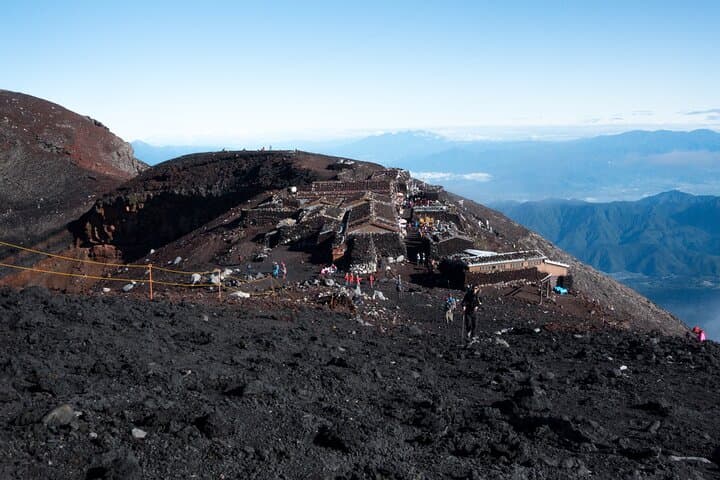

A low bus hum dissolves on the Fuji Subaru Line as the fifth station's cool air meets the traveler.
A low bus hum dissolves on the Fuji Subaru Line as the fifth station's cool air meets the traveler.
The trail opens in a fir-and-birch fringe that offers a last green breath before the mountain tightens into volcanic scree and sky. On the Yoshida Route climbers move from a mellow 2,300 m approach through zigzagging switchbacks to the exposed rock bands above 3,000 m, the wind testing resolve as it pushes you toward the crater rim.
This route has guided pilgrims and travelers since the Edo period; the summit (Kengamine, 3,776 m) crowns centuries of worship and the modern rite of goraiko—the sunrise seen from the rim. Geologically Mount Fuji is a stratovolcano: layered lava and ash create steep upper slopes and a hollowed crater at the top. Cultural markers—small shrines and weathered gates—appear alongside modern huts and first-aid posts, blending spiritual significance with practical safety.
Practically, the tour stages an overnight at a mountain hut to aid acclimatization, then a late-night summit push for sunrise, with descent via a separate gravel track. Expect 6–7 hours up, 3–4 hours down; loose volcanic gravel makes trekking poles and steady boots valuable. Weather flips quickly—temperatures can plummet below freezing before dawn even in summer—so layering and a charged headlamp are non-negotiable.
After descent the itinerary often includes an onsen soak to reset tired muscles. For first-time high-altitude trekkers the combination of careful pacing, hydration, and respect for the mountain’s changing moods makes this two-day climb both attainable and memorable.