THE ADVENTURE COLLECTIVE® · Independent discovery and booking for outdoor travel

Climb by cable car and 4x4 to Mount Etna’s high slopes, then hike to the rim of Bocca Nuova and neighboring craters. This guided route blends volcanic geology, high-altitude walking, and sweeping views to the Aeolian Islands on clear days.
Climb by cable car and 4x4 to Mount Etna’s high slopes, then hike to the rim of Bocca Nuova and neighboring craters. This guided route blends volcanic geology, high-altitude walking, and sweeping views to the Aeolian Islands on clear days.
A cold wind pushes across the black slopes as the convoy of 4x4s climbs above the tree line and a cable car squeals toward Torre del Filosofo. At 2,900 m the air thins and the mountain seems to breathe—steam plumes and dark scars marking recent eruptions—while hikers tighten boots and begin the last steep hour to the rim.
Verified experiences and guided adventures in the surrounding area.
Operated by AITNE · Nicolosi, Sicily
A cold wind pushes across the black slopes as the convoy of 4x4s climbs above the tree line and a cable car squeals toward Torre del Filosofo. At 2,900 m the air thins and the mountain seems to breathe—steam plumes and dark scars marking recent eruptions—while hikers tighten boots and begin the last steep hour to the rim.
Mount Etna is Europe’s most active volcano; its central craters like Bocca Nuova (opened 1968) and the Voragine reveal layers of lava, ash and scoria stacked over millennia. The Valle del Bove, an 8×4 km amphitheater on Etna’s eastern flank, channels flows and frames views north to the Aeolian Islands on clear days. Human history here mixes pastoral mountain villages with centuries of volcanic observation—local farming and small towns such as Nicolosi and Zafferana show how communities adapted to both fertility and hazard.
Expect variable terrain: compacted volcanic ash, loose scoria, and short steep pitches where footing is uneven. Weather changes quickly; wind and cold are common above 2,500 m. Guides limit access depending on volcanic activity, so flexibility is part of the trip.
Practical guidance: bring layered, windproof clothing, sturdy boots with good grip, 1.5–2 L water and sun protection; allow time to acclimatize if you’re arriving from sea level. The organized itinerary typically uses cable car and minibuses to 2,900 m, then a 1–2 hour uphill walk to crater rims and a longer descent through ash fields back to the cable car. Respect closures, follow your guide, and carry cash for local shops in Nicolosi or Rifugio Sapienza.
challenging.
4–6 hours.
Suitable for hikers in good cardiovascular shape who can manage steep uphill walking at altitude.
The uphill section is typically about 1–1.5 hours depending on pace and conditions, covering loose volcanic slopes to the central craters.
Operators often exclude the round-trip cable car and jeep fees—confirm inclusion when booking as some packages vary.
Participants should have moderate to good fitness; the tour is not recommended for people with serious heart, respiratory, spinal conditions, or pregnancy due to altitude and terrain.
Access is controlled for safety; guides take you to crater rims and recent deposits but direct lava exposure depends on current volcanic activity and is often restricted.
Etna’s eruptions have shaped local settlement patterns for millennia; towns on its slopes farm volcanic soils while recording eruptions in local archives.
Stay on marked paths to prevent erosion of fragile volcanic soils; local regulations restrict off-trail walking and collectives support responsible tourism to protect hillside agriculture.
AITNE operates guided outdoor trips and adventures with an emphasis on safety, stewardship, and memorable experiences.
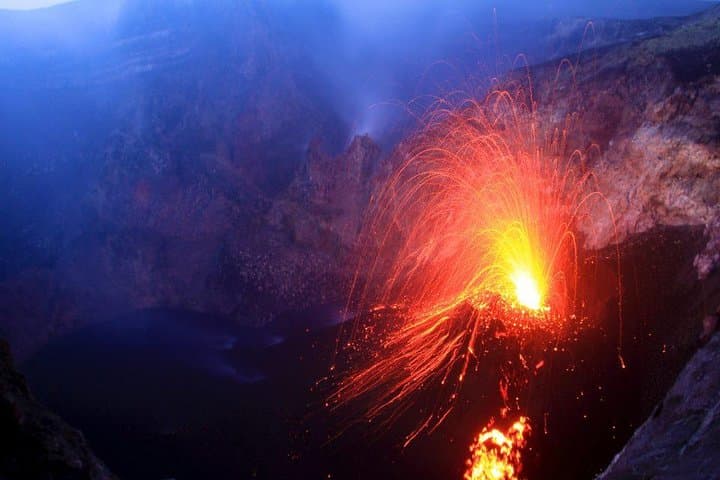


A cold wind pushes across the black slopes as the convoy of 4x4s climbs above the tree line and a cable car squeals toward Torre del Filosofo. At 2,900 m the air thins and the mountain seems to breathe—steam plumes and dark scars marking recent eruptions—while hikers tighten boots and begin the last steep hour to the rim.
A cold wind pushes across the black slopes as the convoy of 4x4s climbs above the tree line and a cable car squeals toward Torre del Filosofo. At 2,900 m the air thins and the mountain seems to breathe—steam plumes and dark scars marking recent eruptions—while hikers tighten boots and begin the last steep hour to the rim.
Mount Etna is Europe’s most active volcano; its central craters like Bocca Nuova (opened 1968) and the Voragine reveal layers of lava, ash and scoria stacked over millennia. The Valle del Bove, an 8×4 km amphitheater on Etna’s eastern flank, channels flows and frames views north to the Aeolian Islands on clear days. Human history here mixes pastoral mountain villages with centuries of volcanic observation—local farming and small towns such as Nicolosi and Zafferana show how communities adapted to both fertility and hazard.
Expect variable terrain: compacted volcanic ash, loose scoria, and short steep pitches where footing is uneven. Weather changes quickly; wind and cold are common above 2,500 m. Guides limit access depending on volcanic activity, so flexibility is part of the trip.
Practical guidance: bring layered, windproof clothing, sturdy boots with good grip, 1.5–2 L water and sun protection; allow time to acclimatize if you’re arriving from sea level. The organized itinerary typically uses cable car and minibuses to 2,900 m, then a 1–2 hour uphill walk to crater rims and a longer descent through ash fields back to the cable car. Respect closures, follow your guide, and carry cash for local shops in Nicolosi or Rifugio Sapienza.